
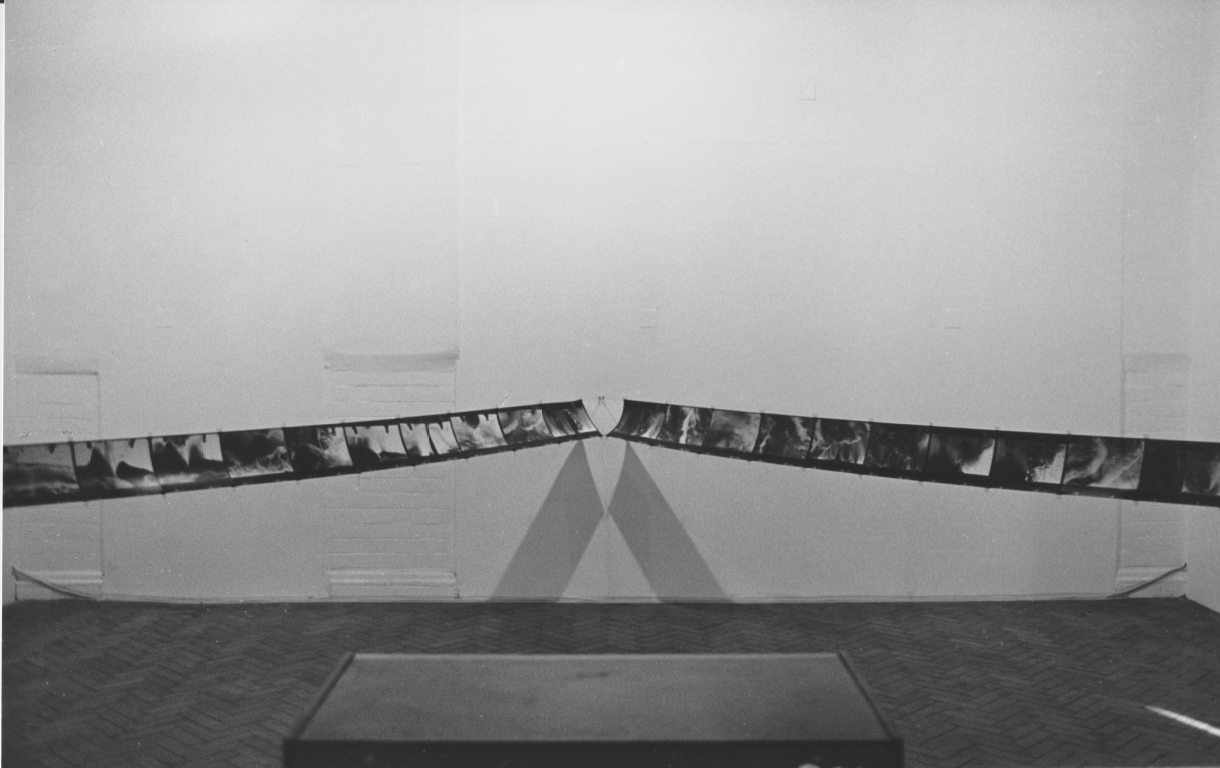
Sea of Light (1978)
Madelon Hooykaas and Elsa Stansfield
Portfolio Available for Acquisition from the Private Archive of Madelon Hooykaas
Archival Portfolio Overview
Artists
Madelon Hooykaas, Elsa Stansfield
Artwork Origin
Core photographic portfolio of the video environment ‘Sea of Light’ by Hooykaas/Stansfield, originally commissioned by and exhibited at Chapter Gallery in Cardiff, Wales (September 16—30, 1978).
Provenance
Private Archive of Madelon Hooykaas, Amsterdam.
Portfolio Contents (Handprinted by Hooykaas)
9 × Vintage Gelatin Silver Prints: 50 × 60 cm (19.69 × 23.62”)
30 × Vintage Gelatin Silver Prints: 24 × 30 cm (9.45 × 11.81”)
Housing & Ephemera
1 × Original Portfolio Folder (storing the 9 larger prints)
1 × Vintage Ilford Photographic Paper Box (featuring handwritten inscriptions by the Artists; storing the 30 smaller prints)
2 × Original Exhibition Postcards (1978)
1 × Original Exhibition Poster (Chapter, 1978)
1 × Original Typewritten Exhibition Text
Contact Details
info@elliott.gallery
+31 (0)6 85724797
Acquisition Fee
Available upon request. Please inquire.
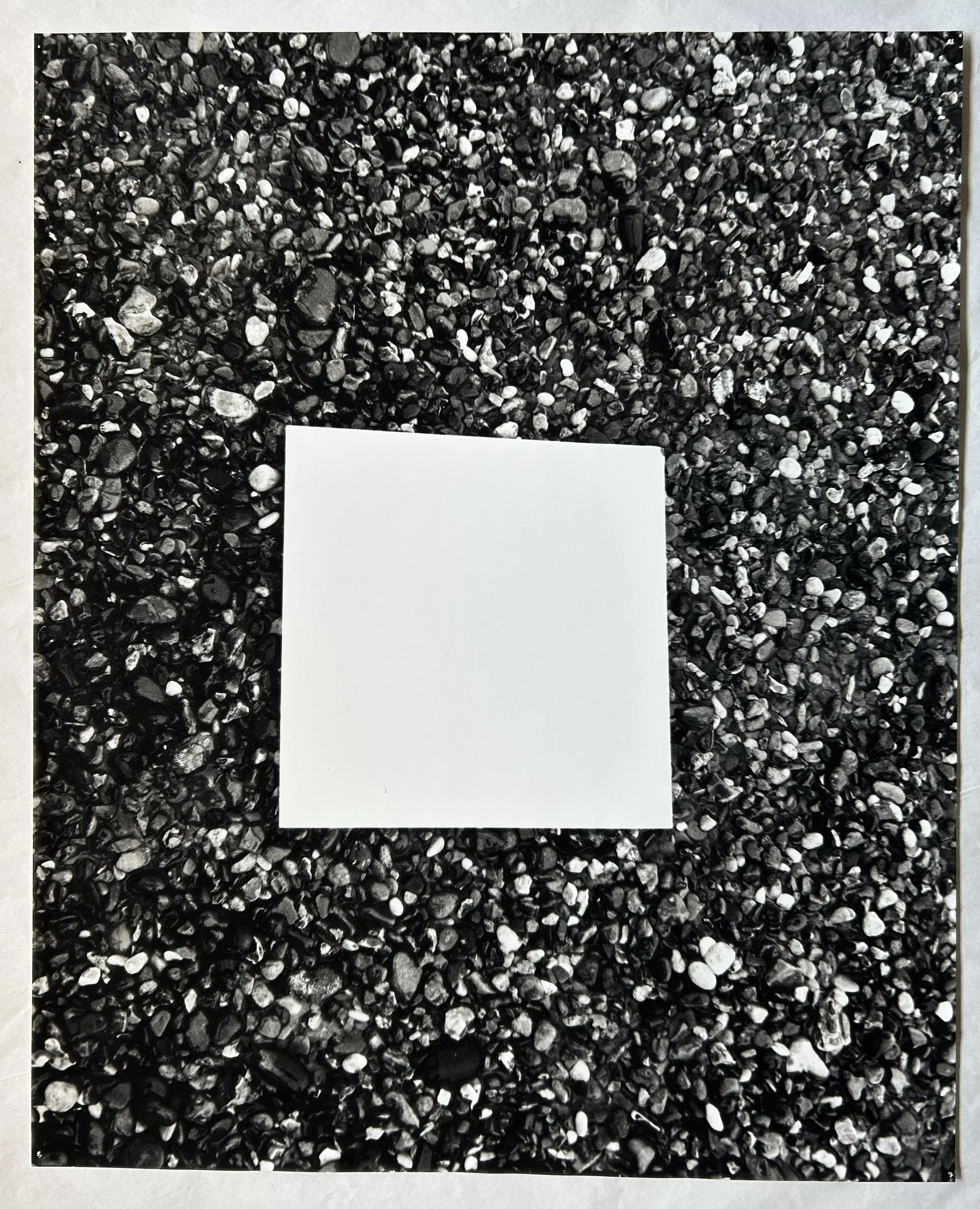
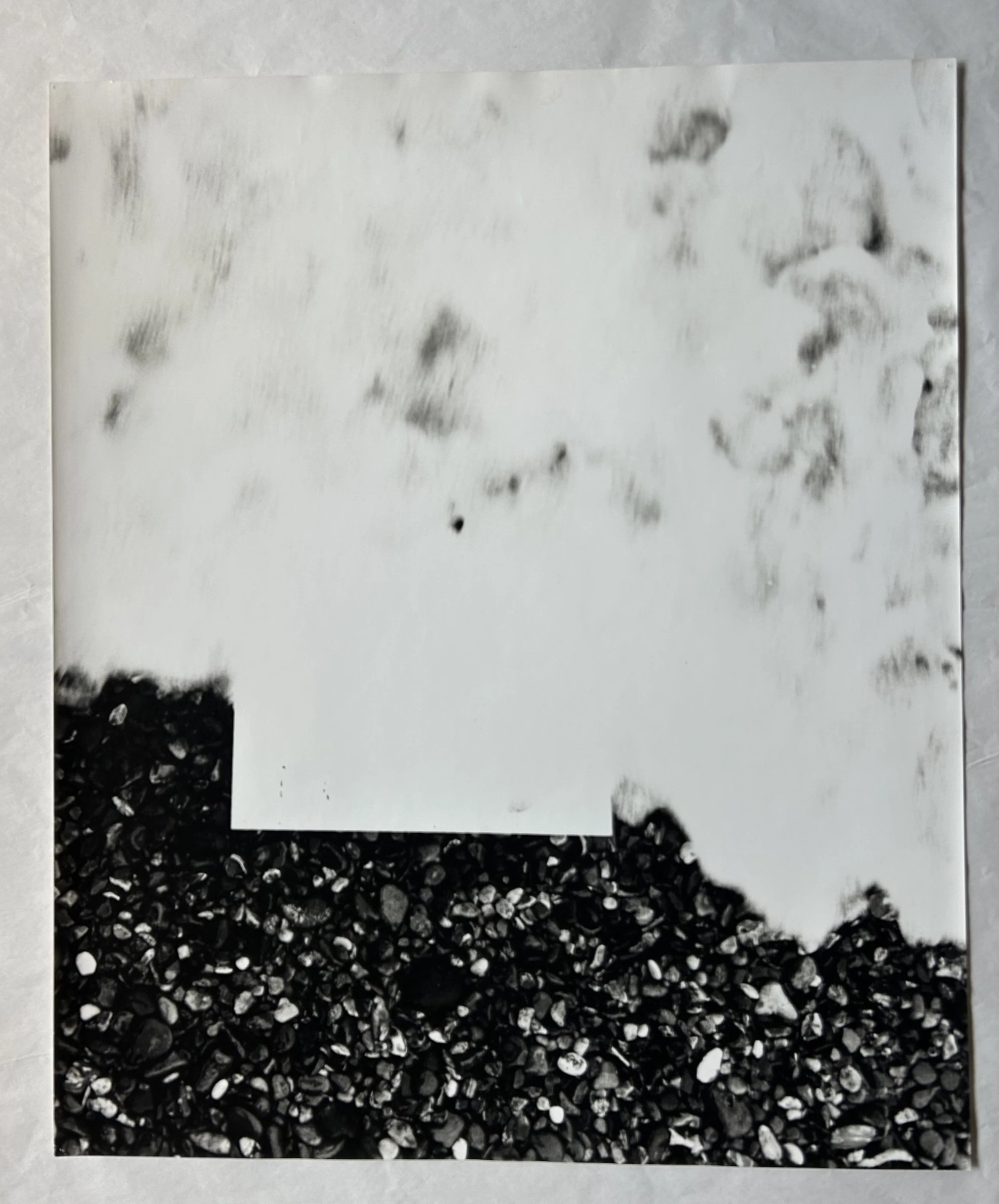
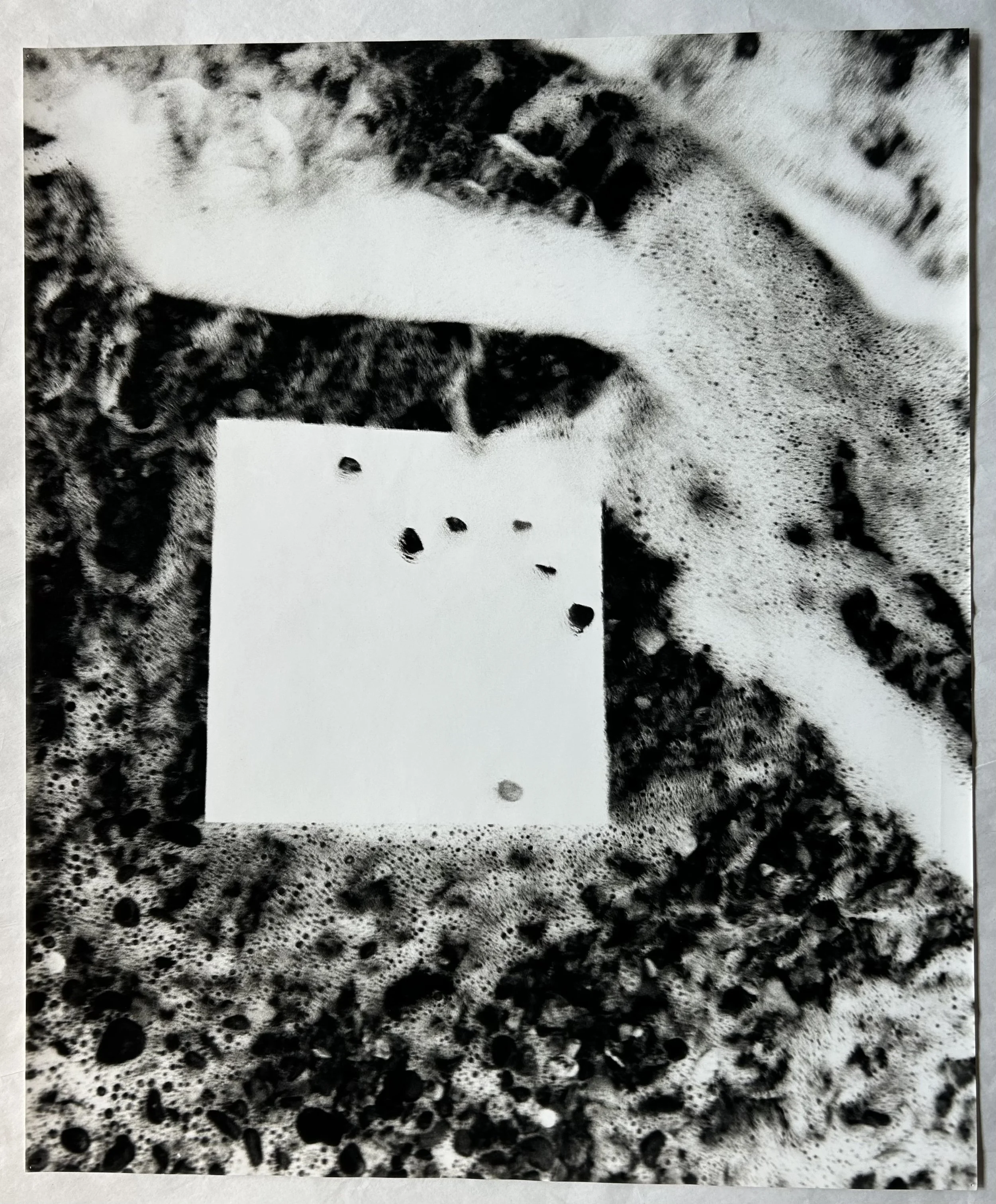
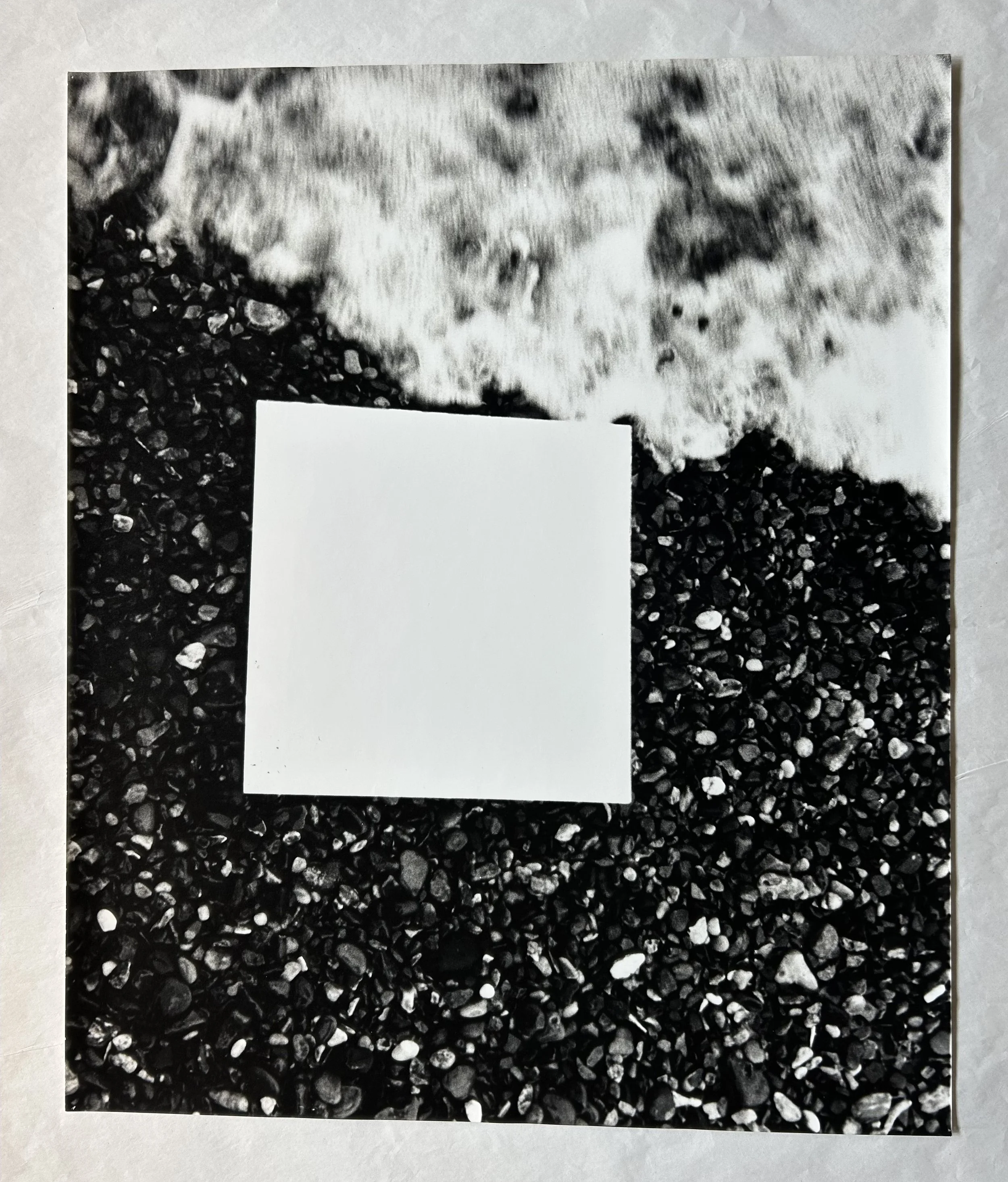
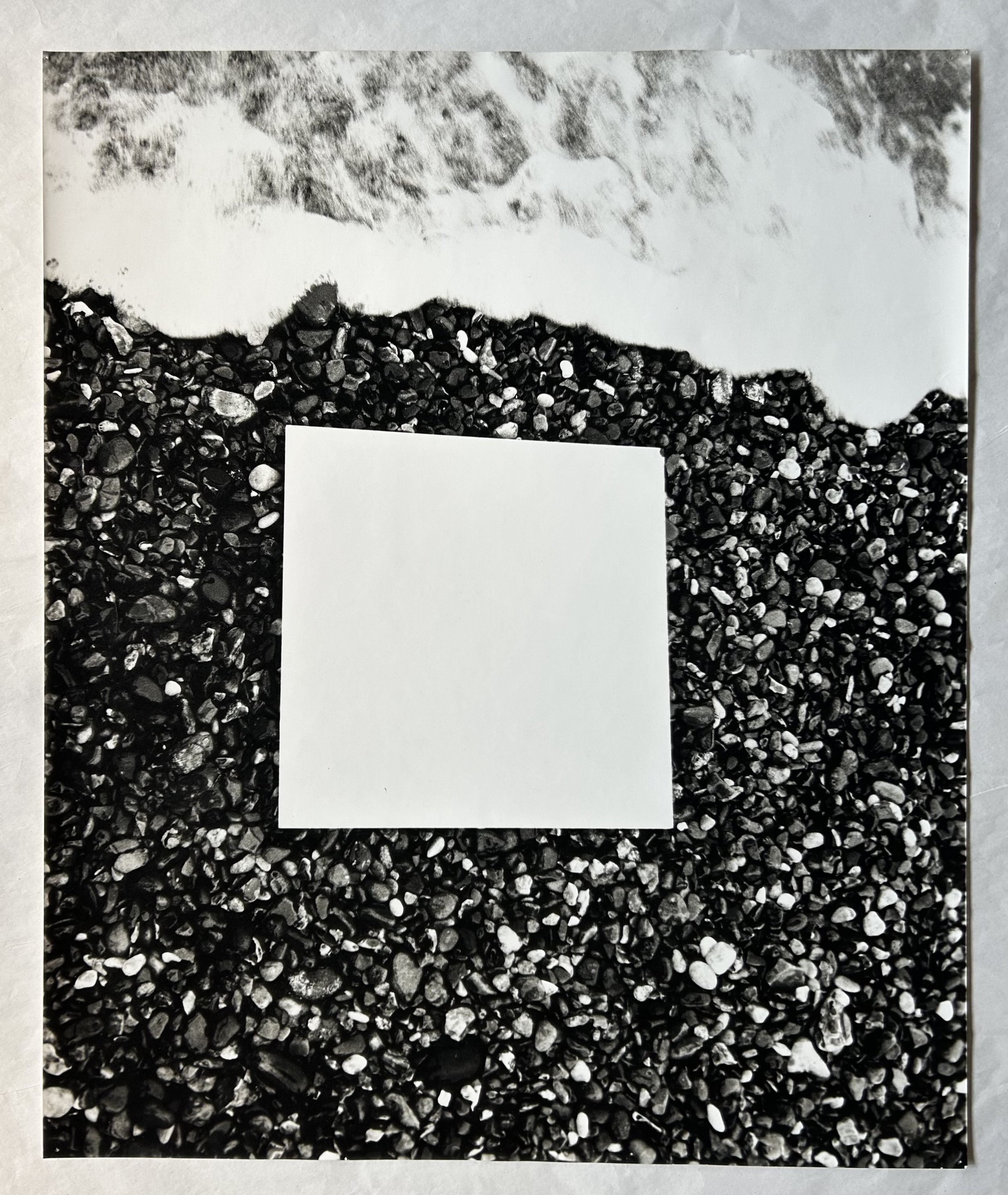
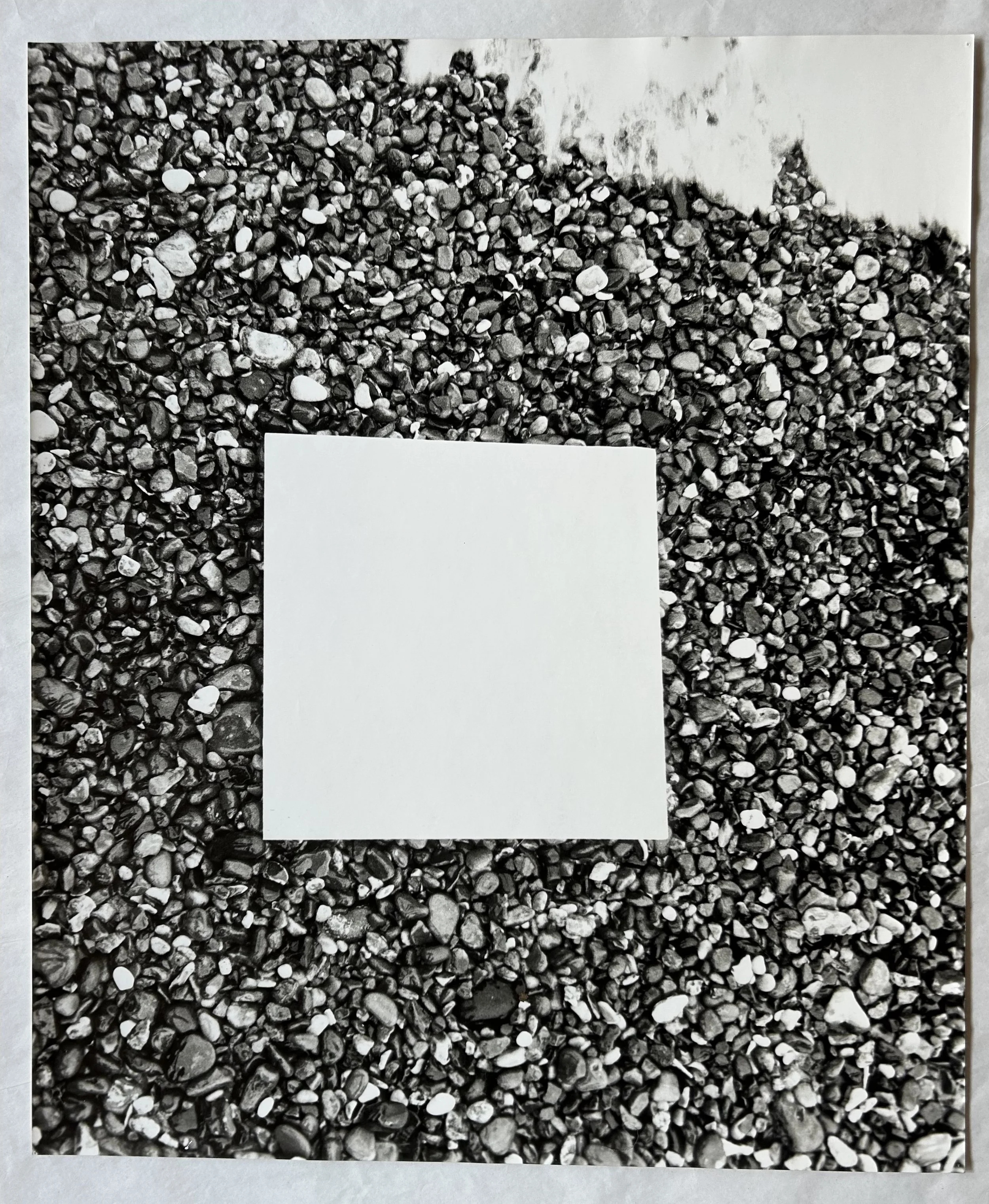
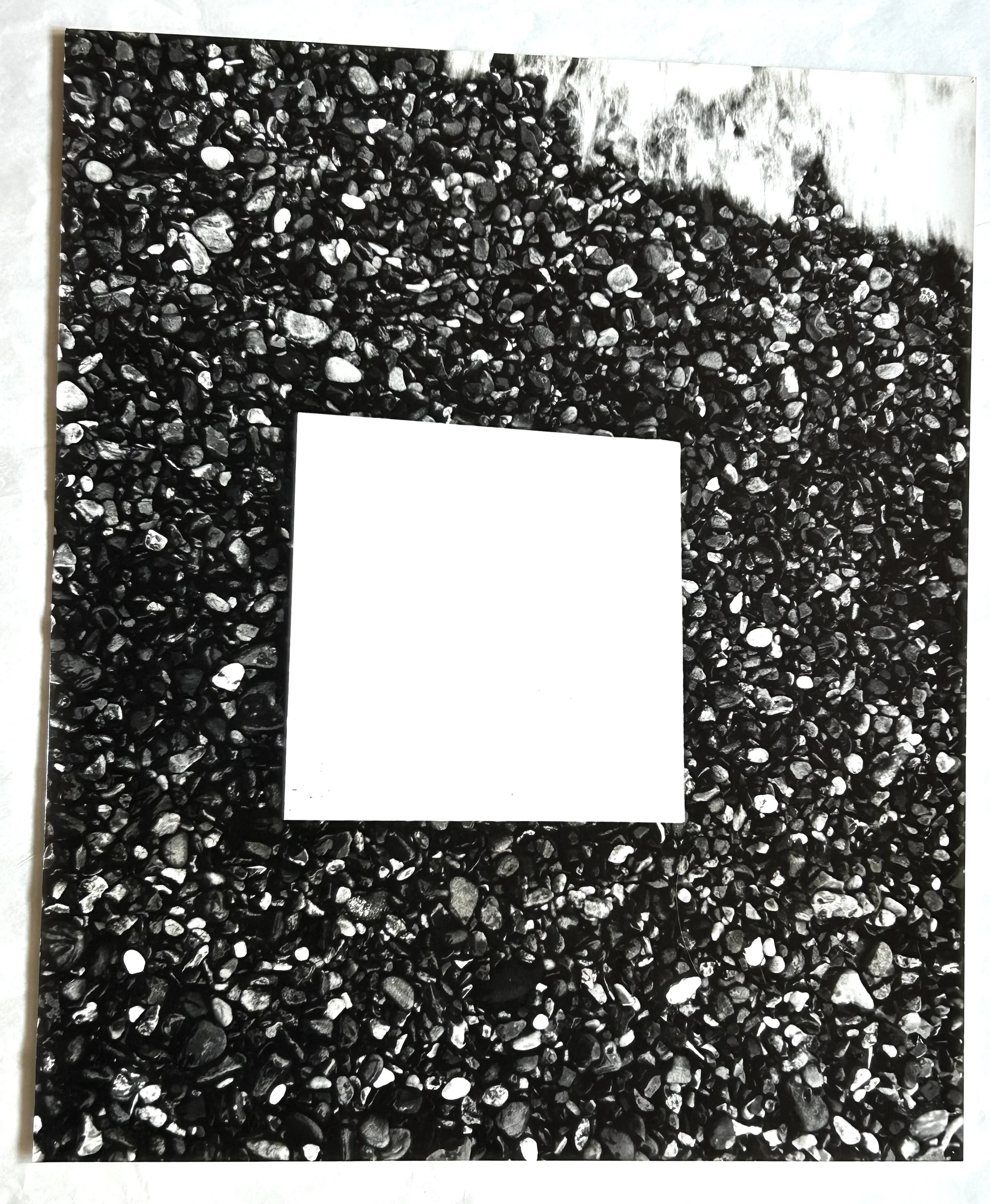
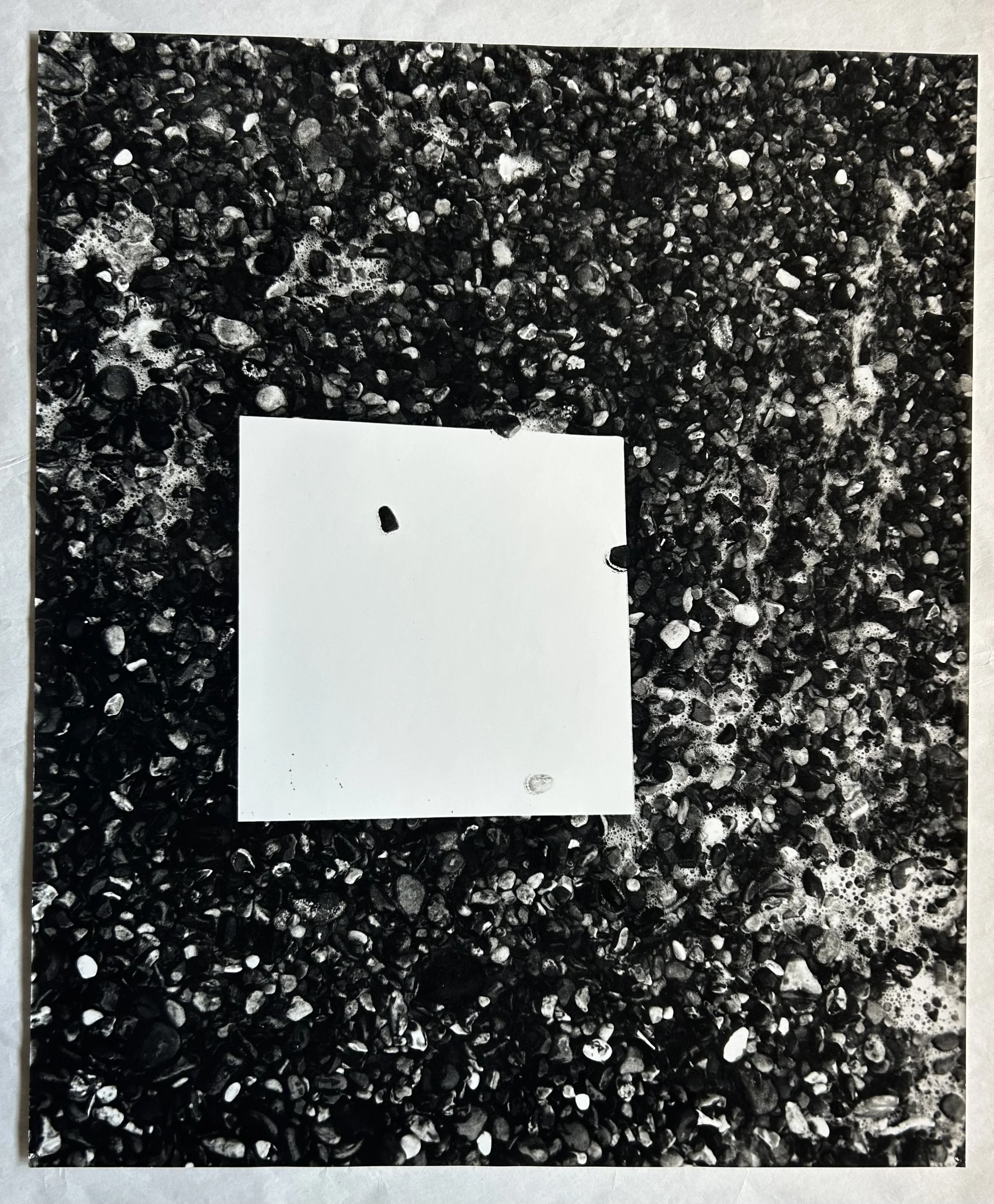
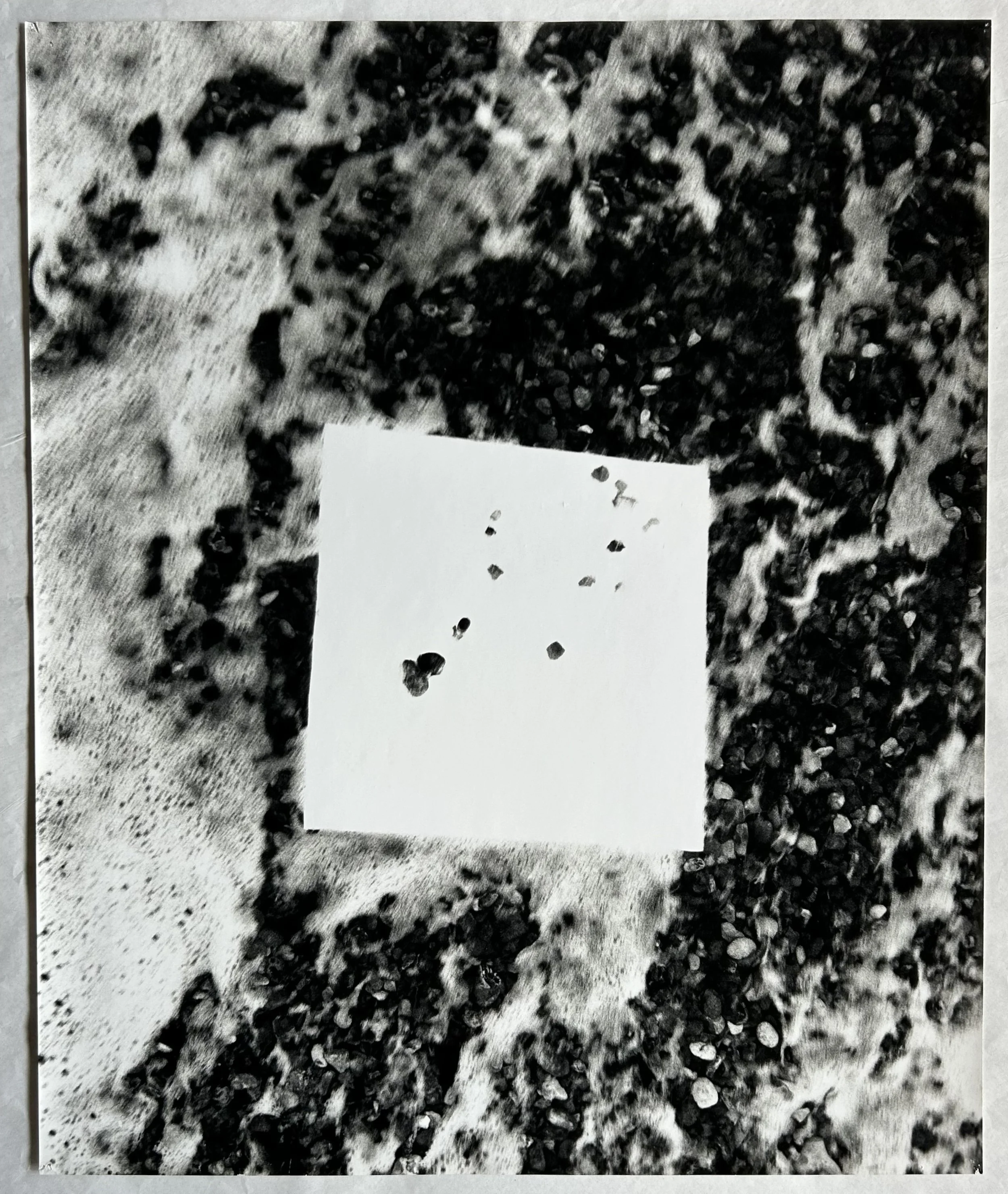
Sea of Light is a seminal site-specific installation created in 1978 for Chapter Arts Centre in Cardiff, Wales, by the pioneering Dutch-Scottish media art duo Madelon Hooykaas (b. 1942) and Elsa Stansfield (1945–2004). Encapsulating a 24-hour time cycle, the work exposes the volatility of reality by juxtaposing raw matter with photography and video, creating a multi-layered play on human perception and materiality.
This 1978 Welsh project is a cornerstone within Madelon Hooykaas' early career and her broader collaborative output with Elsa Stansfield. Following exhibitions at London's Whitechapel Art Gallery and Amsterdam's De Appel Foundation, Sea of Light solidified their position within the first generation of global female artists to adopt and transform time-based media.
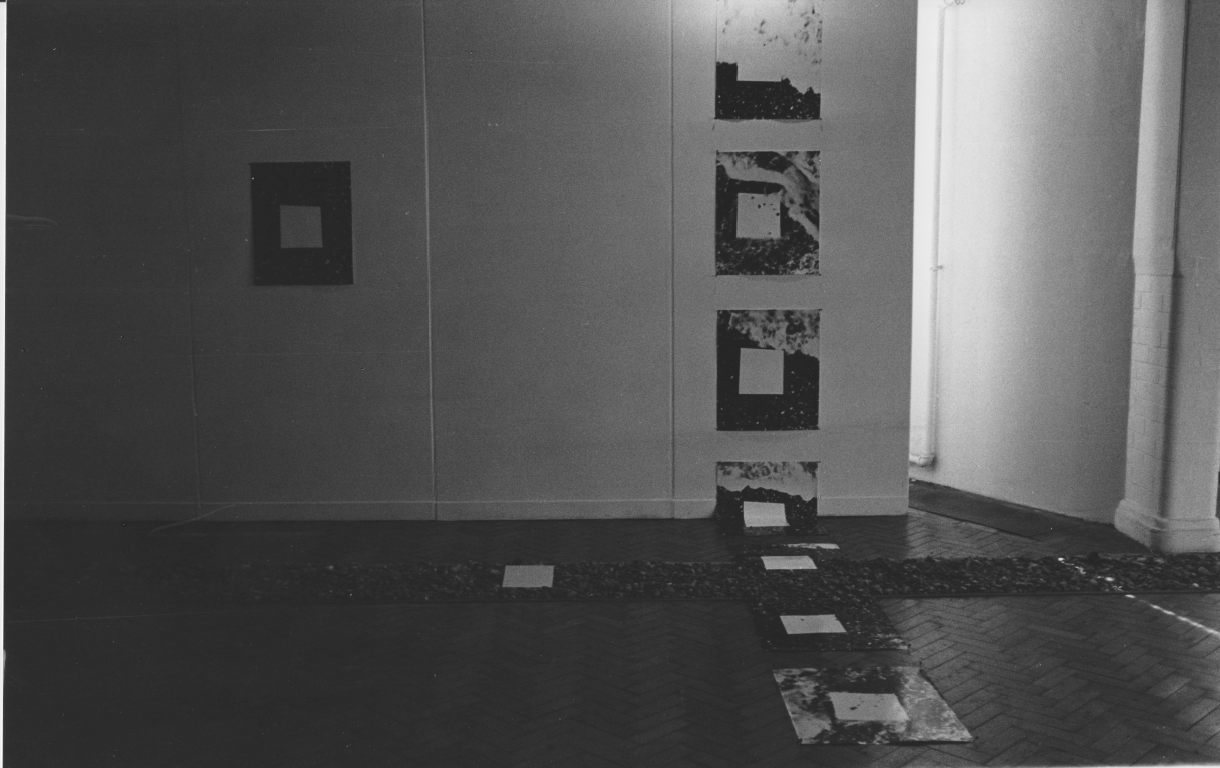
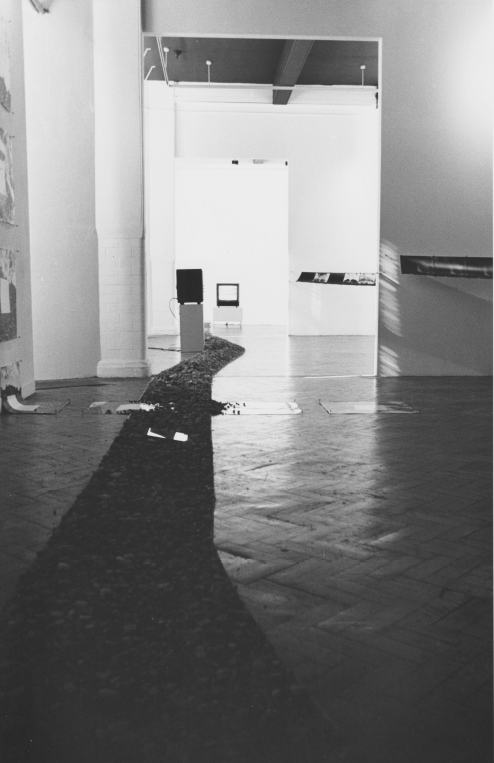
Executed during a decade of experimentation, the project relied on a progressive gallery system within the UK that supported newly commissioned site-specific electronic art – an approach to production that was unusual elsewhere at the time. Within this model, Chapter Arts Centre functioned as an experimental hub for new media, providing the space and institutional backing necessary for international artists to execute multi-room media art installations. It was in direct response to Chapter's unique architectural layout and Cardiff's geographic proximity to the sea that Hooykaas and Stansfield developed the concept.
The "video environment" as Hooykaas and Stansfield referred to their multi-media work throughout the 1970s (later developments would earn the name video sculpture), features a metaphorical 24-hour time cycle in which the four gallery units represent distinct six-hour intervals that transition from darkness at one end to light at the other. Within the environment, photography and video are juxtaposed with sand and stones gathered from the coast of Cardiff.
In these juxtapositions, the same material is encountered through different media. Firstly, there is the object itself, the tactile sand and stone that was brought to Chapter's floor, establishing an unmediated connection to the landscape it was gathered from. Secondly, the electronic video recording translates the stones back into their original setting, introducing a component of time. Thirdly, the photographic prints hung on lines and walls of the exhibition space capture the landscape and stones frozen in time. The final state exists purely within the viewer’s consciousness as a residual mental imprint. As they navigate the dark-to-light progression, memory becomes the ultimate medium, proving that human perception is crucial to the completion of the environment.
"Like the mirrors we have used in the photographs in the space, the entire piece is open to many levels of interpretation. The photographs of stones, the real stones, and the videotaped recording of the stones' original setting form a play on different perceptions of reality."
— Madelon Hooykaas, Elsa Stansfield
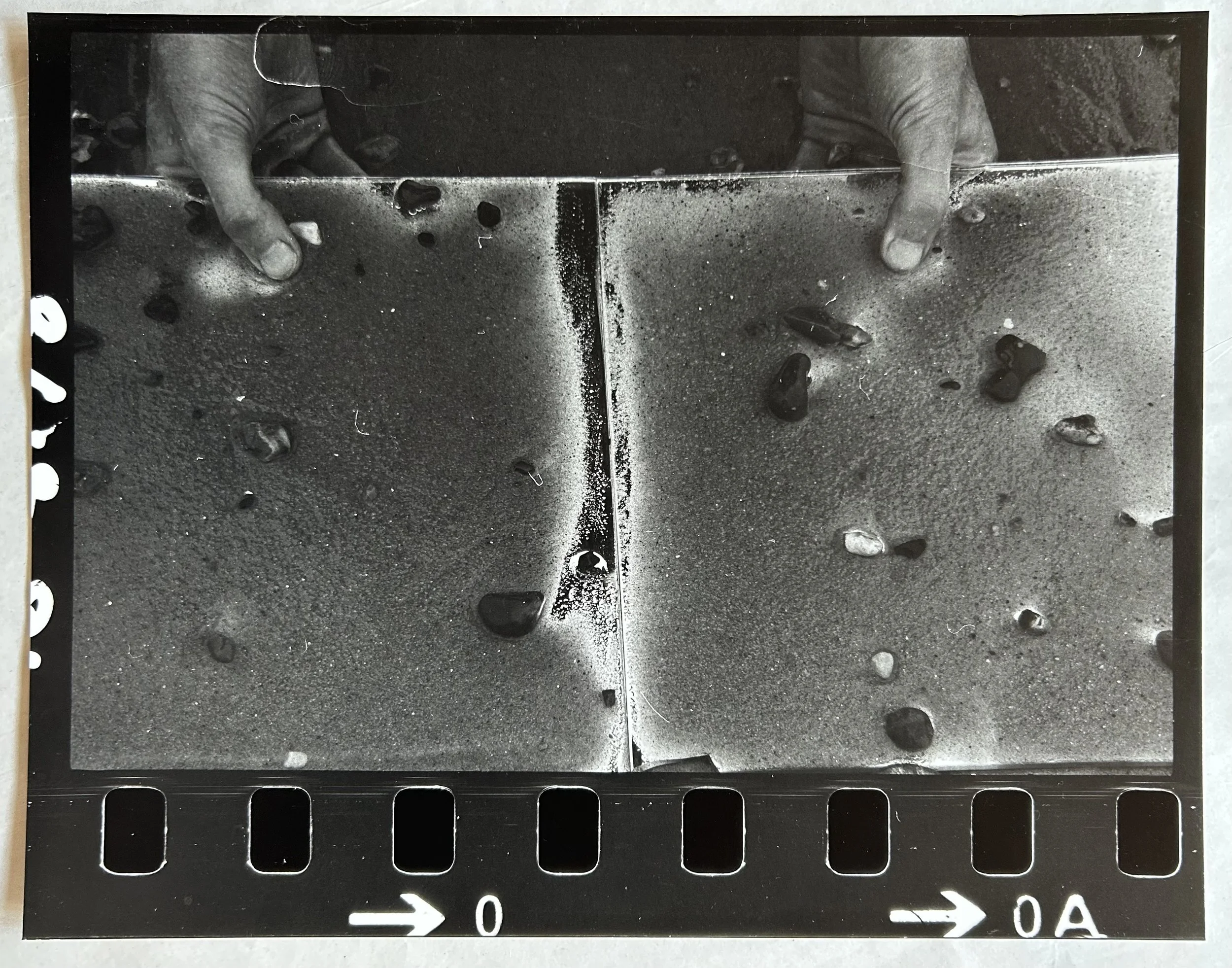
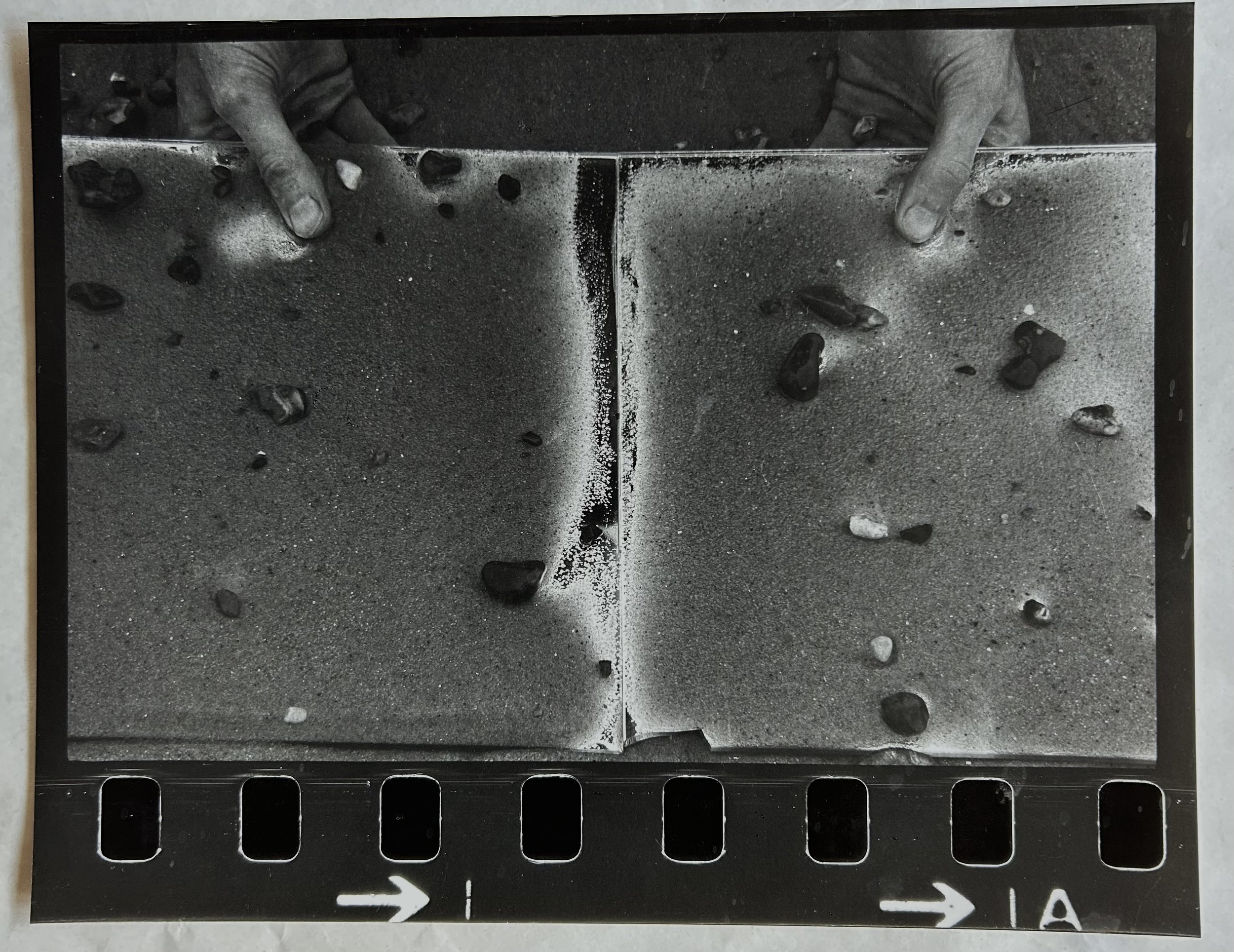
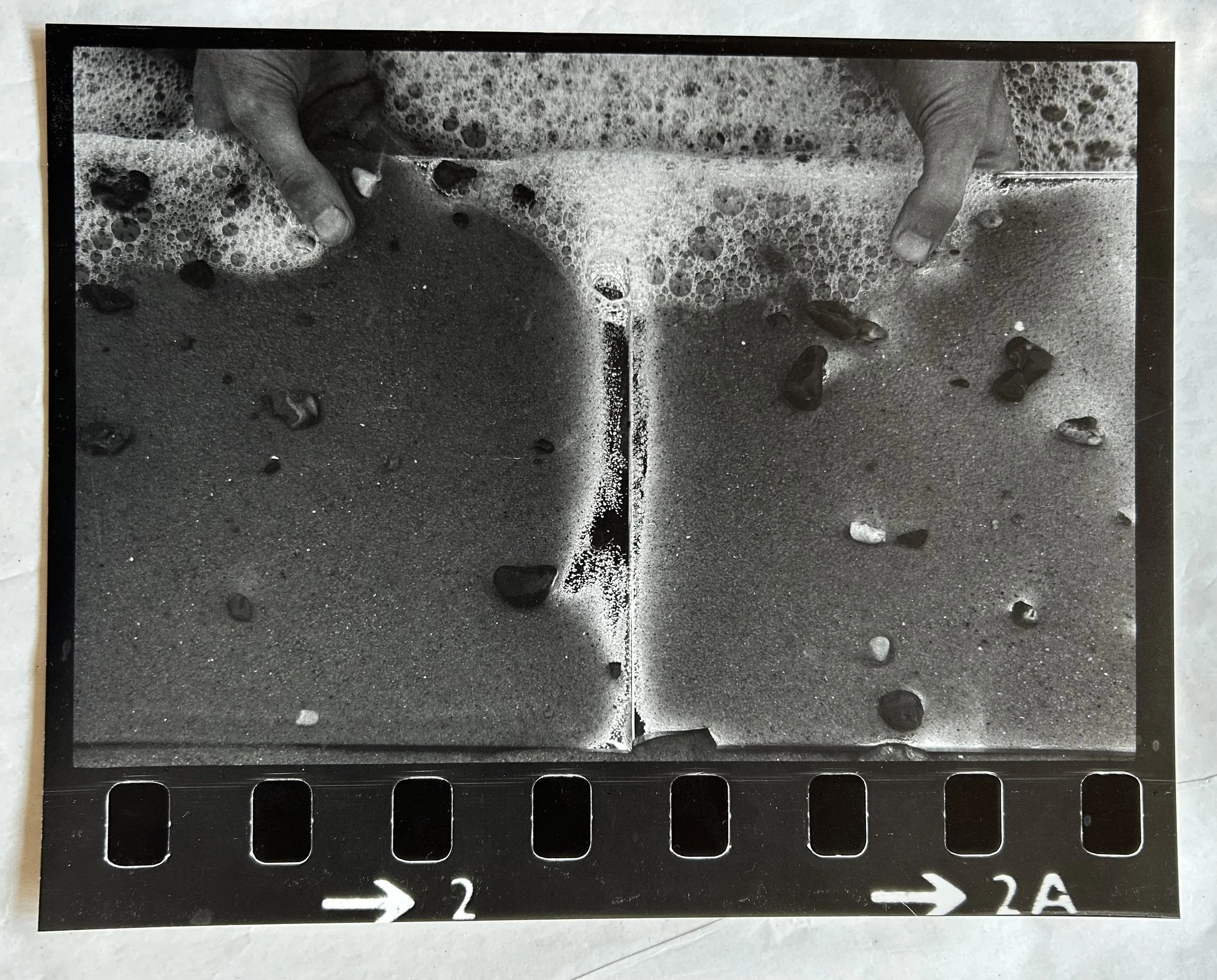
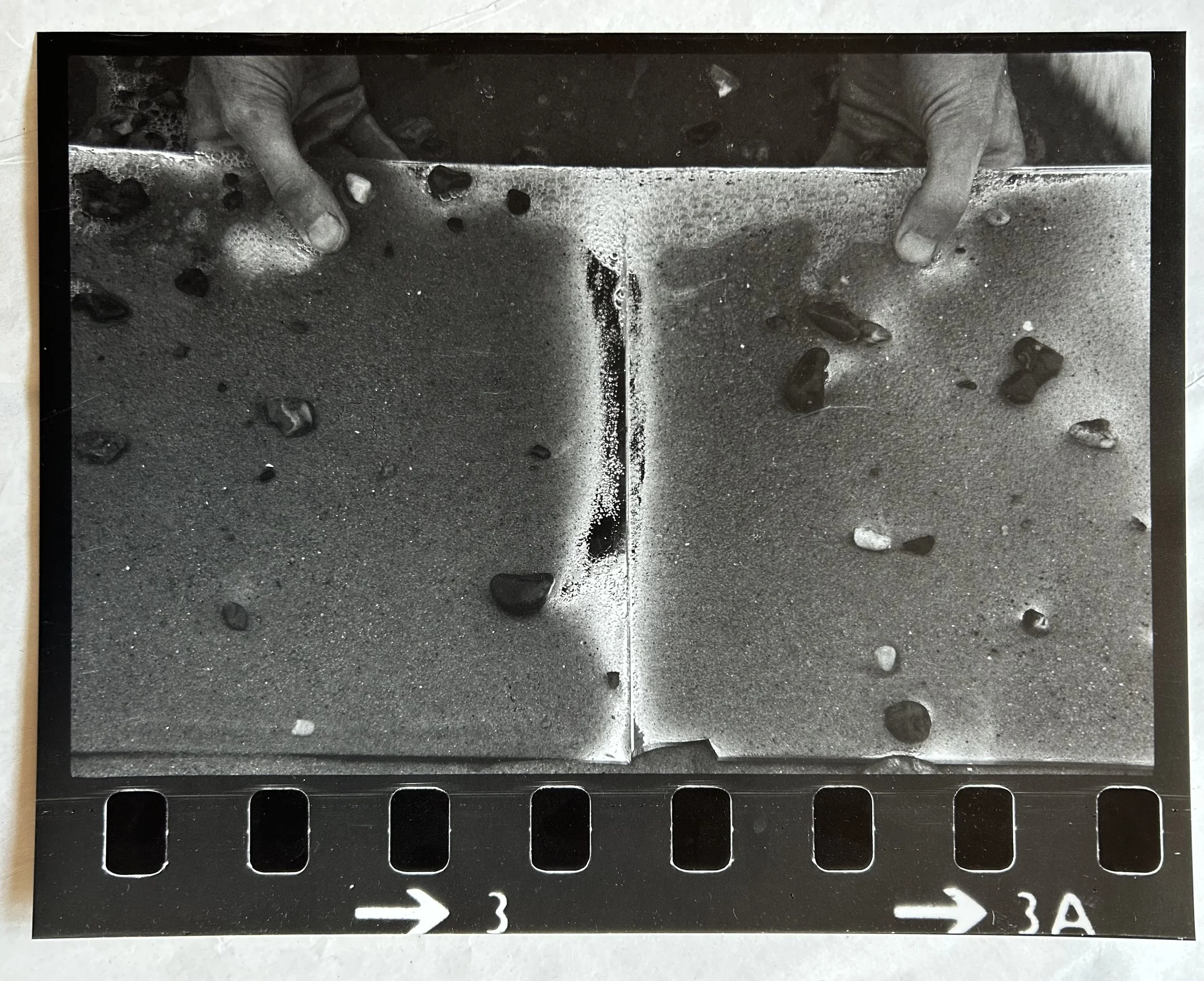
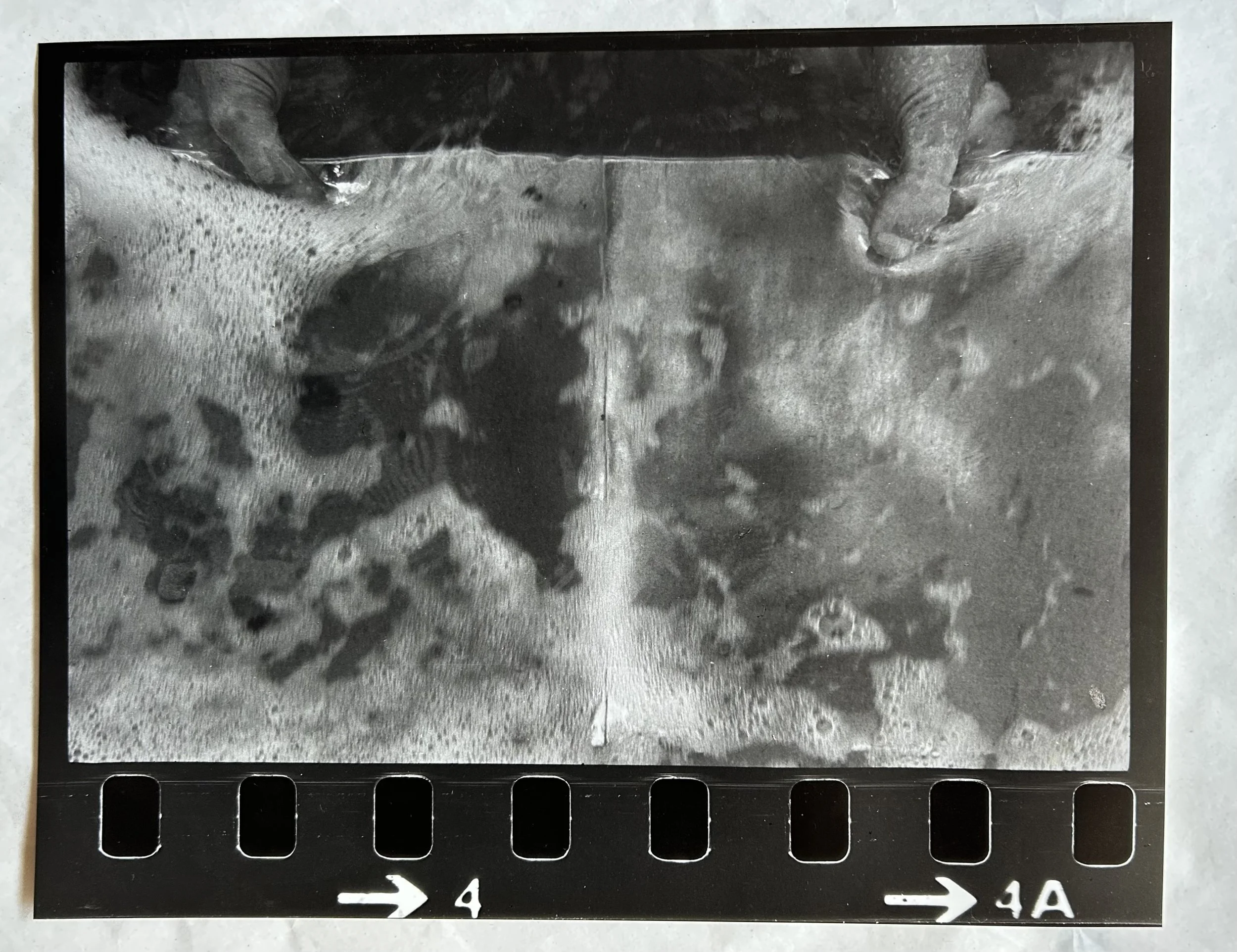
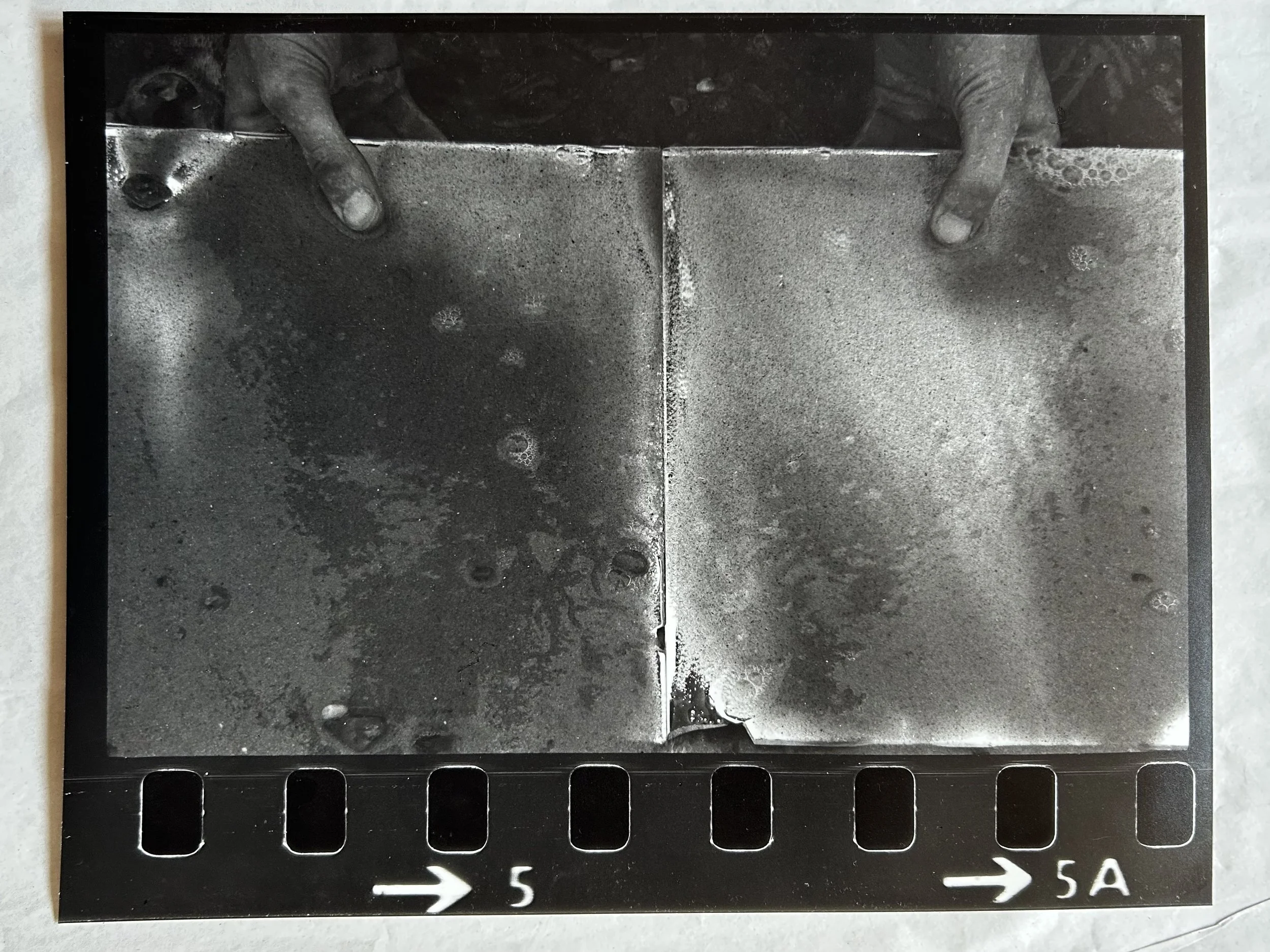
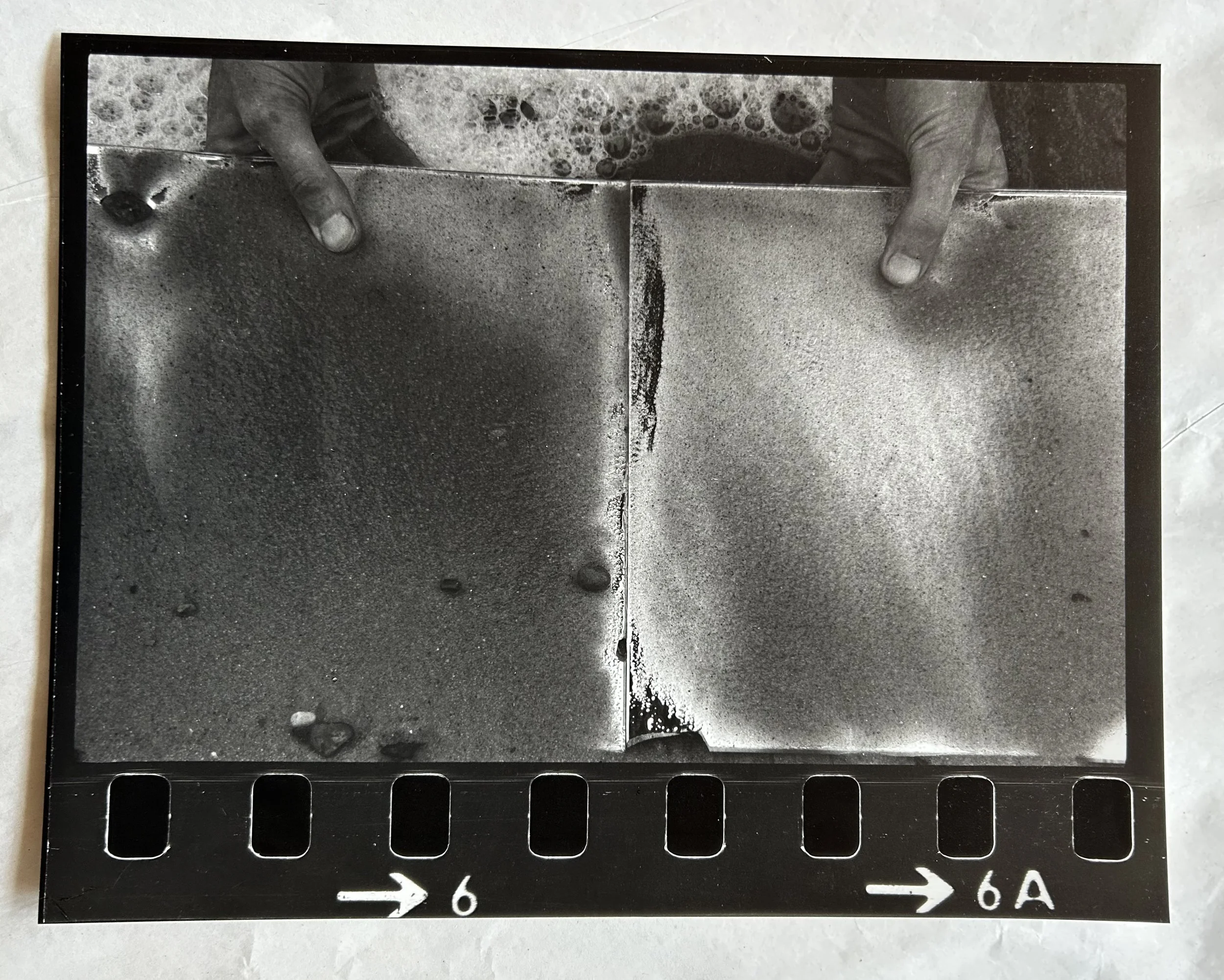
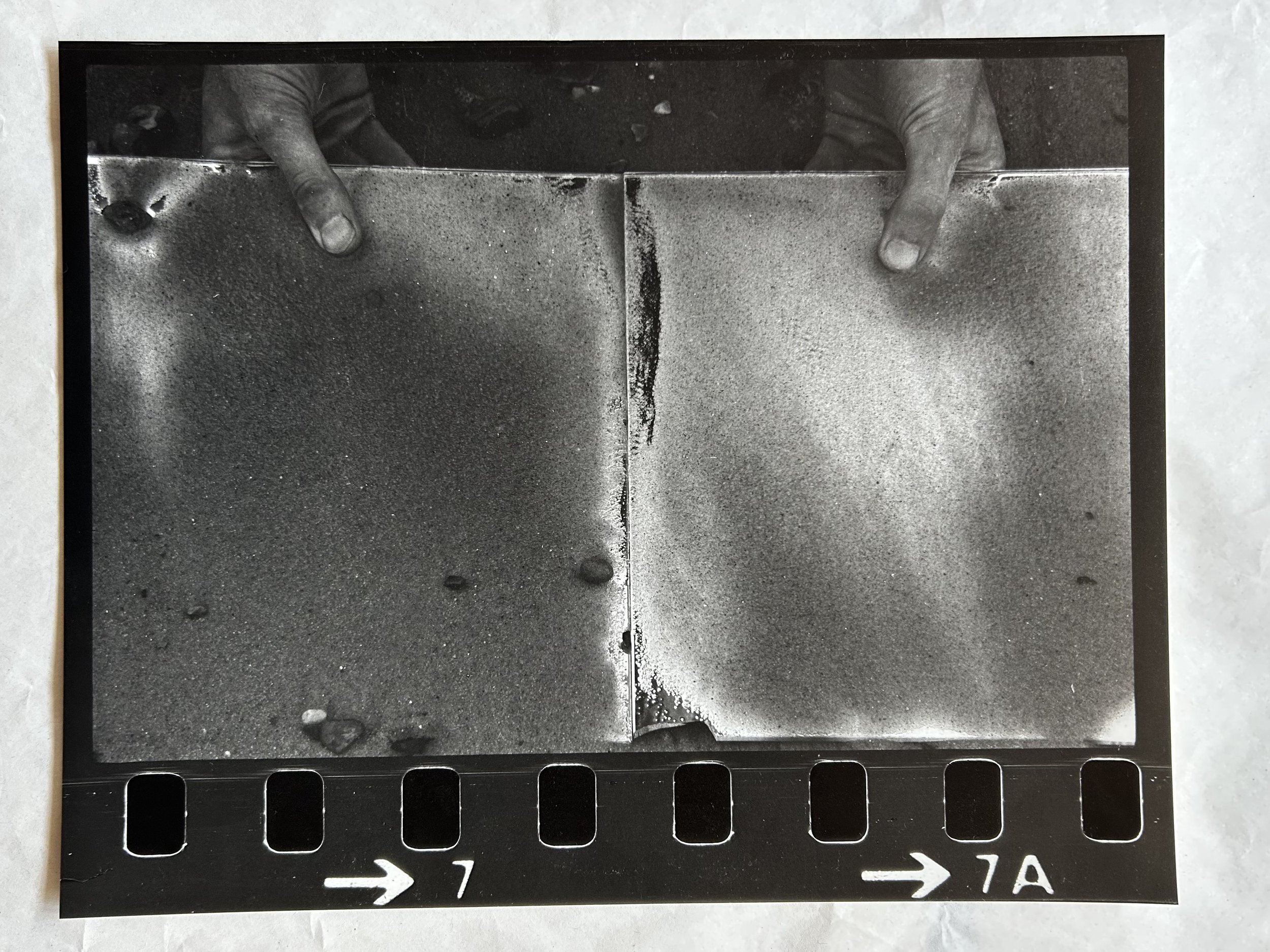
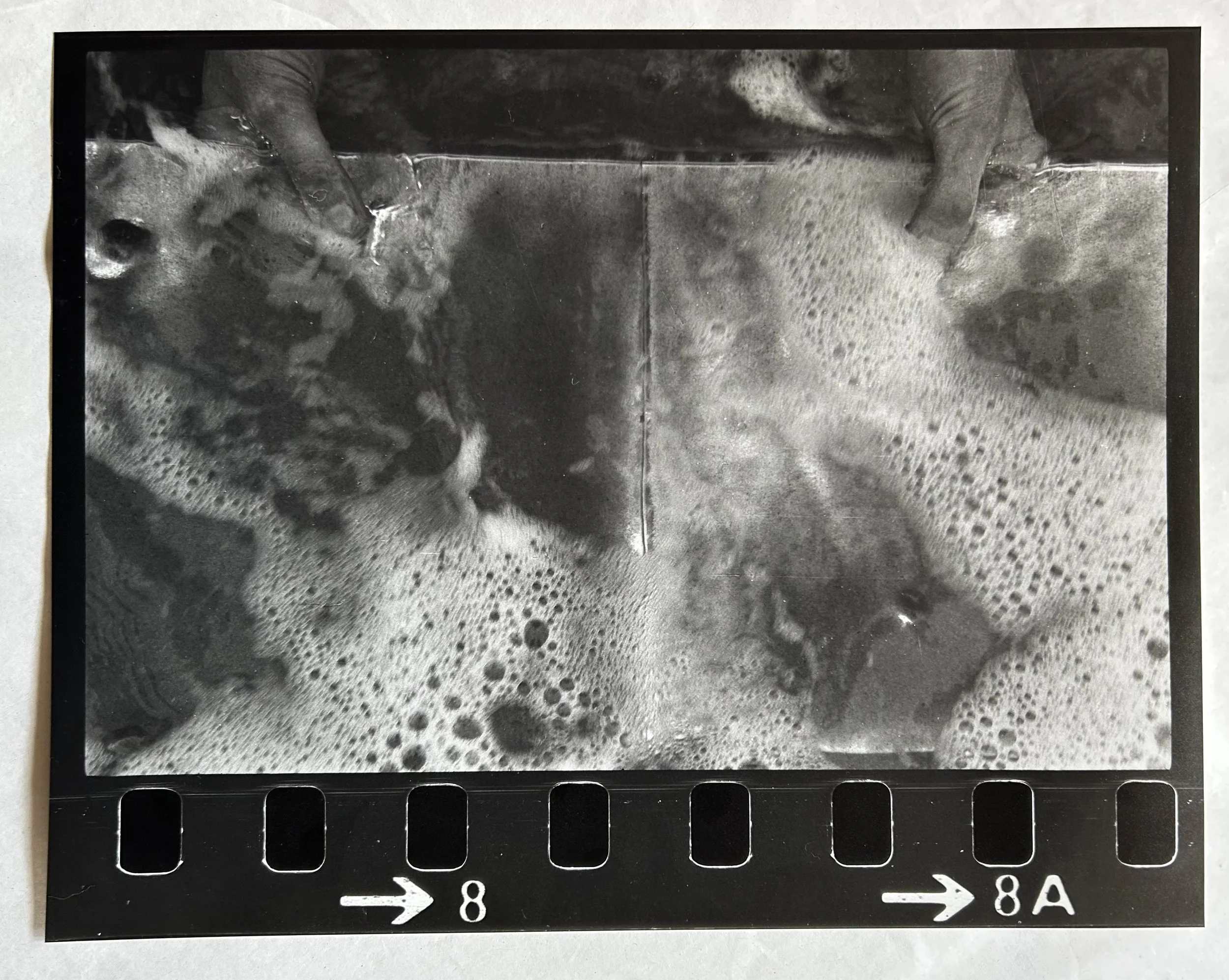
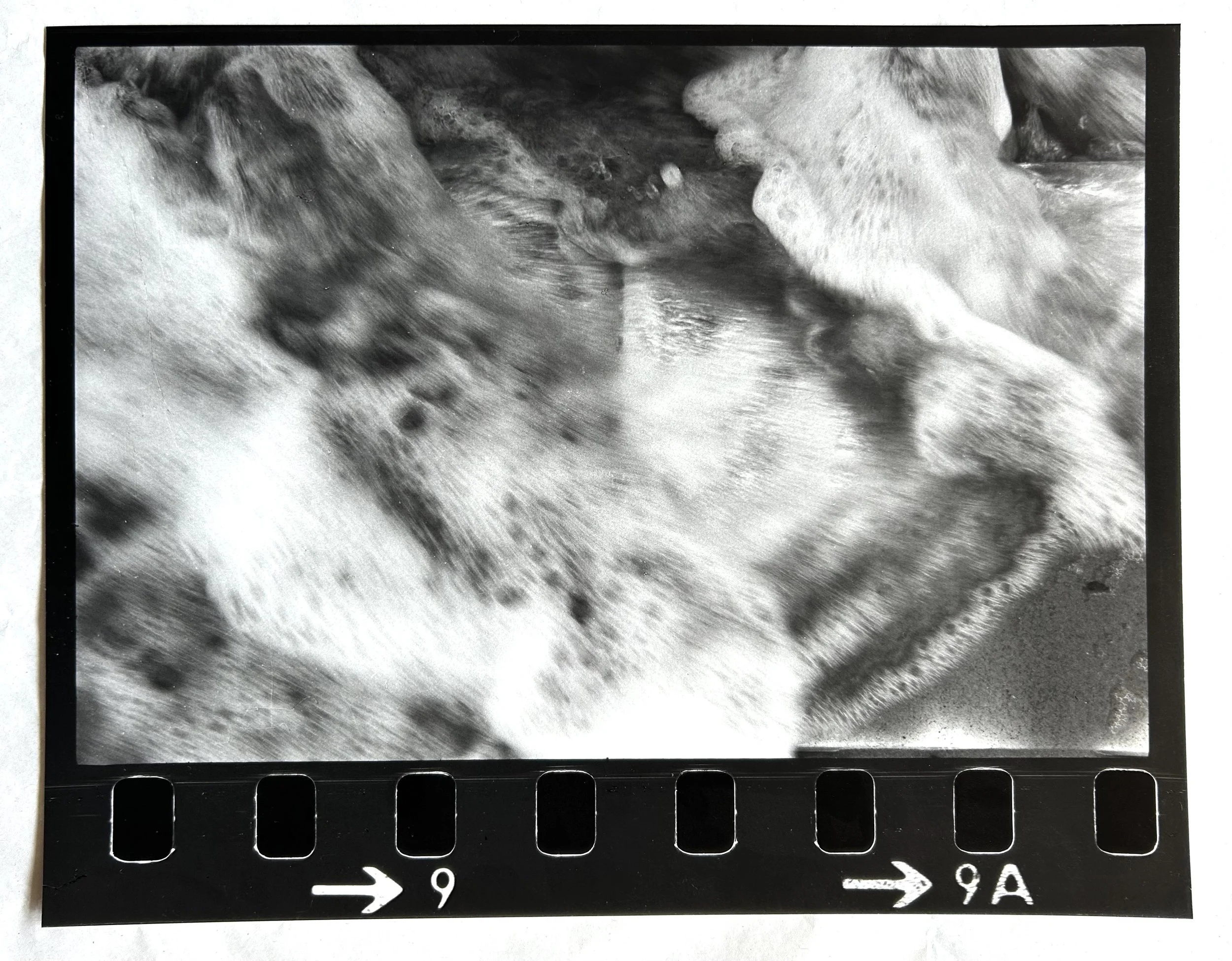
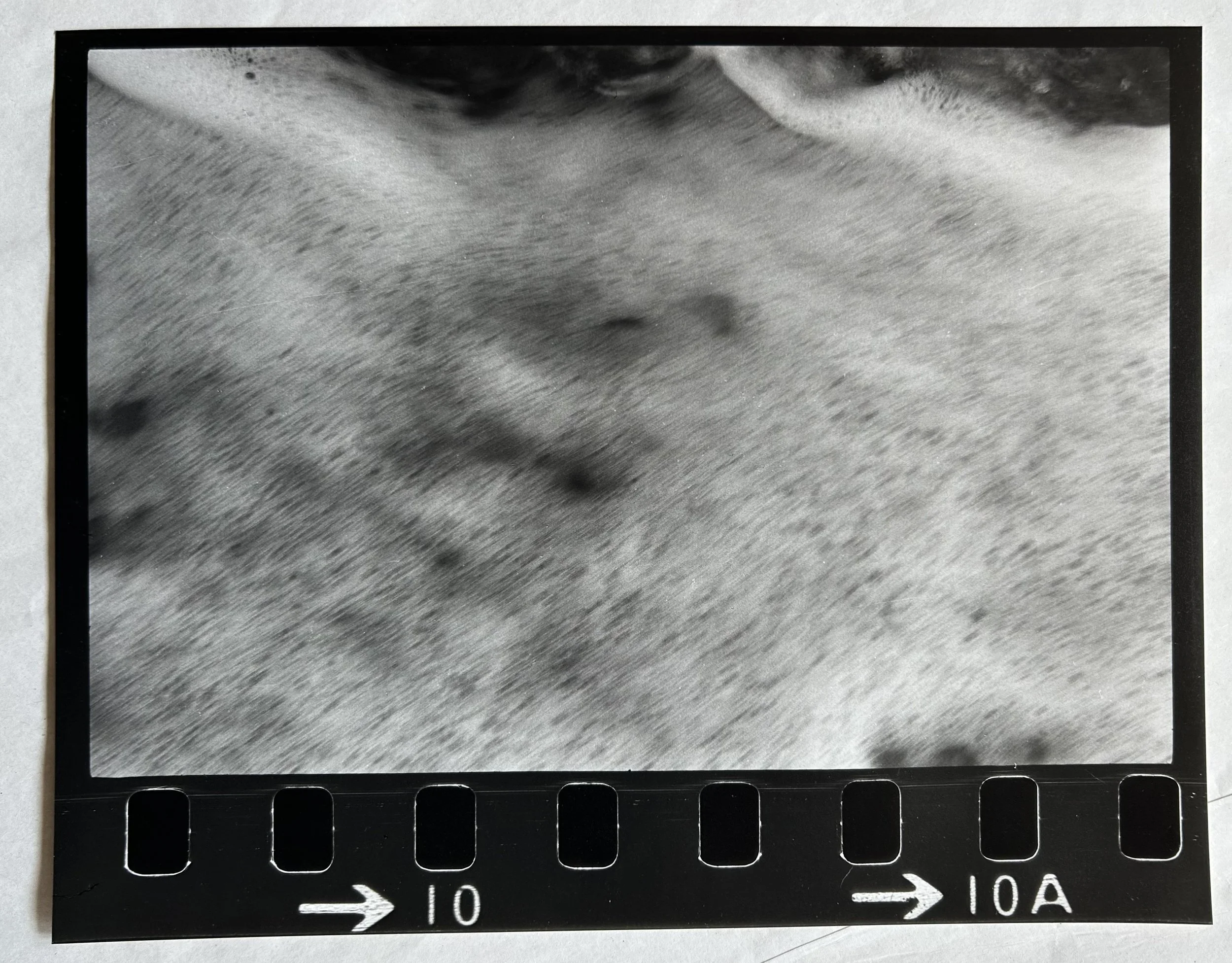
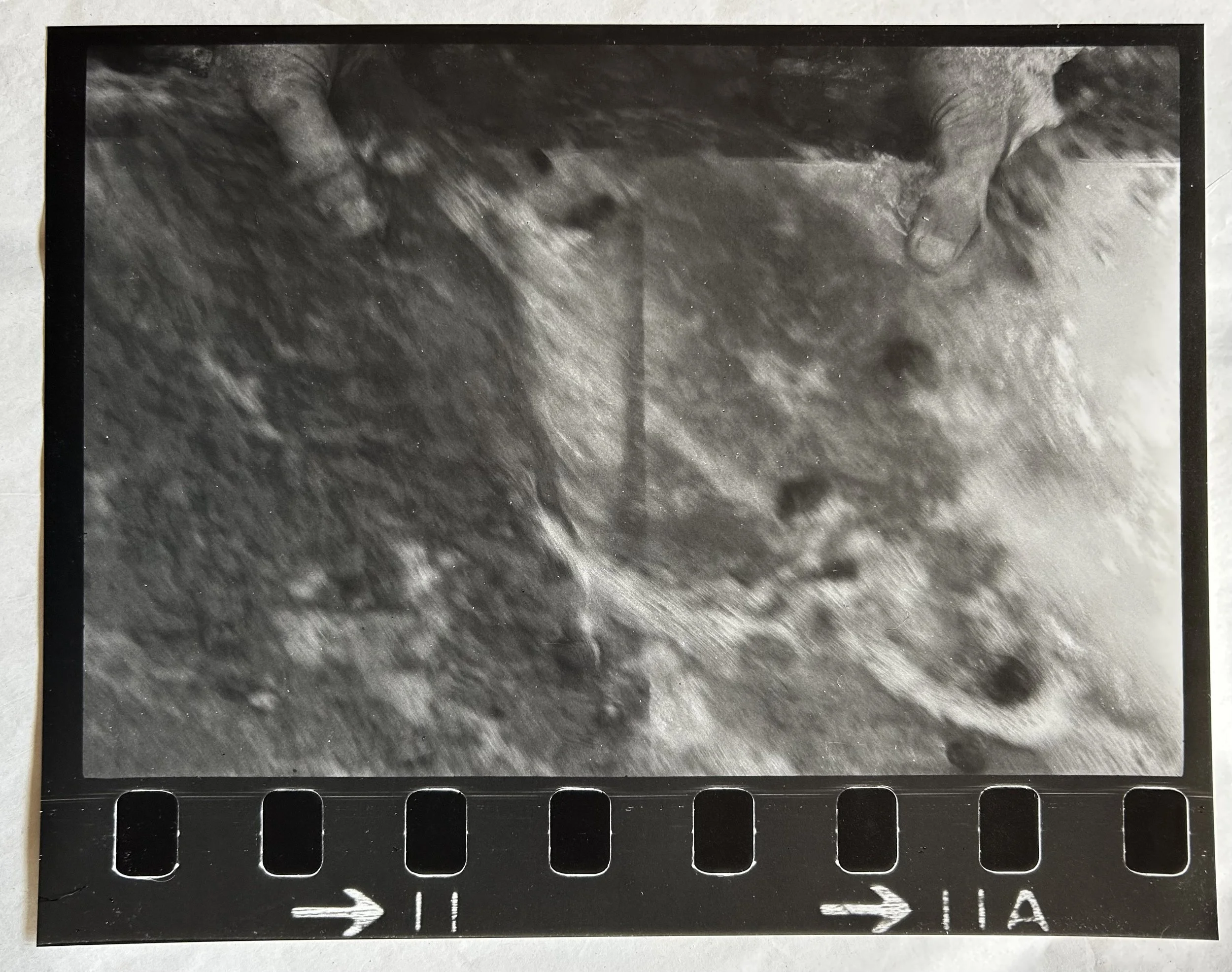
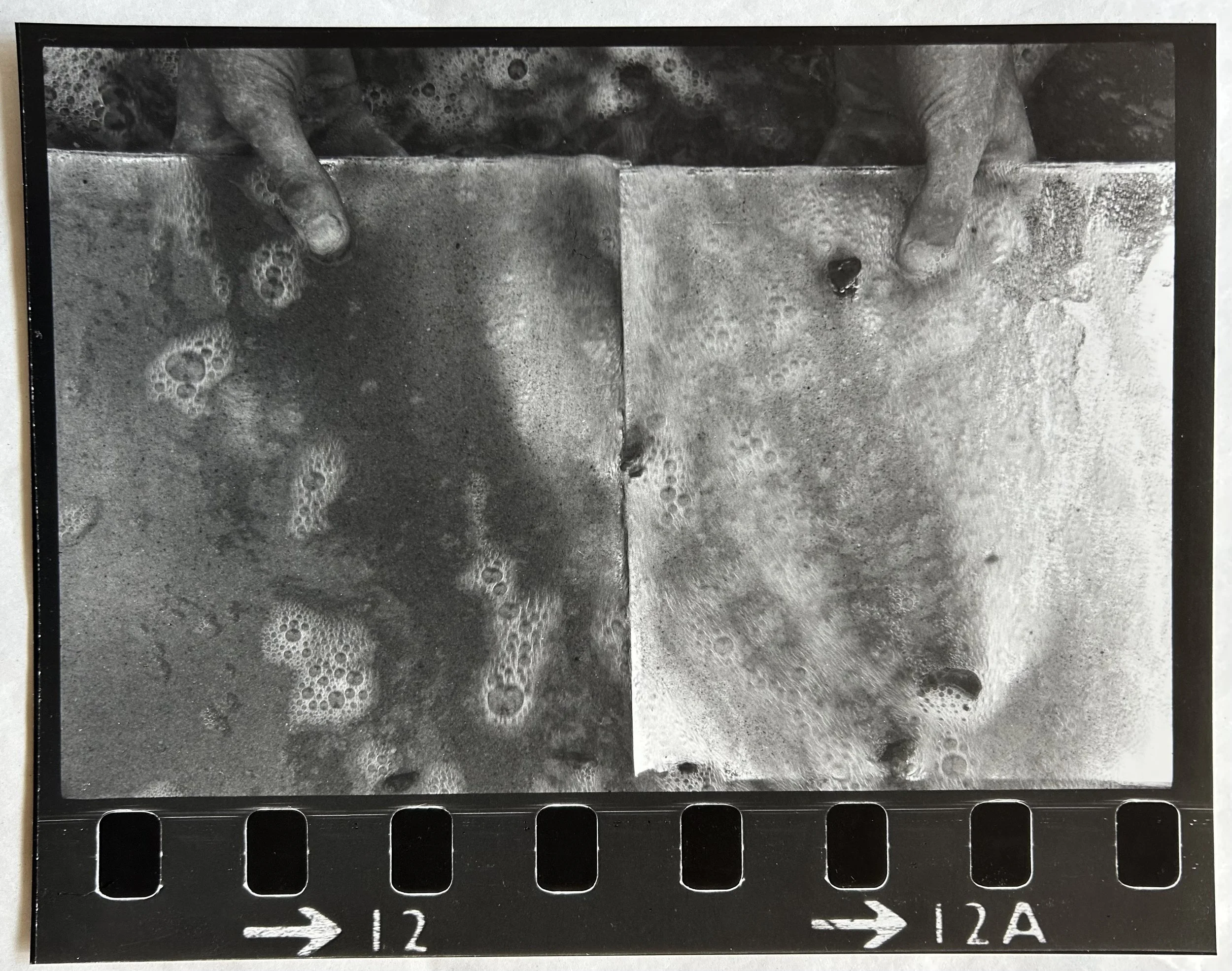
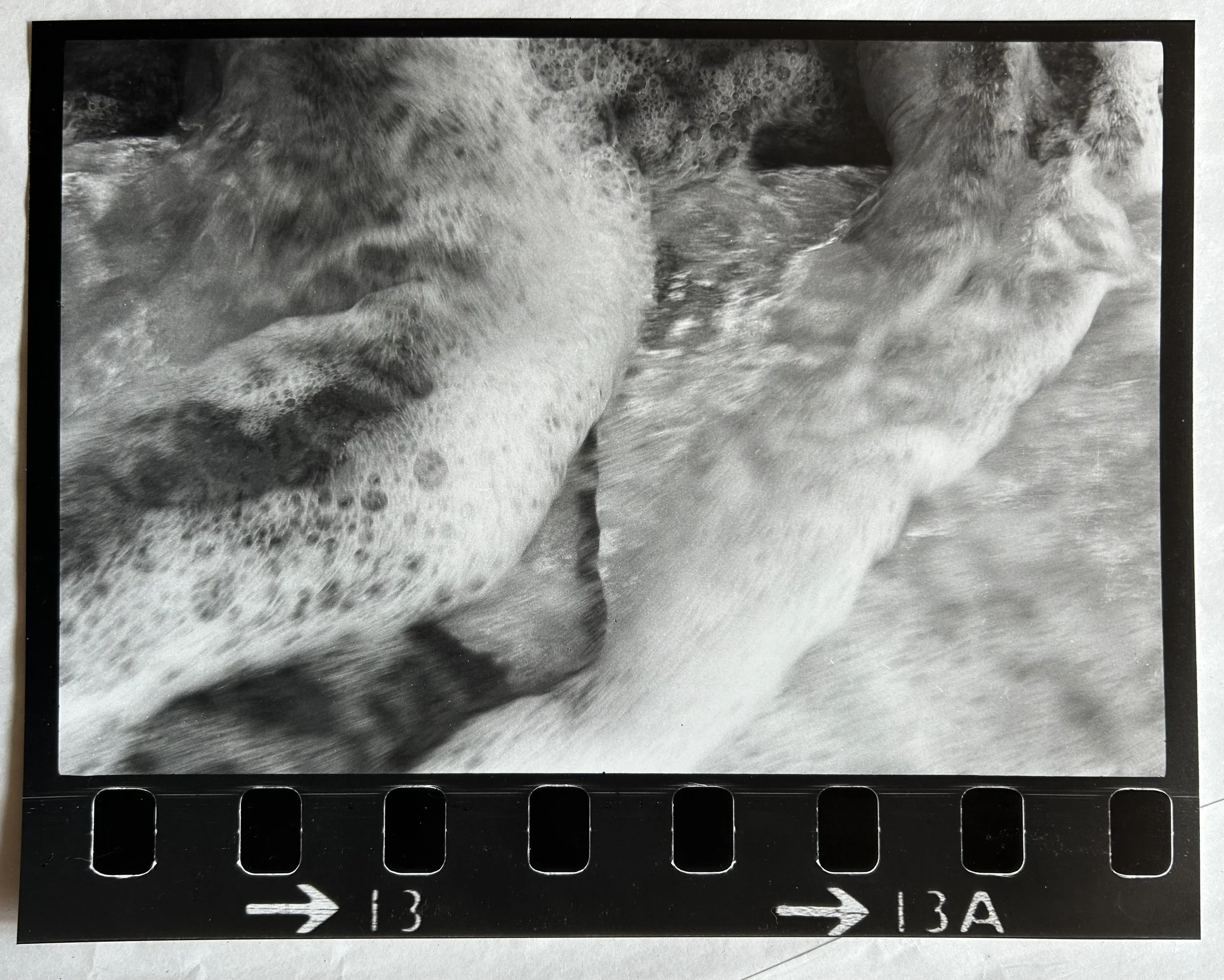
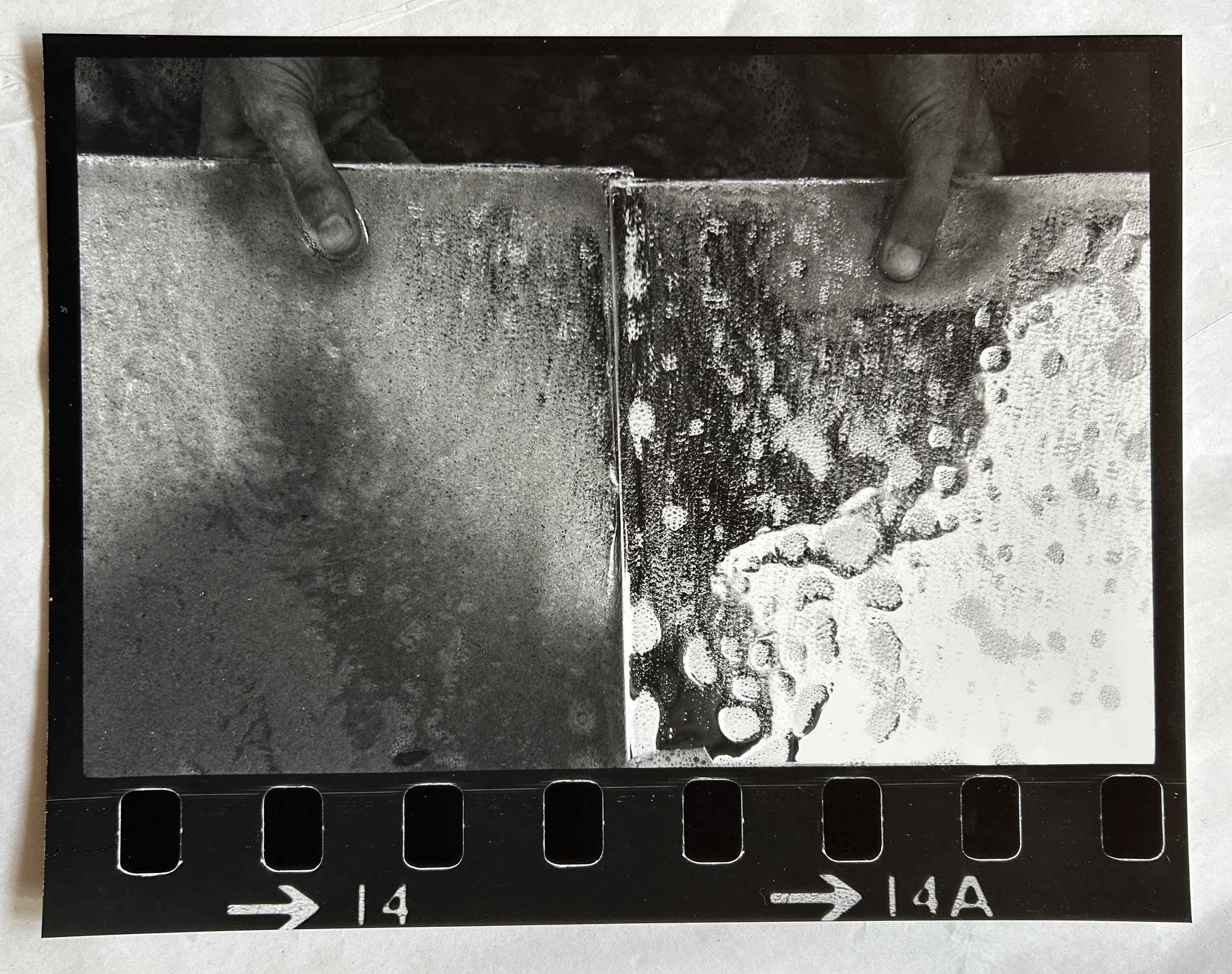
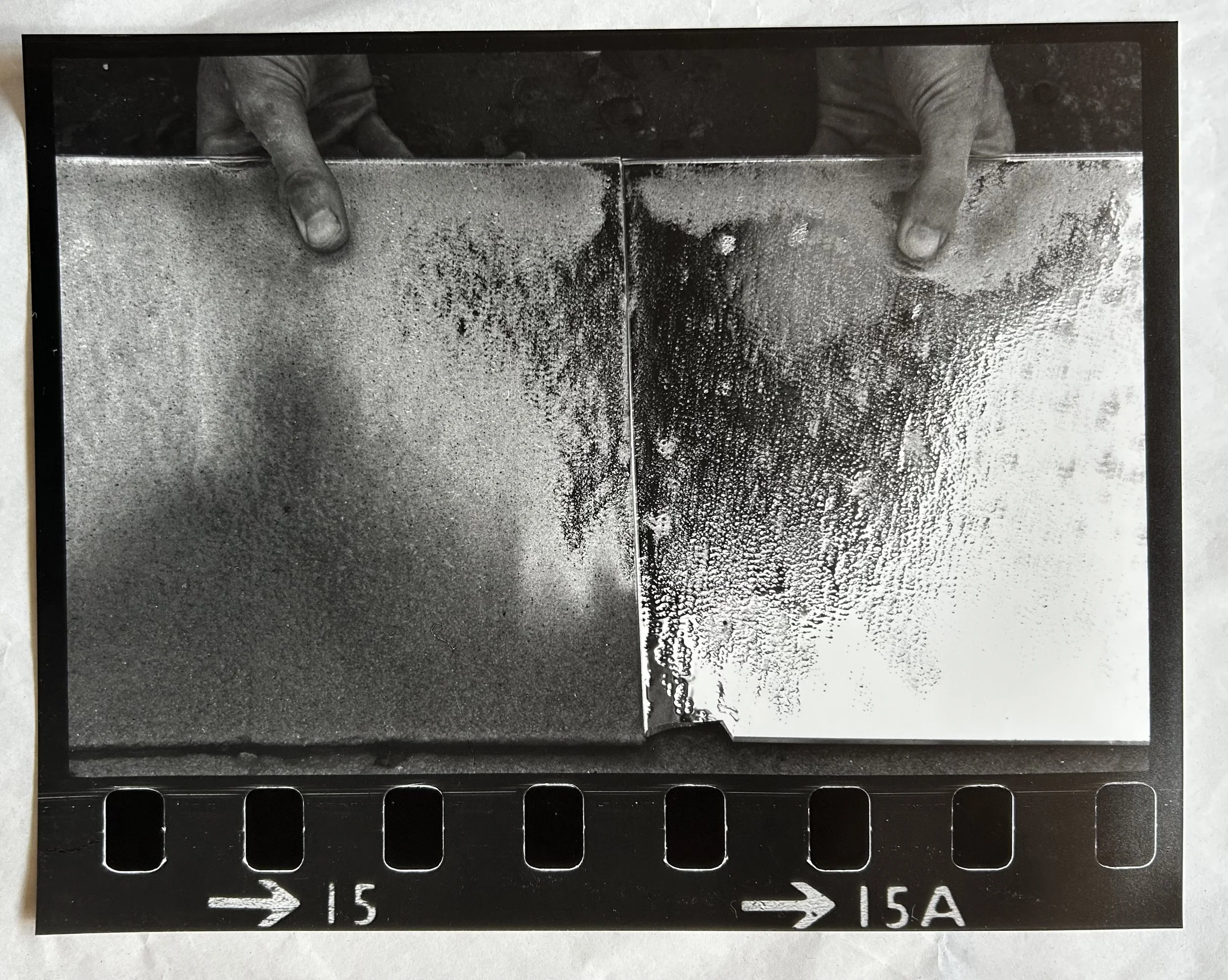
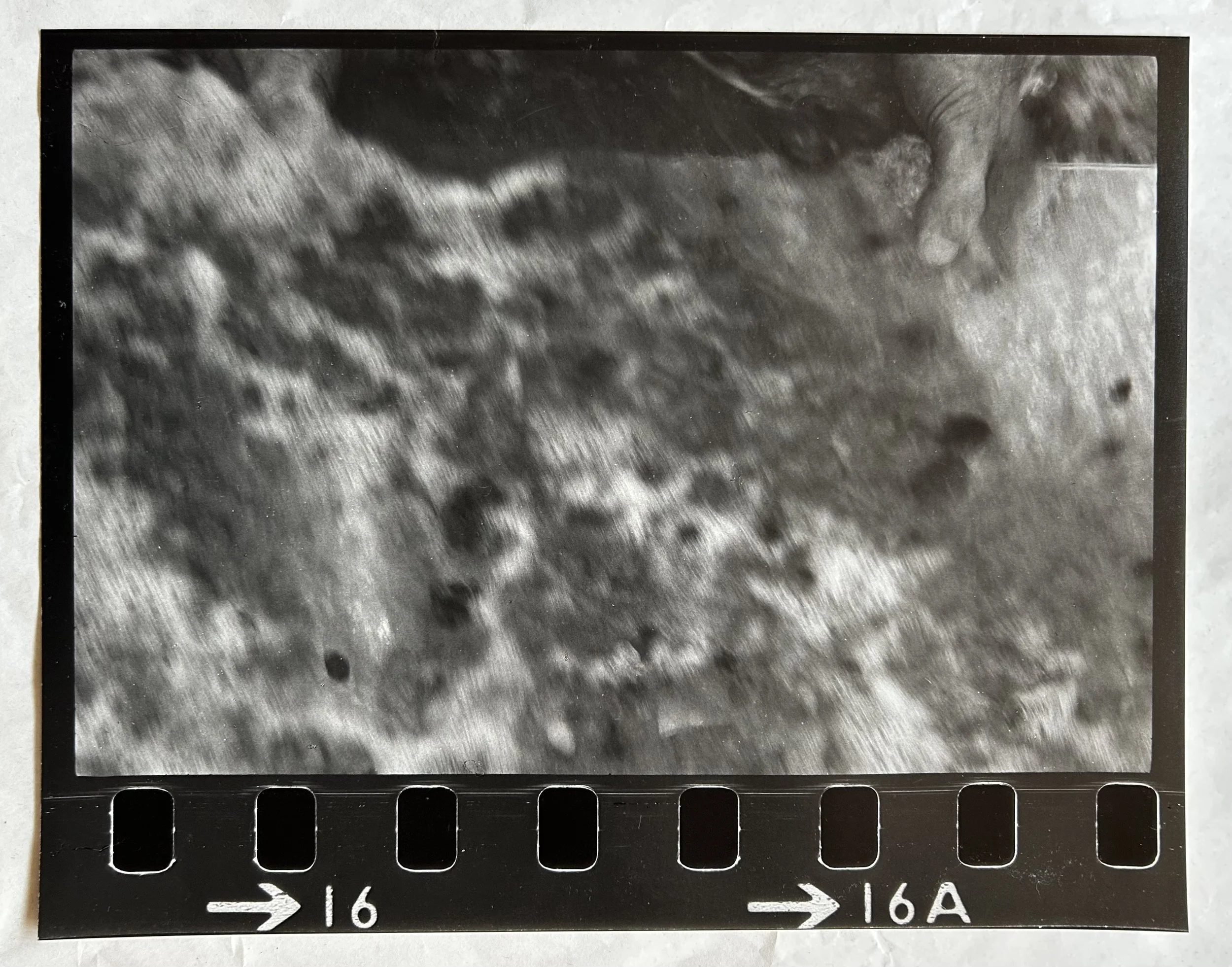
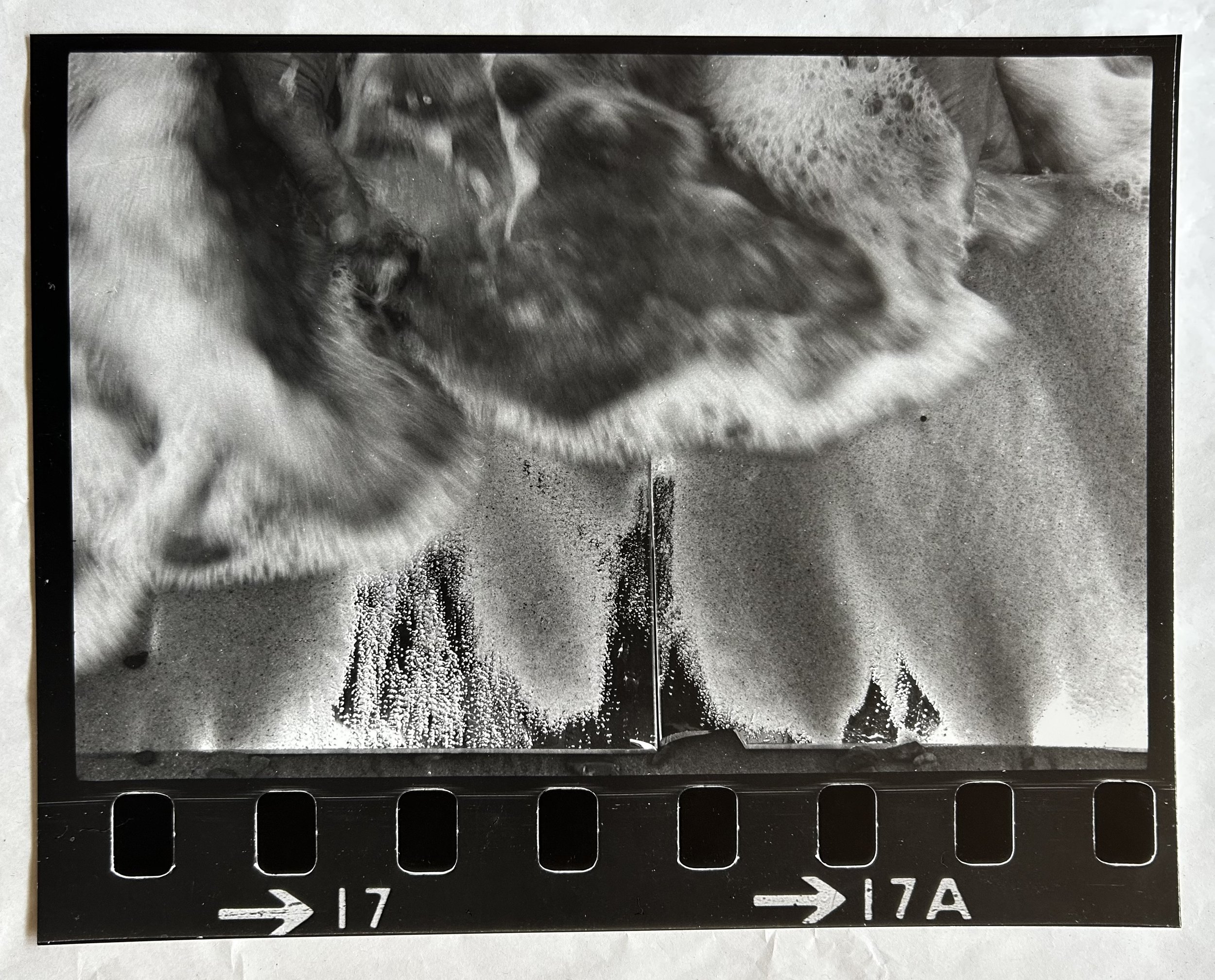
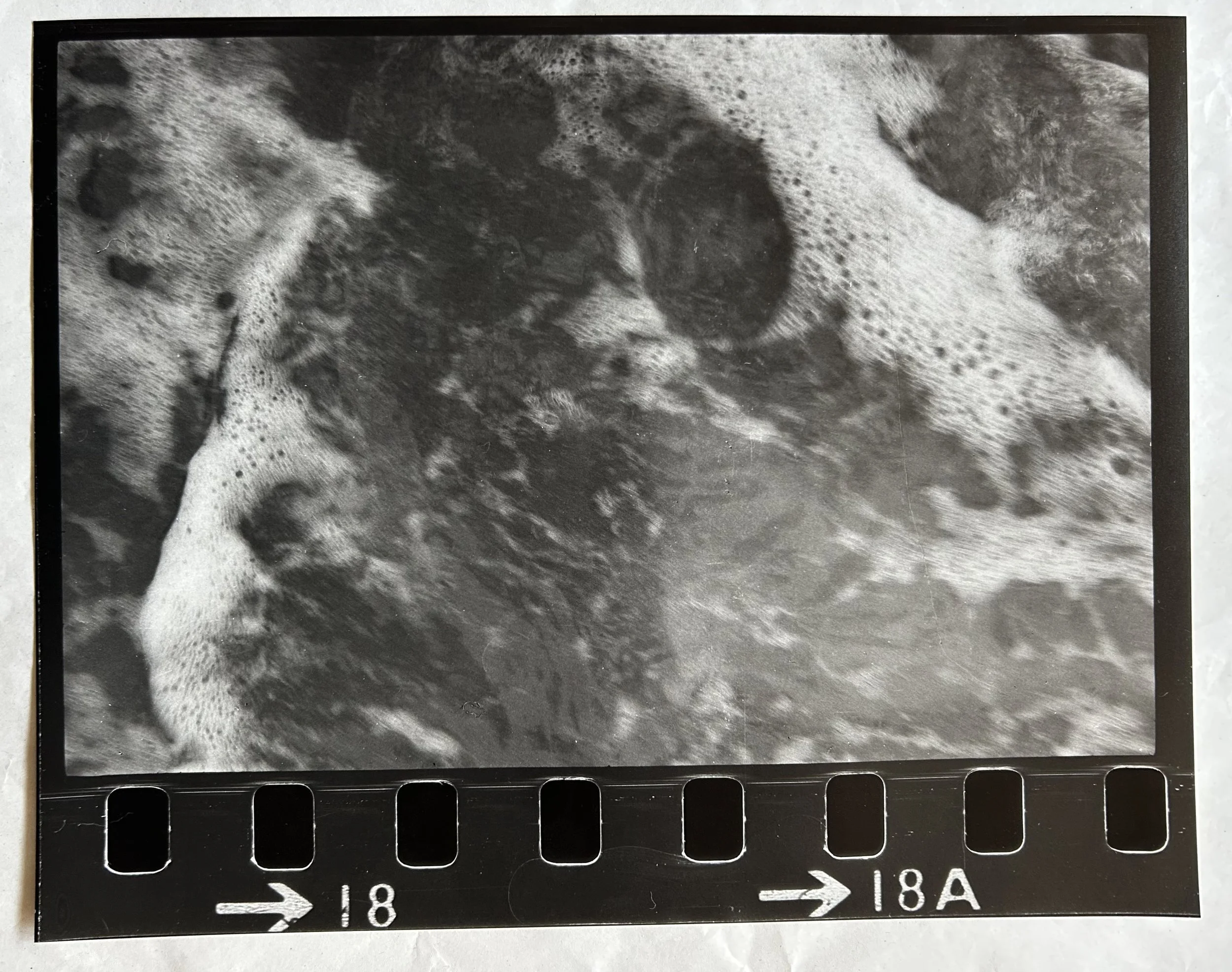
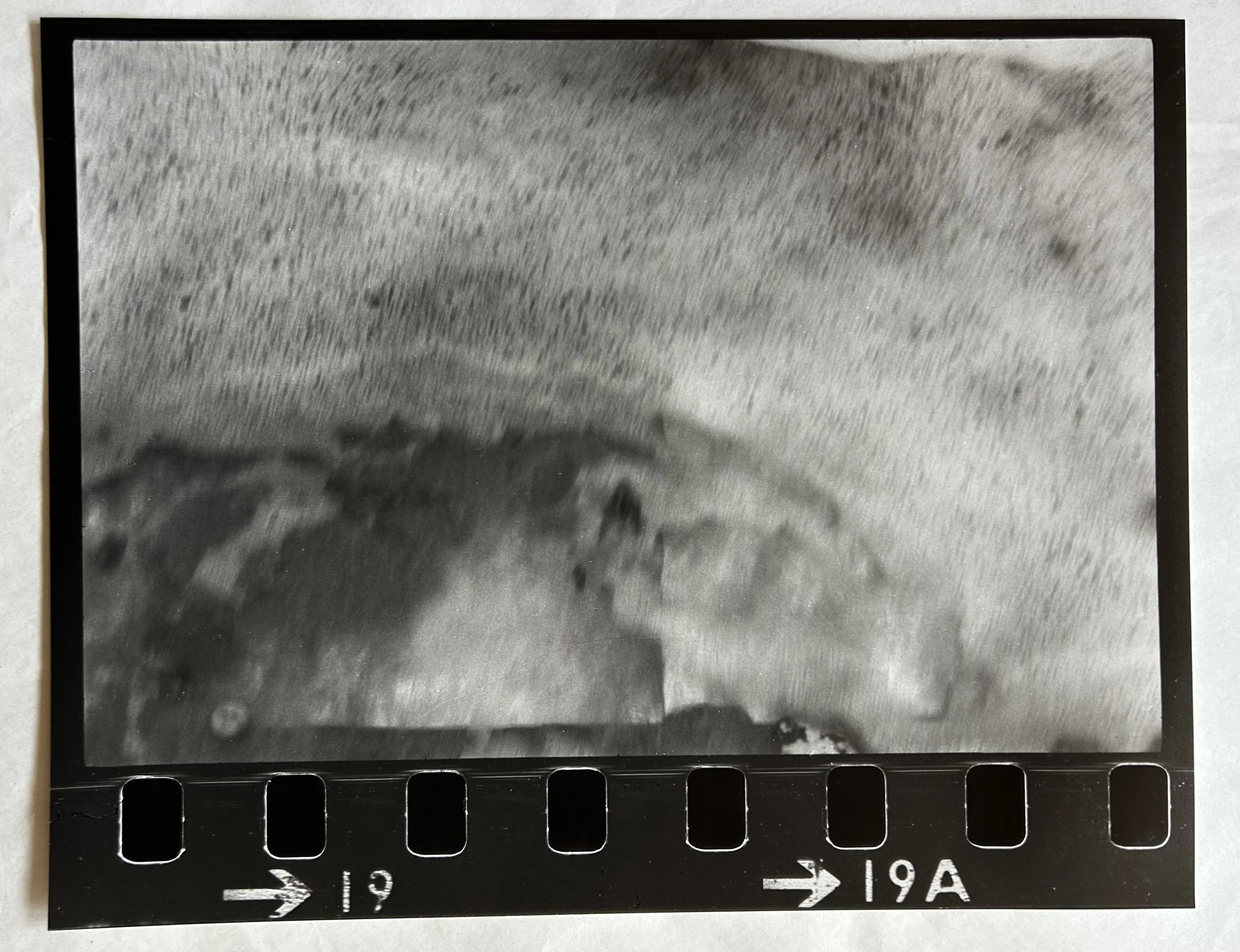
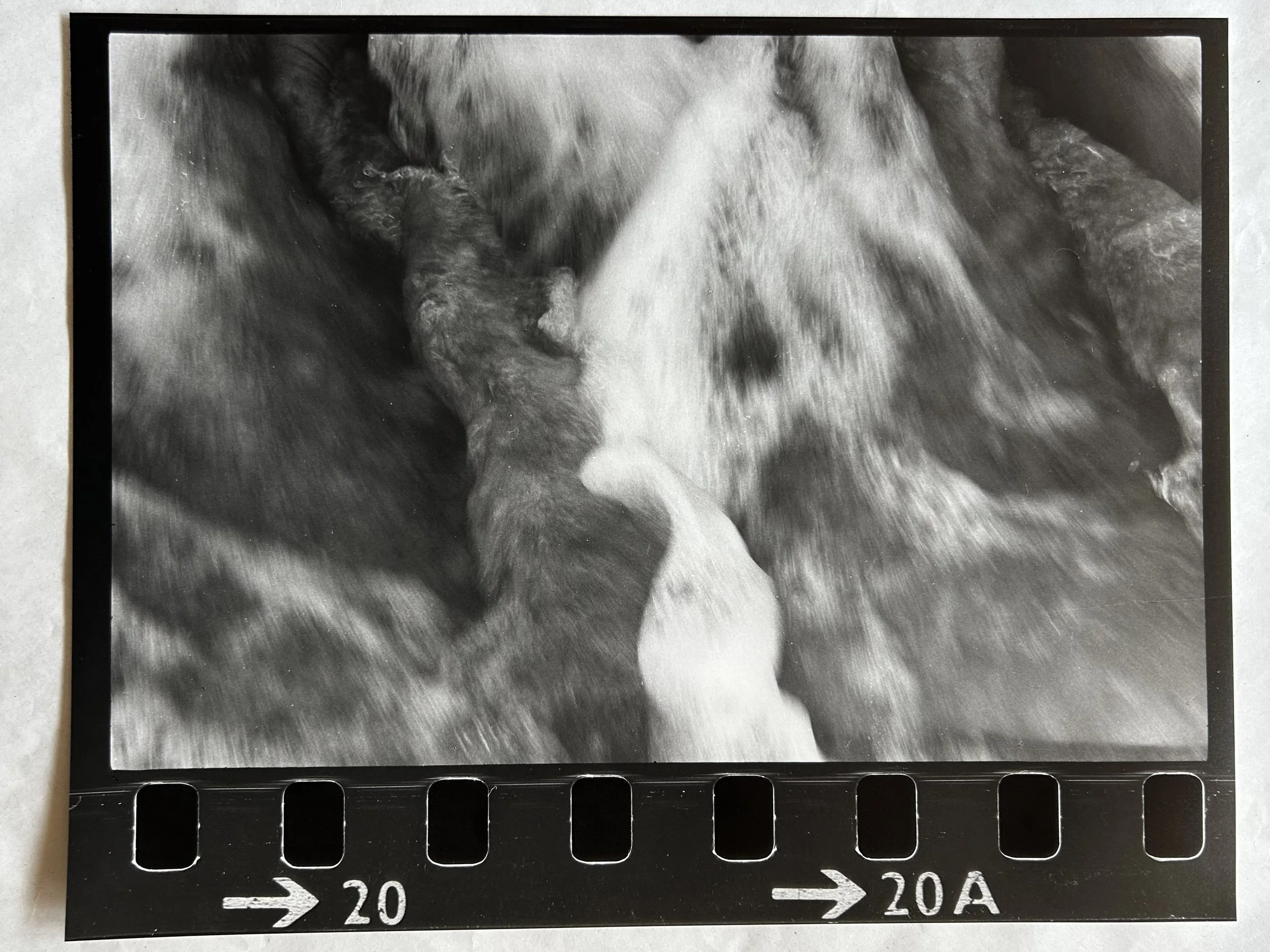
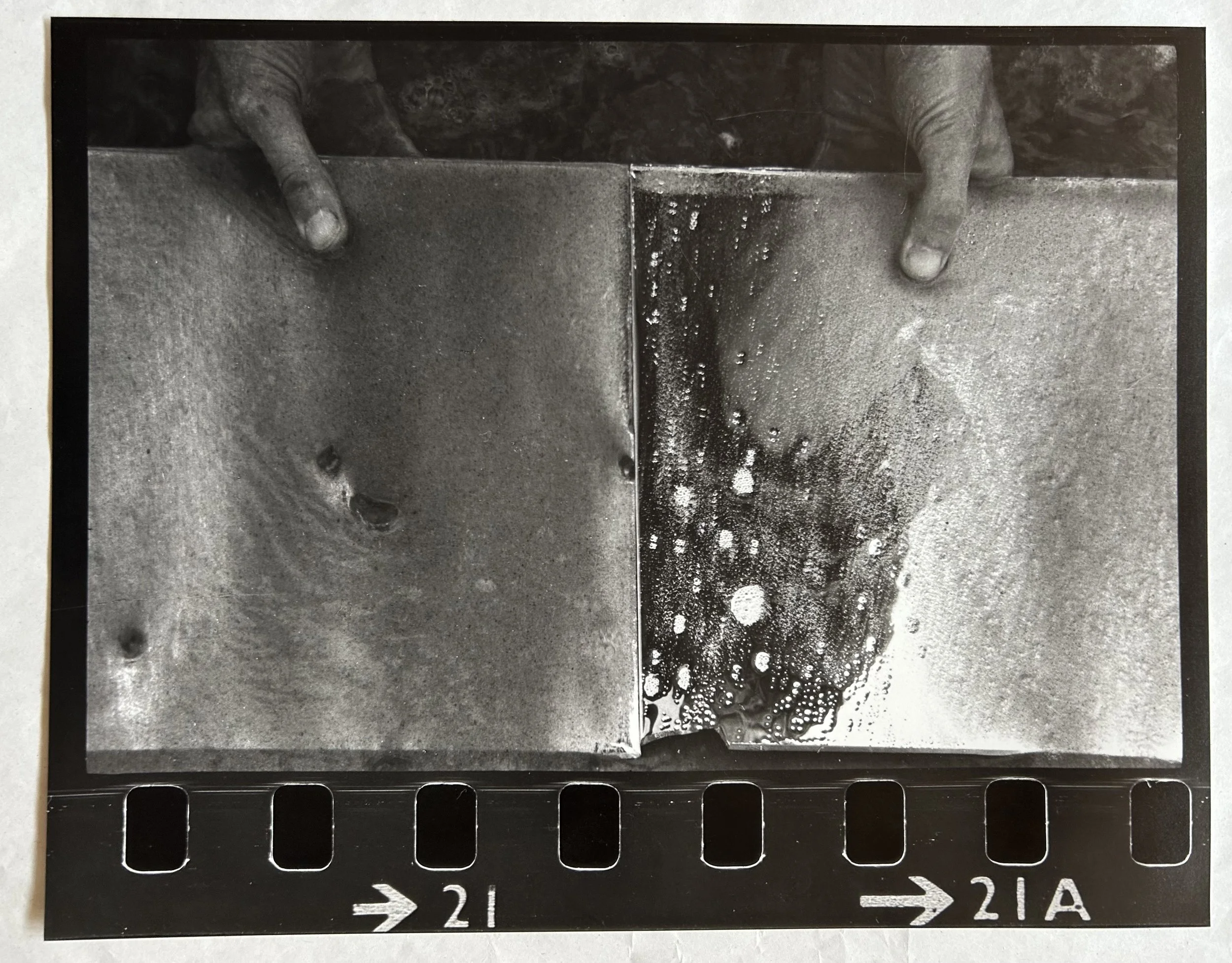
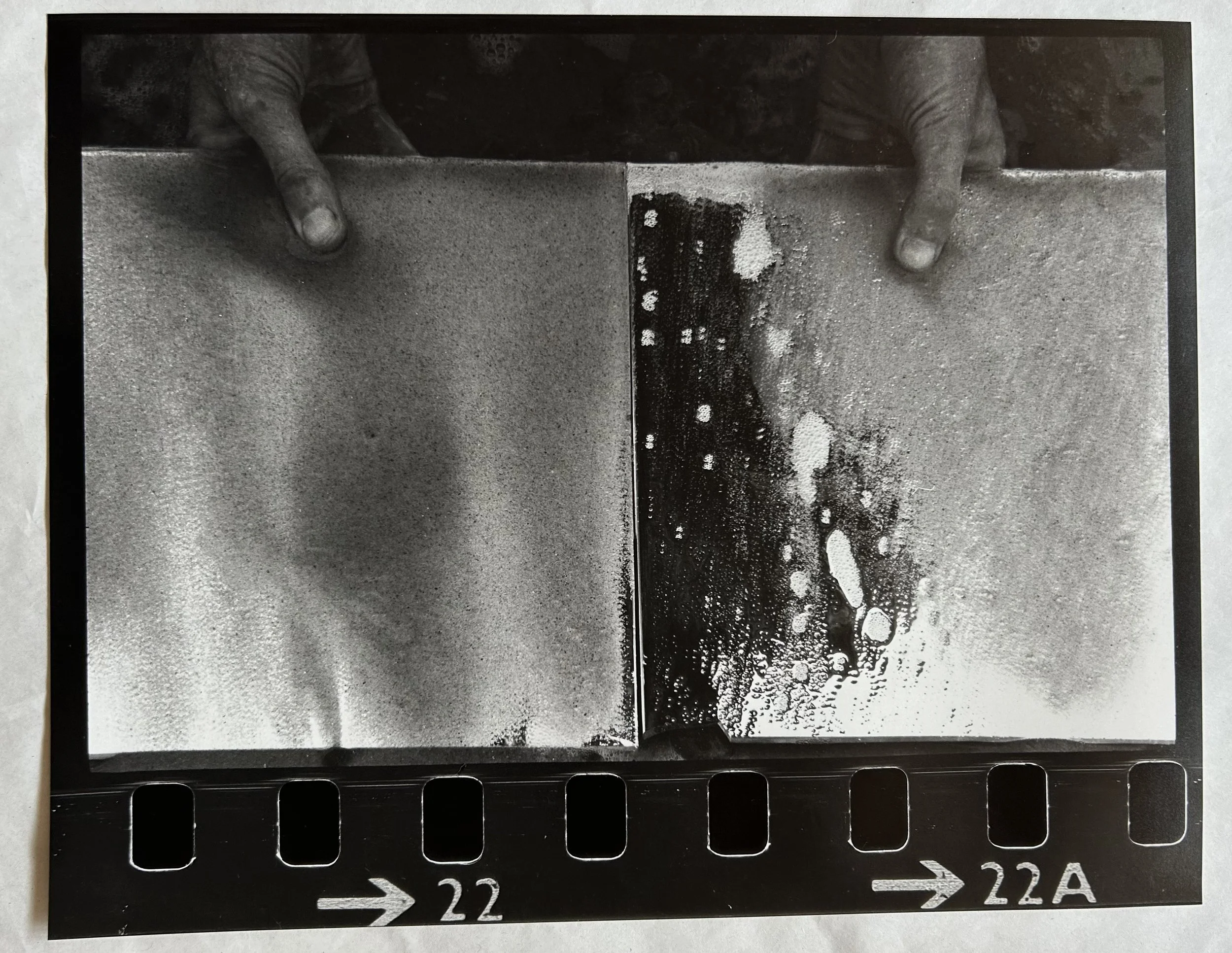
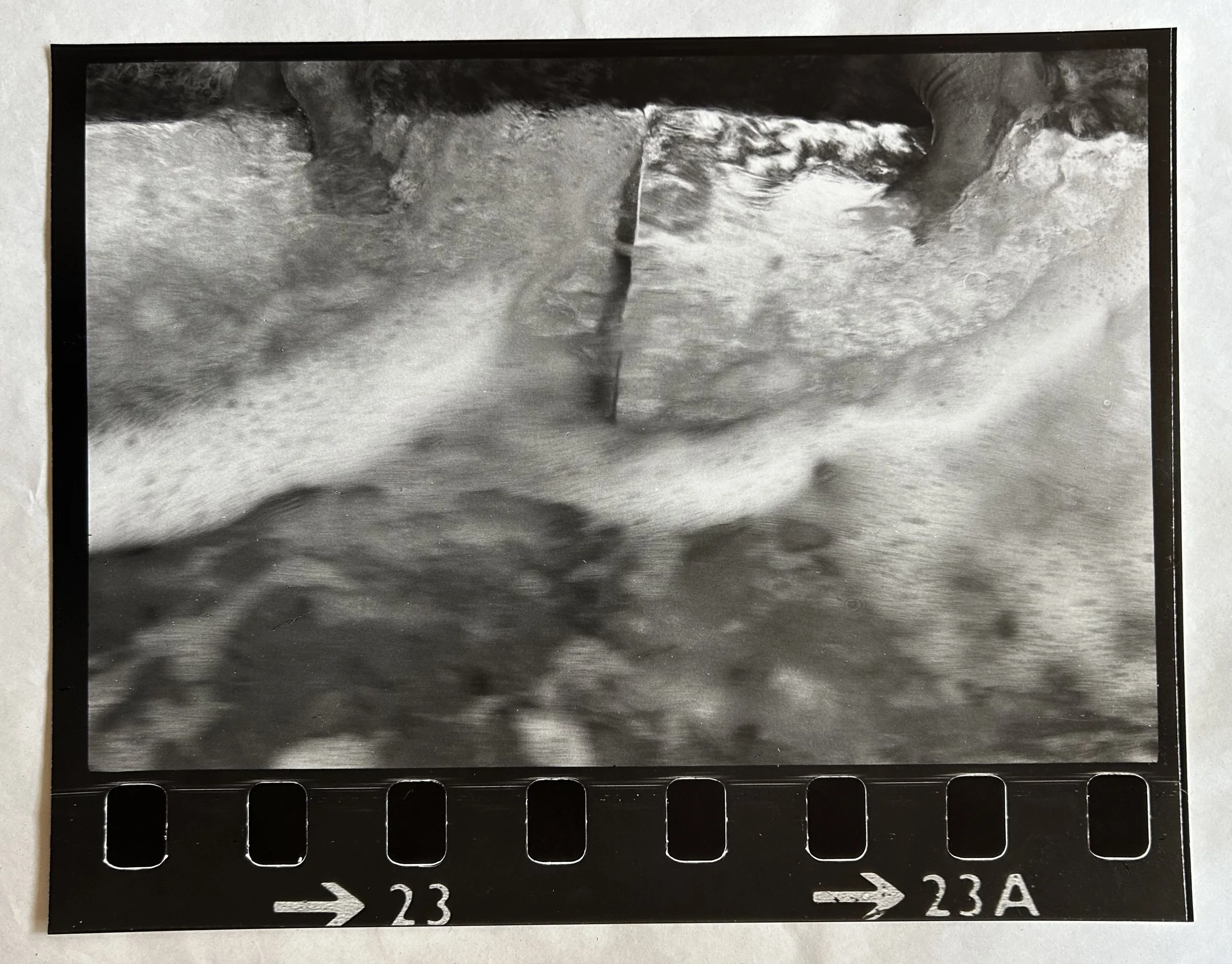
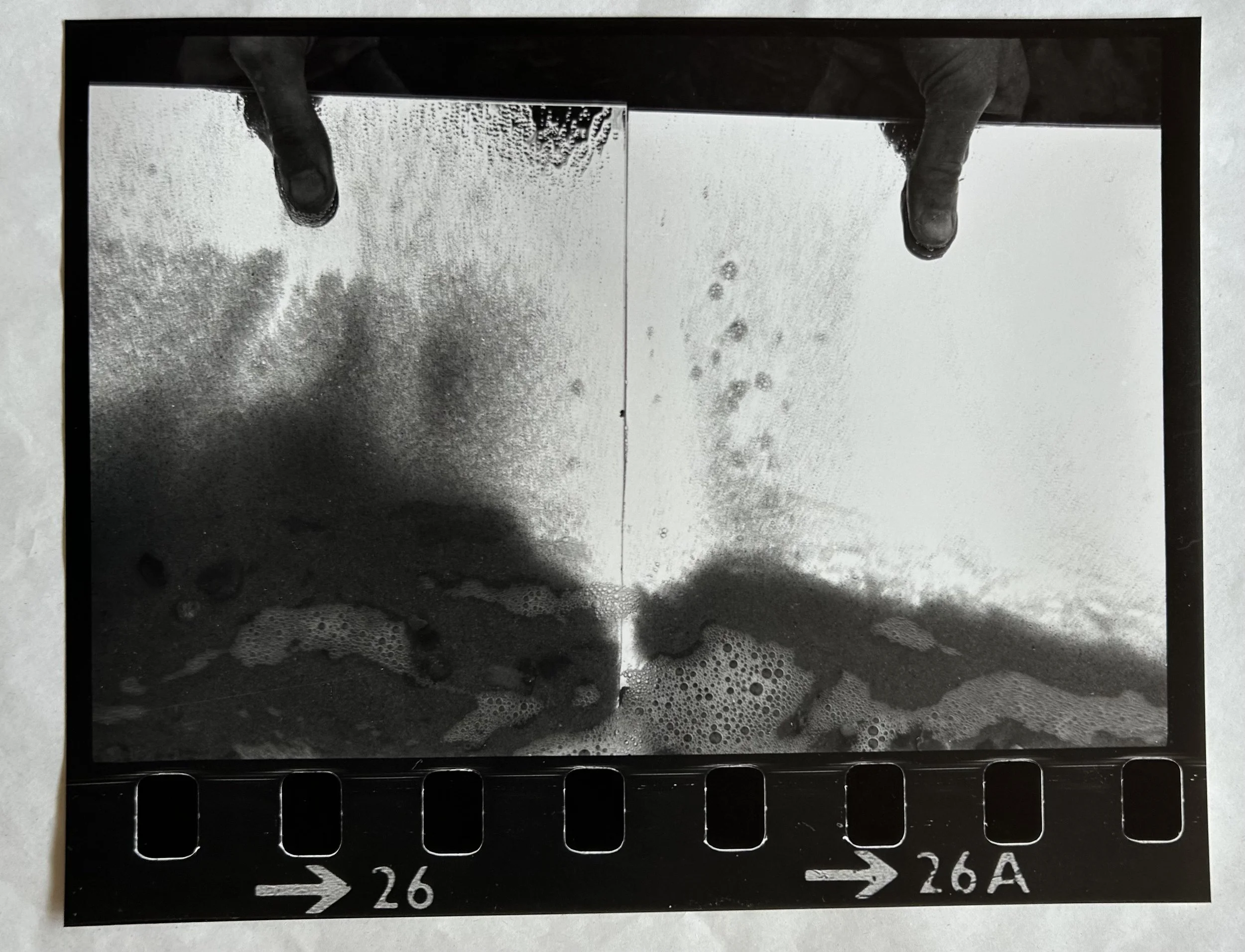
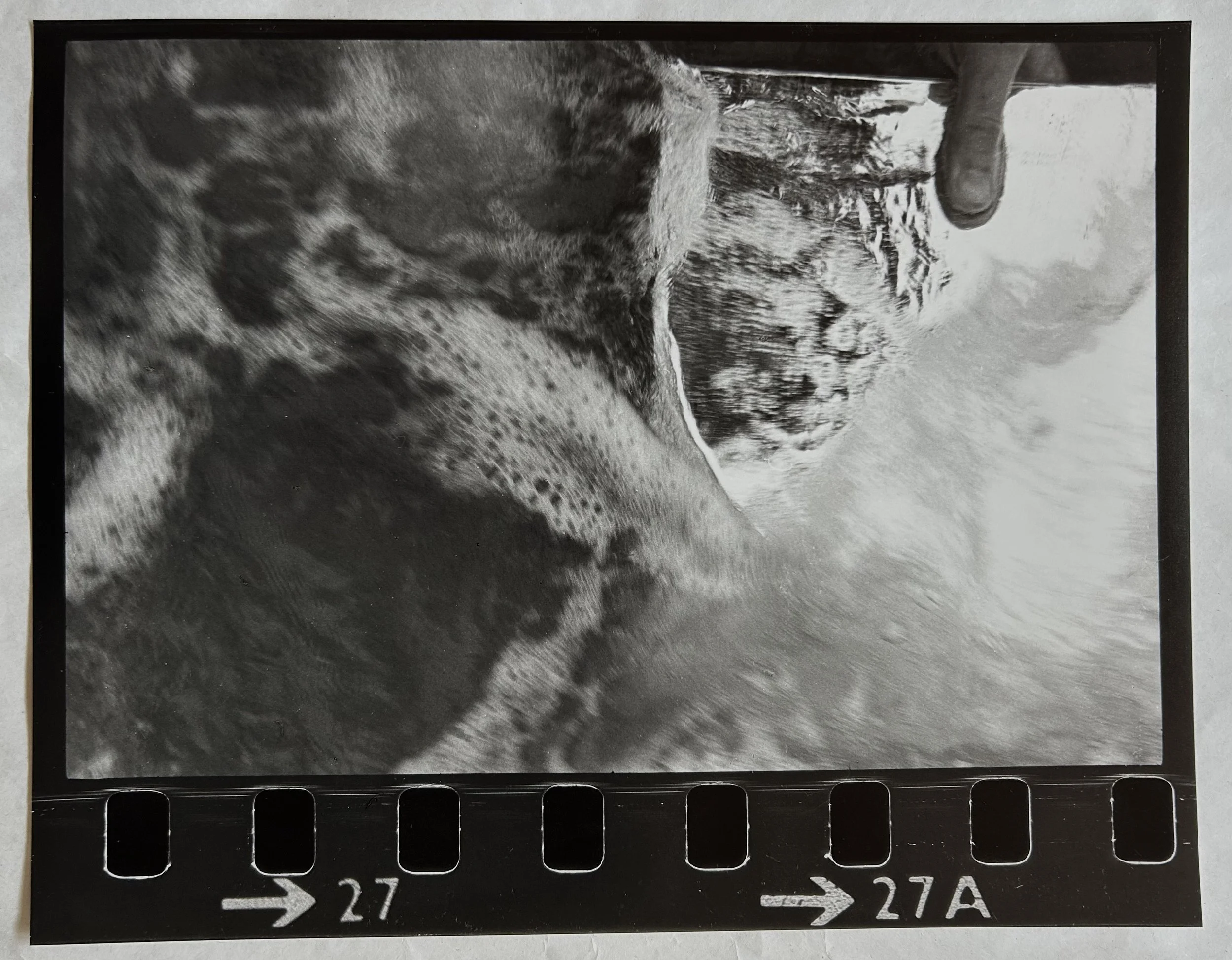
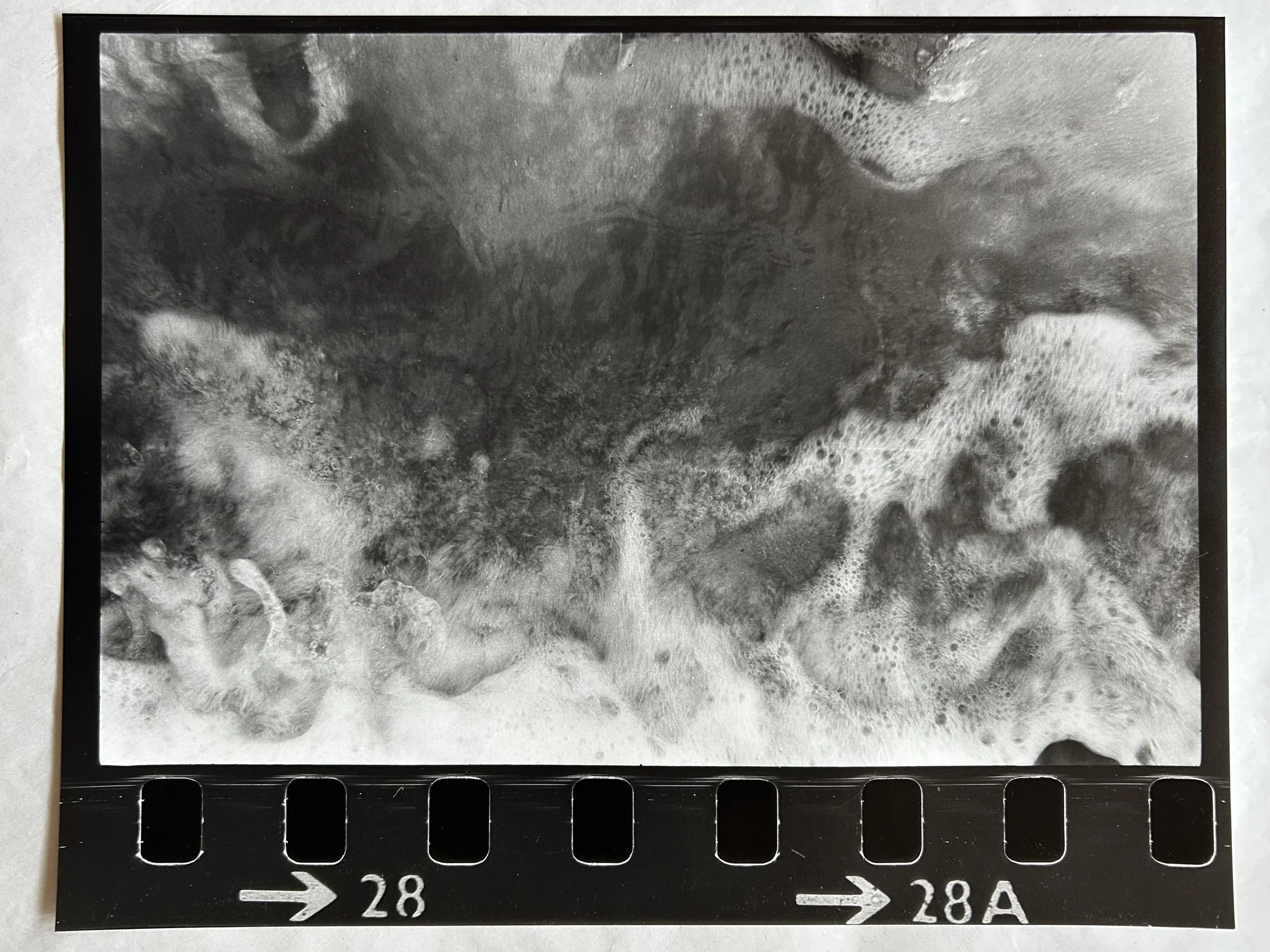
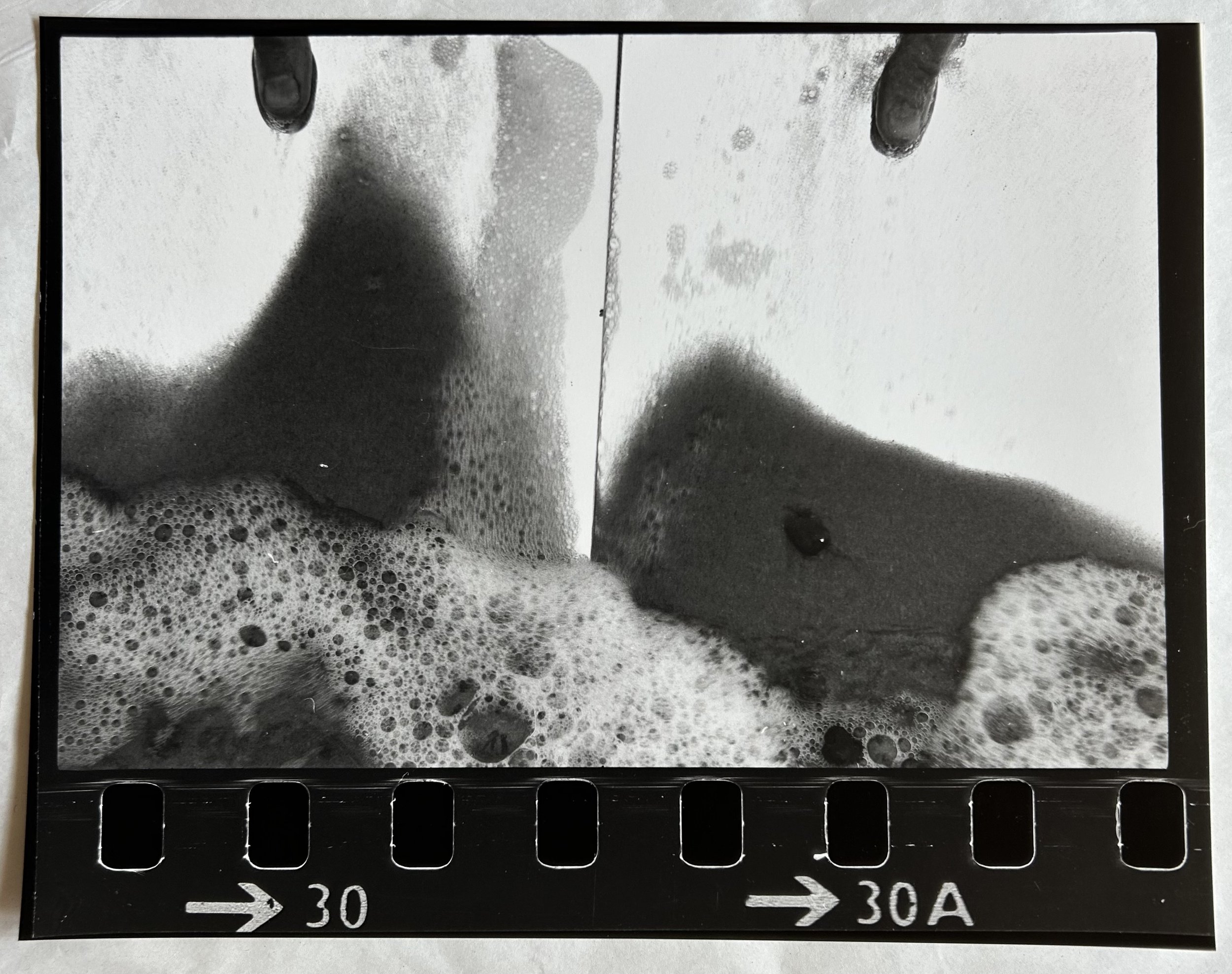
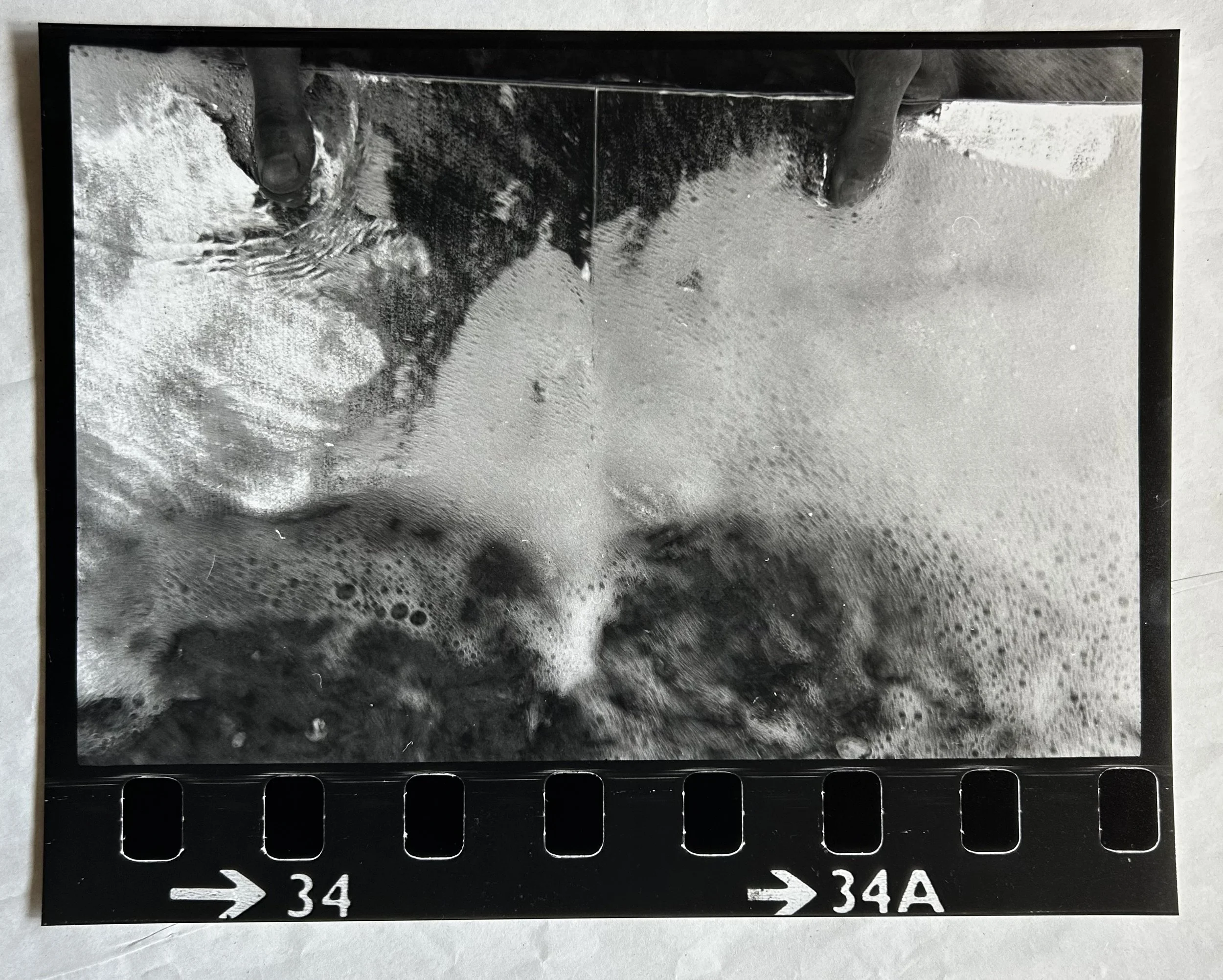
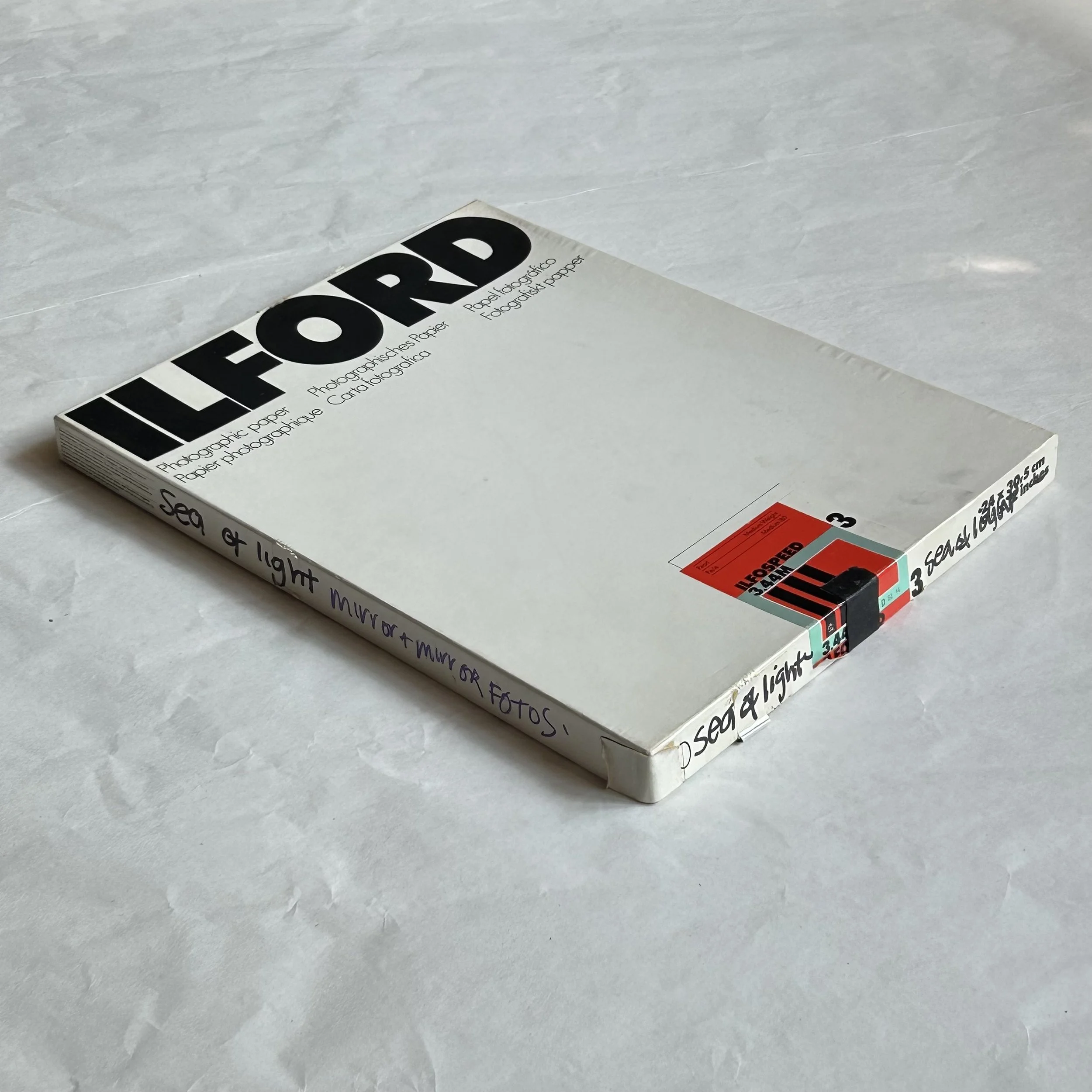
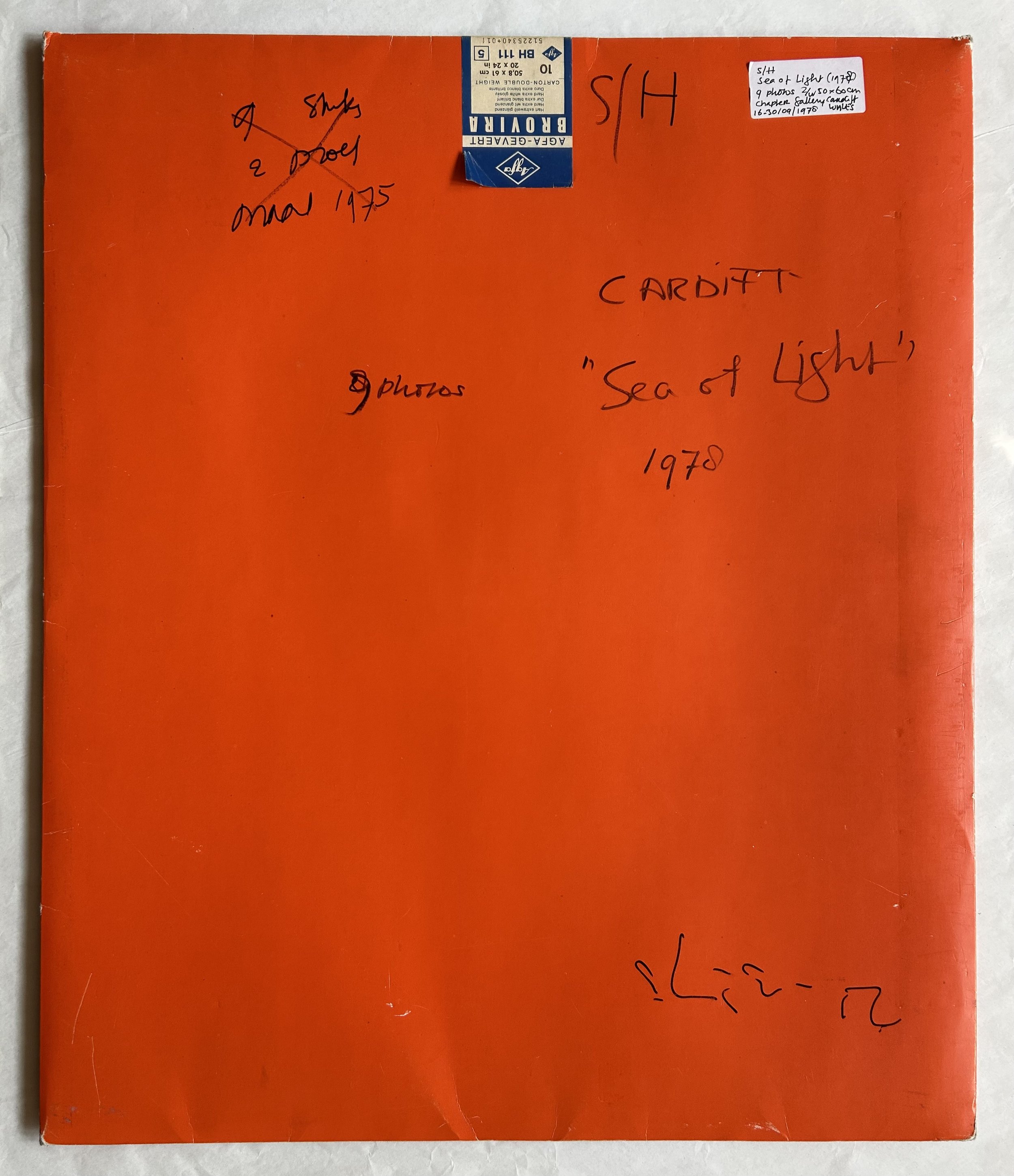
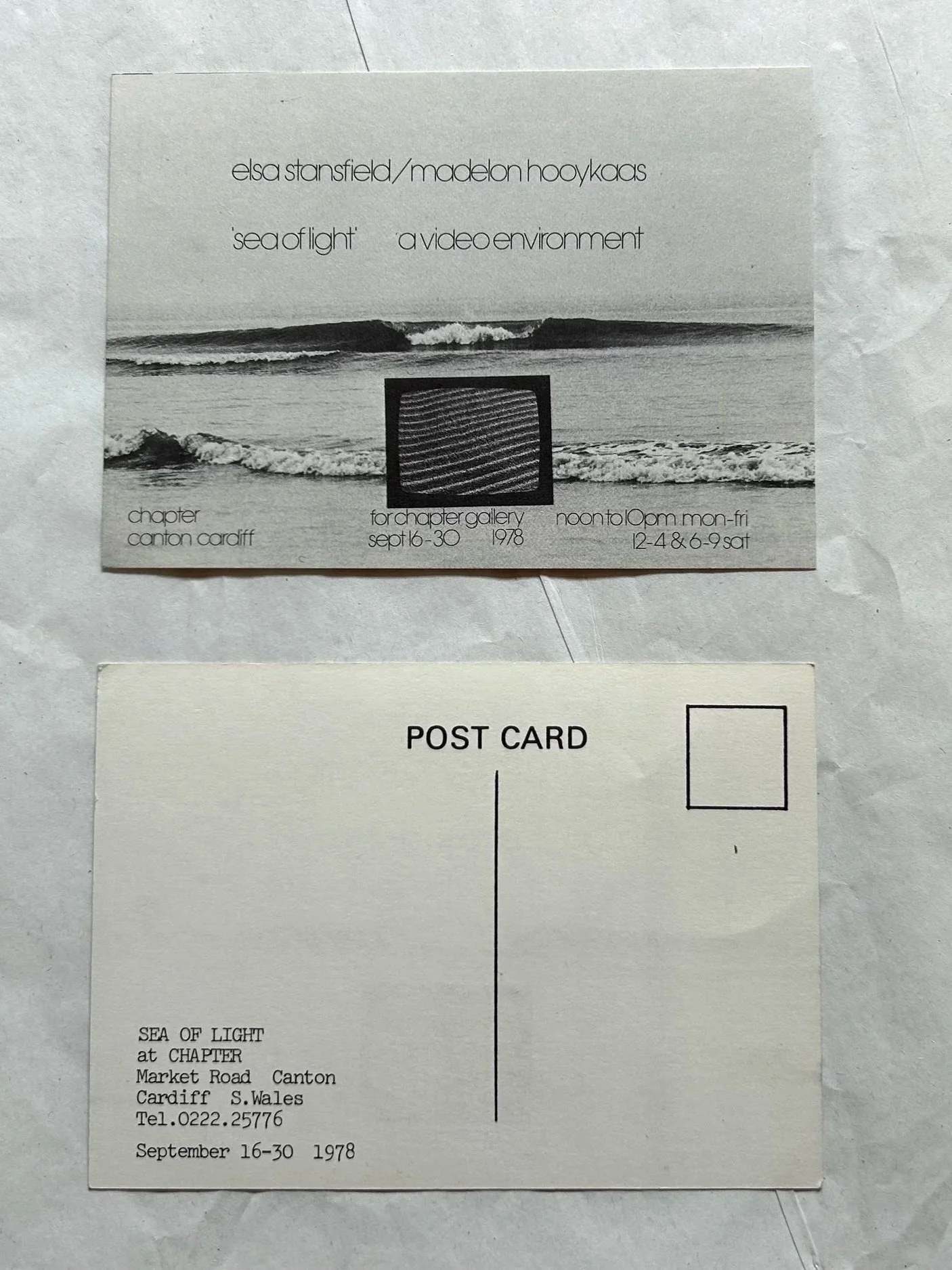
A prime example of the video environments the duo created throughout the 1970s, Sea of Light illuminates Hooykaas' lifelong artistic preoccupation with time, space, and memory. Within the collaboration, the integration of raw coastal matter reflects Hooykaas' individual engagement with Zen Buddhism and spirituality. The harmonious integration of organic materials with electronic technology allowed the duo to transform the gallery space into an immersive and meditative environment where nature, human consciousness, and technology converge.
Preserved within Madelon Hooykaas’ private archive, this portfolio constitutes the surviving physical and photographic core of the historic 1978 Cardiff environment.
Madelon Hooykaas
Amsterdam-based Else Madelon Hooykaas (b. 1942) is an internationally acclaimed photographer, video artist, and filmmaker. As one of the first generation of artists to adopt video as a medium, she is recognised as a transformative figure in video art, reshaping the boundaries of contemporary art through her pioneering approach. Hooykaas is widely known for her collaboration with Scottish artist Elsa Stansfield, as part of the duo Hooykaas/Stansfield. Together, they have produced a wealth of groundbreaking video environments and installations, exhibited internationally. Beyond her collaborative work, Hooykaas has established herself as a visionary solo artist, with a remarkable and ever-expanding legacy across photography, film, interactive performance, and conceptual installations.
Originally from Rotterdam, Hooykaas began her formal photography training under various Dutch photographers before moving to Paris in 1964. In 1966, she was awarded the Europhot Prize to work in England on Along the Pilgrim’s Way to Canterbury, a documentary photo project inspired by The Canterbury Tales. Following further freelance photographic work in Brussels and Paris, she was awarded a travel scholarship by the Netherlands Ministry of the Arts in 1968, becoming the first Dutch photographer to receive this funding for research in the United States. During her pivotal tenure in New York, she worked alongside legendary photographers Philippe Halsman and Bert Stern, while refining her street-photography and compositional instincts under the guidance of Garry Winogrand and Joel Meyerowitz. Upon her return to the Netherlands, she joined the prestigious professional association of photographers (GKf) and became an influential critical voice, writing profiles on iconic figures such as Robert Doisneau, Jacques Henri Lartigue, and numerous Japanese masters for the prominent magazine Foto.
Her photographic and installation work remains deeply informed by her lifelong commitment to Zen Buddhism, an engagement catalysed by a transformative meeting with the philosopher Alan Watts in California and deepened by subsequent travels to Japan. Throughout the decades, her solo and collaborative work has entered major international institutional collections and been showcased at venues including the Stedelijk Museum Amsterdam, the Museum of Modern Art (MoMA) in New York, and Tate Britain.
Today, now in her eighties, Hooykaas continues to operate an active, evolving studio practice from Amsterdam.
Elsa Stansfield
Elsa Stansfield (1945–2004) was a pioneering Scottish artist recognized as a transformative figure in European video art and time-based media. Born in Glasgow, she studied drawing and painting at the Glasgow School of Art before moving to London to specialise in photography and film at the Ealing School and the Slade. During her final year of studies, she actively shaped London's underground film scene by curating experimental programmes and running the Arts Lab cinema in Drury Lane. In 1970, Stansfield co-founded the independent "Eight, Nine and Ten" film studio in Covent Garden, as well as the electronic sound studio Electrophon Music alongside pioneering audio creators Delia Derbyshire and Brian Hodgson. In 1972, she partnered with Madelon Hooykaas, launching a thirty-year collaboration that produced a vast body of internationally exhibited videotapes, video-installations, and sound works. Stansfield permanently relocated to the Netherlands in 1980 to serve as Head of the Time Based Media Department at the Jan van Eyck Academy in Maastricht until 1991, continuing to collaborate closely with Hooykaas on groundbreaking media environments until her untimely passing in Amsterdam in 2004.