


Drag Daughters: A Solo Exhibition by Michelle Sank

Davina, Cape Town
Drag Daughters
A Solo Exhibition
by Michelle Sank
7th May 2026 - July 7th 2026
at Het Zuid-Afrikahuis | Keizersgracht 141-C | 1015 CK, Amsterdam
What began as a chance encounter with a stranger on Cape Town’s Promenade, Drag Daughters by Michelle Sank developed into a powerful body of work portraying some of the city’s most exquisite drag queens. The series follows six young drag queens who have grown up in townships and, despite facing rejection or having to hide their identities in the past, are now becoming more accepted, striving to make a difference within the communities they grew up in.
Included in the exhibition are an striking collection of portraits that move beyond the conventional depiction of drag in pageants or nightclub performances. Removed from theatrical settings, and stripped of spectacle, Michelle Sank’s photographs reveal the poised presence, pride and individuality of each of her subjects. At the same time, the images radiate performance and allure, reflecting the vibrant personalities of the drag queens dressed in breathtaking costumes against the neutral background of a hotel lobby or the streets of their township neighbourhood.

Laylah, Cape Town
In a country still navigating the legacies of apartheid alongside ongoing social challenges, these images speak powerfully of visibility and change. Drag Daughters is a testament to the dynamic and evolving drag scene in South Africa, inviting us to appreciate and celebrate this vibrant facet of society.
“I think [because of] the trauma that South Africans have gone through, there is now a sense of individuality and expression … and people are out there, people are open. Obviously, there are real issues still, but my work there has been acelebration of what is happening…people are empowered there and the way they manifest that is really interesting”
- Michelle Sank
About Michelle Sank
Michelle Sank grew up during apartheid as the child of immigrant parents, a background that informs her interest in sub-cultures and the exploration of contemporary social issues and challenges. Her crafted portraits meld place and person creating sociological, visual and psychological landscapes and narratives. Known for her work on youth culture, her practice has expanded into long term projects documenting communities and cultures in depth.
Sank has exhibited and published internationally, including the Netherlands, USA, Germany, Canada, Mexico, Australia, Hong Kong, and South Africa. Her work is held in major public and private collections worldwide. She has received numerous awards, including recognition from the Taylor Wessing Prize, The Julia Margaret Cameron awards, the Sony World Photography Awards (Portraiture, 2024), and the Royal Photographic Society, awarding her an Honorary Fellowship.
About Het Zuid-Afrikahuis
Het Zuid-Afrikahuis is an international knowledge institute focusing on the language, culture, and history of South Africa. Its building on the Keizersgracht houses the largest collection of South African (professional) literature in Europe. The collection consists of a library, archive, and image bank. In addition to managing these collections, ZAH organizes events, exhibitions, language courses, and maintains a loyal reading group. Het Zuid-Afrikahuis Foundation funds a chair in South African literature, culture, and history, a thesis prize, manages a scholarship fund, and organizes study trips as part of the Youth Project.
Artist Talk & Guided Tour
The exhibition opening event will take place on 7 May 2026 between 16:30 and 18:30 at Het Zuid-Afrikahuis, Amsterdam. Attendees are invited to join a lecture and guided tour with the artist Michelle Sank, followed by a reception.
Exhibition Details
Venue: Het Zuid-Afrikahuis, Keizersgracht 141-C, 1015 CK Amsterdam
Opening Hours: Monday, Tuesday, Thursday | 10:00 – 16:00
Admission: Free
For press inquiries, interviews and event information, please contact Eszti Bakos at eszti.bakos@elliott.gallery.

Open Call Winners' Exhibition

from The Traveller series by Birte Kaufmann
Opening Reception:
Saturday 11th April 2026
from 17.00 to 19.30
at Elliott Gallery | Tussen de Bogen 91 | Amsterdam
Join us to celebrate with the Artists present!

from The Traveller series by Birte Kaufmann
The Travellers by Birte Kaufmann
German photographer Birte Kaufmann is based in Cologne, Germany, documents themes of identity and social marginalization through her empathetic portrait and documentary photography.
The Travellers (2011–ongoing) gives insight into the everyday life of Ireland's largest minority group, now looking for a new identity within 21st-century Western European society. The travellers live in a kind of parallel world to which outsiders have little access. Over time, and through living alongside one large family, Birte gained their trust, and with it, a rare closeness to their everyday life.
From What We Choose Not to See series by Naïma El Kadi
What We Choose Not to See by Naïma El Kadi
Moroccan born photographer Naima El Kadi is based in Antwerp, Belgium. Through analogue experiments and field research, she develops a visual language where time, material, and memory come together.
What We Choose Not to See focuses on former landfill sites in Flanders, Belgium. Naima develops analogue photographs using polluted water collected from these sites — chemical residues react directly with the photographic emulsion, leaving visible marks on the images. The pollution becomes part of the image-making process, not as an illustration, but as a physical presence.

From the Take Notice series by Olivier Tuinier
Take Notice by Olivier Tuinier
Olivier Tuinier is an Amsterdam-born and based photographer focused on documentary and street photography, with a soft spot for faded glory.
Take Notice is an ongoing series in which Olivier documents small, often overlooked scenes encountered in the streets. Drawn to the unspectacular and the unfiltered, the series reflects the real not by documenting dramatic events or obvious beauty, but by highlighting the subtle and honest poetry found in ordinary spaces. In a visually saturated world, Take Notice is, above all, an invitation to pause and really look.
Join us for the opening of the exhibition and meet our incredible winners! The exhibition will be on view from 11th April until 16th May.
We are open by appointment.
Limited edition and unique polaroid prints are available to purchase.

Miles and Miles of Texas & Honky Tonk by Henry Horenstein
Jerry Lee Lewis, Ramada Inn, Boston, Massachusetts, 1976
Elliott Gallery is proud to present:
Miles and Miles of Texas & Honky Tonk by Henry Horenstein
In Honky Tonk and Miles and Miles of Texas, Henry Horenstein takes us on a journey through the heart of American music and culture—capturing not just what it looked like, but what it felt like to be there.
Honky Tonk offers a candid, affectionate glimpse into the golden age of country music in the 1970s, where legends and locals shared the stage in small-town bars, music parks, and iconic venues. With warmth and unflinching detail, Horenstein preserves the grit, glamour, and sincerity of a scene built on shared songs and smoky dance floors.

Rodeo Cowboy, Leakey Jubilee, Leaky, TX, 2023 by Henry Horenstein
That same spirit—equal parts myth and memory—carries into Miles and Miles of Texas, a later body of work that retraces the cultural and musical echoes of the American South, with Texas as its beating heart. Combining roadside Americana, personal reflection, and a deep appreciation for music history, Horenstein captures the enduring character of a place where honky tonk still lives on, reshaped but recognisable.
Viewed side by side, these series trace a lineage of American identity through music, memory, and place. Horenstein’s lens remains constant: warm, direct, and tuned into the rhythms that make a culture hum.

Indifferent West by Daniel Mirer
Stuck in the Mud, Utah 2021
Elliott Gallery is excited to present:
Indifferent West
An Exhibition and Forthcoming Book
by Daniel Mirer
Indifferent West is a new solo exhibition and forthcoming book launch by Artist-Photographer Daniel Mirer on September 27, 2025. Offering a powerful reflection on today's pressing socio-political issues; Mirer’s visually arresting photographic work is a critical exploration of American history, identity, and environmental crisis through the mythic American West.
Indifferent West is a salient visual investigation into the mythology, commercialisation and environmental disruption of the Western landscape. The exhibition features a selection of Mirer’s meticulously composed, vivid photographs spanning over 30 years, capturing the strange beauty and haunting irony of a landscape defined more by fantasy than fact. Mirer's forthcoming book of the same title, showcasing 108 photographs, launches in conjunction with the show at Elliott Gallery.
Drawn from decades of road trips across the American Southwest, Mirer’s jarring images aim to both play into and subtly disrupt our collective cultural memory of the mythic American Frontier. A tourist himself, he documents desertscapes and roadside attractions so familiar from countless Hollywood Western movies, while simultaneously exposing their deeper contradictions: romanticised ruins, hyperreal facades, and ironic representations of water politics occupying the space. In Indifferent West, cowboy legends clash with Native histories, kitsch collides with the climate crisis, and remnants of settler colonial fantasies are rebranded for tourist consumption.

Train Trestle, Utah 2024
Included in the exhibition are bold and brightly coloured photographs that present stark juxtapositions laced with a dark sense of humor to highlight the absurdity of American myth-making alongside the ever-so-pressing issues of water politics and environmental devastation. Shot in square format, and so rejecting traditional landscape conventions, these breath-taking images at first glance reveal the sweeping beauty of vast landscapes. However, on closer inspection they uncover tattered tourist sites, rusting billboards, flooded parking lots, and abandoned swimming pools dotting the historical American Frontier.
Indifferent West is a reflection on the American psyche and its uneasy relationship with history, land, and identity. The title itself points to a deeper “indifference”: not only of the land to its own history, but of a society complicit in sustaining romanticised myths while overlooking the economic, human, and environmental exploitation beneath them. Through his allusive photographs, Mirer confronts a nation entangled in its own mythology and urges viewers to reckon with their complicity in the ongoing disruption of the landscape.

Swimming Pool by Desert Landscape, Utah 2023
The exhibition opening event and book launch will take place on 27 September, 2025 at Elliott Gallery, Amsterdam. Attendees are invited to join the Artist for a book signing, an evening of conversation, and a reception celebrating the exhibition.
The exhibition runs from September 27, 2025 until January 17, 2026.
For press inquiries, interviews, event information and review copies of the book, please contact us at info@elliott.gallery

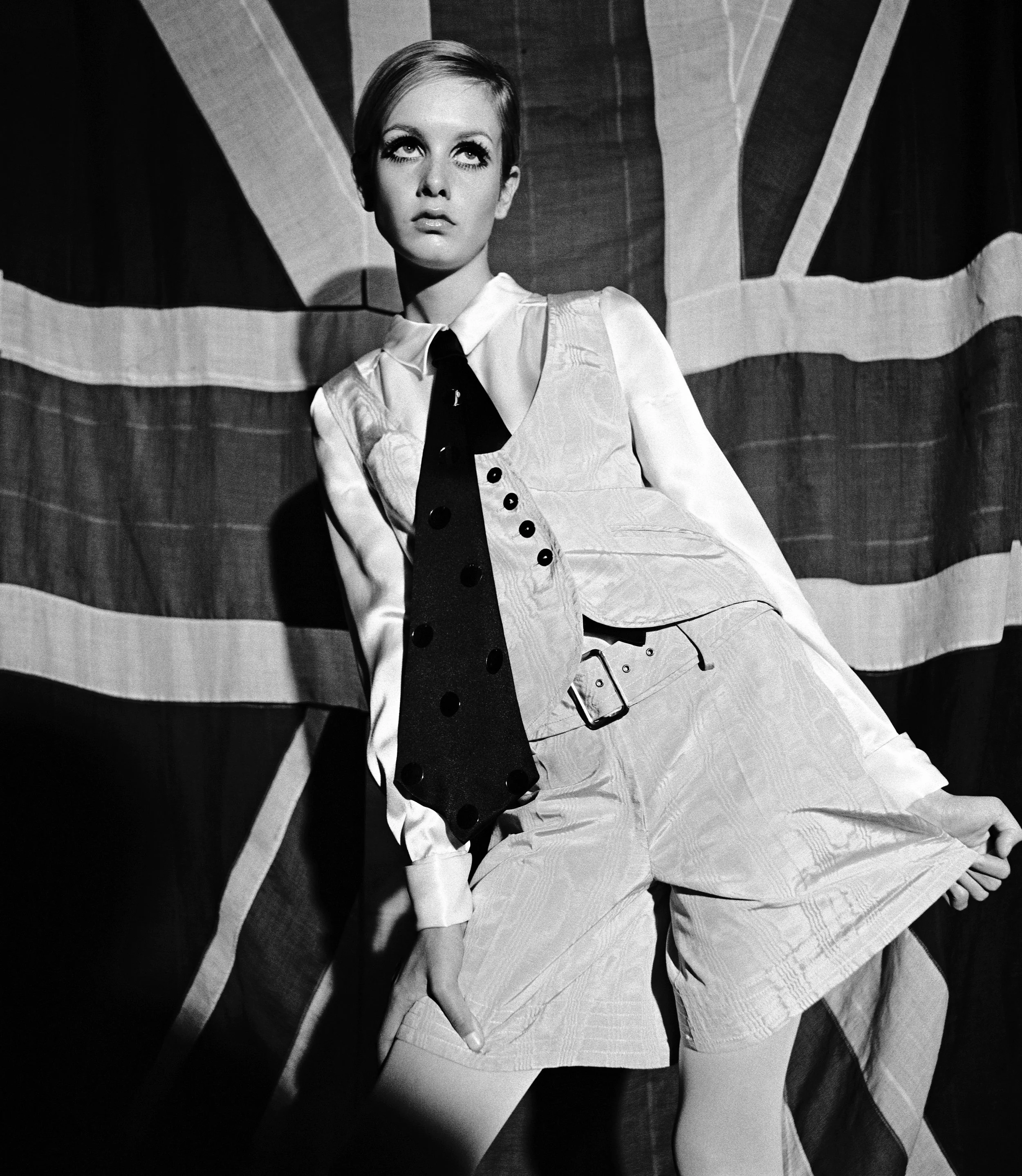
Streets In, Studios Out! Fashion Photography by Norman Parkinson

Jerry Hall, Jamaica, Vogue, 1975 by Norman Parkinson
Elliott Gallery is excited to present:
Streets In, Studios Out!
Fashion Photography by Norman Parkinson
“I like to make people look as good as they’d like to look, and with luck, a shade better.”
"Streets in, Studios out!" explores the transformative career of trailblazing British photographer Norman Parkinson (1913-1990), whose innovative approach revolutionised editorial and fashion photography, shaping the way we see and appreciate style today. Spanning seven decades, Parkinson's work was instrumental in transitioning fashion imagery from rigid, posed studio shots to dynamic and immersive storytelling. His pioneering vision continues to shape contemporary editorial aesthetics, solidifying his legacy as one of the most influential figures in 20th-century fashion photography.
Famous for his iconic sense of style and glamour, Parkinson’s unexpected and unique approach has redefined the genre. His elegant yet approachable style, paired with his sharp wit apparent in some of his work, brought a freshness to the sometimes staid genres of fashion and portrait photography. Moving away from the formality of earlier photographic styles, Parkinson embraced movement, spontaneity, and natural settings. With striking use of compositions, a keen eye for talent, and an innate ability to capture the spirit of the times, Norman Parkinson’s work graced the pages of magazines like Vogue, Life, Harper’s Bazaar, Queen and Town & Country, leaving an enduring mark on the industry.
This exhibition traces Norman Parkinson’s evolution as a fashion photographer, guiding viewers through his life-long career. “Streets in, Studios out!” highlights Parkinson’s continuously evolving approach to capturing fashion, from breaking free of studio constraints to developing a narrative-driven style and his innovative use of colour and composition. Featuring portraits of the era’s most iconic models and celebrities, like Apollonia van Ravenstein, Jerry Hall, Audrey Hepburn, the Beatles, the Rolling Stones and Jane Birkin, alongside a number of previously unseen images, the show stands as a testament to a legacy defined by transformation and an eccentric vision in fashion imagery.

Capital chic in London, 1960 by Norman Parkinson
Beginning his career as an apprentice to court photographers, then opening his own studio in London, Parkinson had his breakthrough in 1935 when Harper’s Bazaar editor Joyce Reynolds commissioned his first fashion shoot. An assignment that marked the beginning of a long-standing collaboration with the magazine and the launch of his fashion photography career. Working for Harper’s Bazaar and The Bystander in his early career, Parkinson rejected the formal constraints of traditional studio photography. Instead, inspired by contemporaries such as photojournalist-turned-fashion photographer Martin Munkácsi, Parkinson championed outdoor settings, movement, and natural light, capturing his models in action shots.
A year after leaving Harper’s Bazaar, Parkinson joined British Vogue in 1941, documenting what Vogue art director John Parsons called “the rustic elegancies of England.” By the late 1940s, he moved to New York to work with American Vogue, being drawn to its vibrant studios and increasingly colourful pages. “I scanned the plush pages of American Vogue and Harper’s; beautifully lit and reproduced full pages were appearing in every issue in ‘glorious colour […]” told Parkinson in his autobiography, Lifework. As fashion photography shifted from rigid studio shots to a dynamic, photojournalistic style, Parkinson played a key role in this transformation. His increasing use of colour photography, which he called “largely magic”, paved the way for the youthful energy of the Swinging Sixties. With a filmic approach to storytelling, his work blended glamour with spontaneity, transporting viewers to beautiful locations worldwide.
In the 1960s, Parkinson became Associate Editor and Contributing Photographer at the newly re-launched Queen magazine after leaving Vogue in 1959. Aimed at the emerging youth market, Queen was at the forefront of the Swinging Sixties, and Parkinson, now in his late forties, was perfectly positioned to capture the era’s cultural revolution. His covers and editorials featured rising stars like the Beatles and the Rolling Stones, while his keen eye for talent helped launch models such as Celia Hammond.
After returning to Vogue in the mid-1960s, Parkinson continued to redefine fashion photography throughout the 1970s. Taking models to tropical locations like the Seychelles, Jamaica, and Barbados and using exclusively colour photography, he produced some of his most iconic images. Notable trips included his travels to the Soviet Union and Jamaica with Jerry Hall and to the Seychelles and Barbados with Apollonia van Ravenstein for British Vogue. A champion of individuality throughout his career, Parkinson’s portraits of many of the greatest fashion icons of the 20th century emphasised personality, shaping a new vision of expressive, unconventional fashion.
In the 1980s, Parkinson joined Town & Country, working with editor-in-chief Frank Zachary to document the glamorous world of international high society at home or in vibrant locations from Sri Lanka to the Yucatán.
Norman Parkinson passed away while on location for a Town & Country shoot in Malaysia.
Throughout his career, Parkinson continuously reinvented both himself and the industry producing a legacy that ranges from his images pioneering action realism in the 1930s to the increasingly colourful shots of the Swinging Sixties and the lavish destination shoots of the 1970s and 1980s. His work for Vogue, Harper’s Bazaar, Queen and Town & Country set new editorial standards, blending elegance with adventure and wit. By placing fashion within cultural moments, he made high fashion both aspirational and accessible. His mastery of composition, colour, and setting ensured his lasting influence on modern fashion photography, shaping the aesthetics of magazines for generations to come.
The exhibition will be on view from 10th May to August 2025.

Audrey Hepburn wearing a Givenchy afternoon cocktail dress from his Spring/Summer 1955 collection at ‘Villa Rolli’, a farmhouse in the Alban Hills of Cecchina, Italy, during the filming of King Vidor’s ‘War and Peace’, for Glamour, 23rd June, 1955 by Norman Parkinson

Beauty Is All Embracing (first nude in colour). Vogue Beauty Book, No. 5, 1951 by Norman Parkinson
Stripper & Saddleworth by Matthew Murray

Ashway Rocks, Saddleworth Moor, 2013
Elliott Gallery is proud to present:
Stripper & Saddleworth by Matthew Murray
Matthew Murray’s work is marked by an eclectic vibrancy that draws inspiration from his everyday visual encounters and extensive travels. His photographic style blends portraiture and landscape, capturing moments of subtle vulnerability and intimate exposure. With a career spanning editorial and advertising campaigns for world-leading agencies, Murray’s portfolio also includes a rich selection of personal projects.
In the Saddleworth series, Murray responds to the vastness and texture of the landscape, paying homage to the light found in Dutch Seventeenth Century landscape painting. This series, shown at mac in Birmingham (2017) and Elliott Gallery in Amsterdam (2018), explores both the grand and the minute, offering a contemporary take on classical landscape traditions. The monograph for this series won first prize in the 2018 International Photography Awards.

Ducca, Adrenaline by Matthew Murray
Meanwhile, Stripper delves into the themes of exposure and performance, documenting the UK Pleasure Boys, the UK's premier male stripping service. Through his use of a dark filter to mask the subjects' physiques, Murray encourages viewers to engage with the images slowly, exploring the voyeuristic nature of stripping and the complex interplay of seduction and intimacy.
Murray’s work has been exhibited internationally in Paris, London, Berlin, and Cologne and is part of the permanent collections of MOMA, New York, The Tate, The Victoria & Albert Museum, and The British Library.
Ballade by Michelle Sank

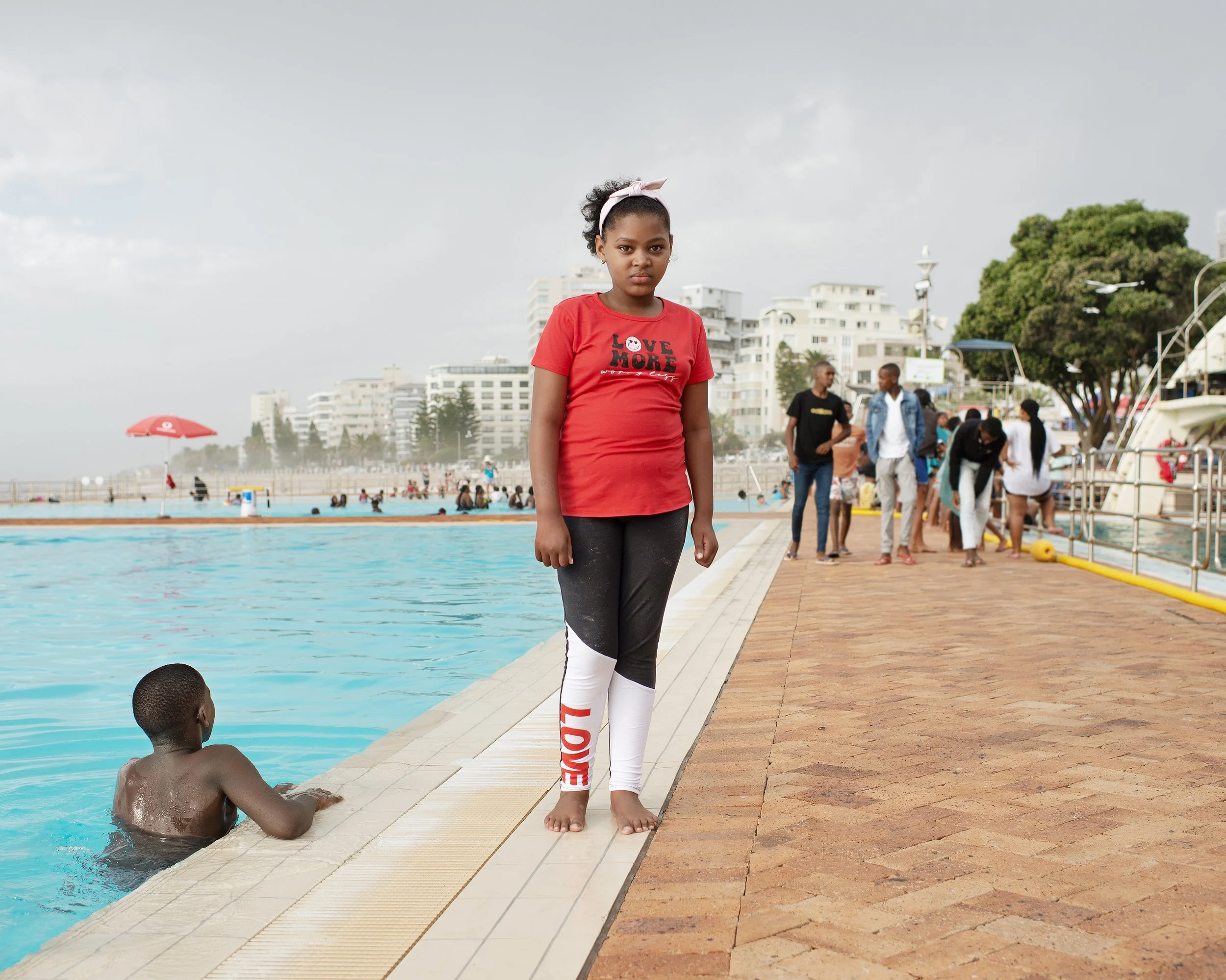
Zenande, Sinawe, Zinathi, Buhle and Saneliswe, Sea Point Pavilion, Cape Town by Michelle Sank
Elliott Gallery is excited to present:
Ballade by Michelle Sank
“Ballade is a poetic homage to my birthplace, Cape Town. My strongest memories are of the Sea Point Promenade in Cape Town and its accompanying Pavilion swimming pool where I frequented the long walkway and its bordering vast grass areas through all of my formative years. I was born there, and my recall is one of tableaus transpiring through play, encounters and festivities. The pool, the walkway, the beaches and the green areas continue to serve as stage sets within which diverse performances unfolded.” -- M. Sank

Sanele and Sihle,Sea Point Pavilion, Cape Town by Michelle Sank
On view from 8th February to 12th April 2025.
REVISITING HERITAGE: Multiple award-winning photographer Michelle Sank pays homage to South Africa’s flourishing post-Apartheid society upon returning to her birthplace, Cape Town
Michelle Sank’s Ballade series documents the vibrant fabric of Cape Town’s emblematic Sea Point Promenade, offering an exploration and celebration of its rich socio-economic, racial, and gender diversity. Through her deeply evocative portraiture, Sank highlights the fundamental interplay of identity, place, and community while painting a compelling narrative of the Promenade’s not only historical, but autobiographical significance.
As one of Cape Town’s popular public spaces, Sea Point Promenade and the adjacent Pavilion Pool serve as a unifying backdrop that connects Sank’s individual subjects to space, community and culture. Sea Point’s rich history and evolving social fabric, from a racially segregated urban area during apartheid to a vibrant, multicultural neighbourhood in the post-apartheid era, have transformed the space into a central meeting point for both residents and visitors alike. As Sank reflects; “For many, [the Promenade] with the Pavilion Pool is their sanctum, the public space they don’t have in private due to cramped living conditions or general pressures and continued life challenges in S.A”
Beyond its historical significance the Promenade also holds autobiographical importance for Michelle Sank. Having grown up in Cape Town in an immigrant community during Apartheid, she left after completing her studies, only to return decades later. Through her work, Michelle pays tribute to South Africa’s post-apartheid social diversity, present in Sea Point as well.
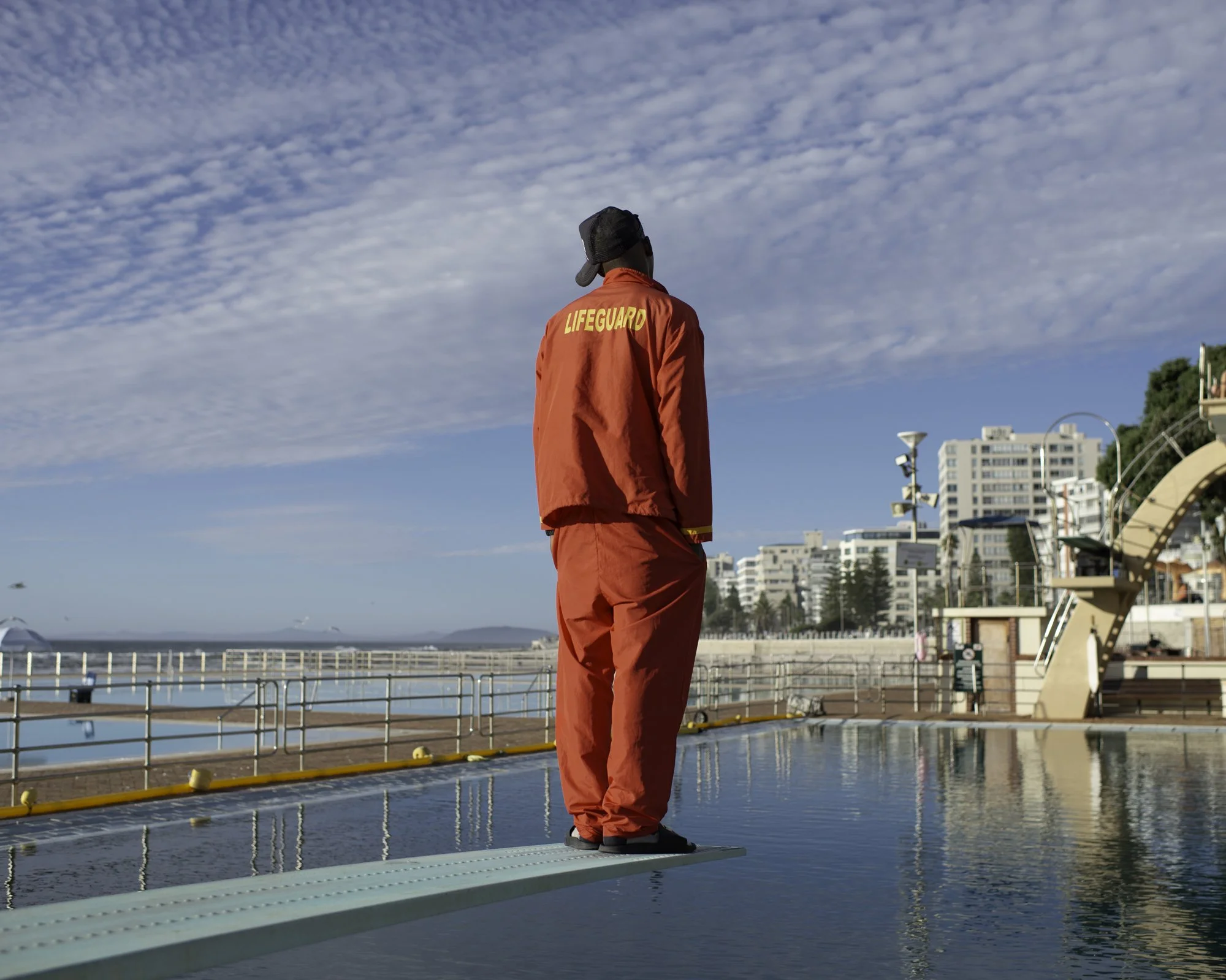
Kevin, Sea Point Pavilion, Cape Town by Michelle Sank
Michelle Sank’s photography is often centred around topics of socio-economic diversity, and the exploration of the pressures and hopes of young people living in suburban and coastal towns. In Ballade, just like in her other projects, Sank’s deeply personal and empathetic approach to her subjects results in an intimate portrayal of each individual she photographed. Through this lens, the images simultaneously capture the inner Self of the subjects and preserve the deep connection between them and their environment, highlighting the reciprocal relationship they share.
Moreover, Sank’s unique non-judgemental and inquisitive gaze is apparent in Ballade’s portraiture. The photographs in this exhibition focus on the young visitors and residents of the Promenade, capturing a spectrum of raw human emotions – from awkwardness to confidence, vulnerability to strengths, and the love and connection shared within the groups portrayed. To achieve this, Sank places great importance on building a trusted relationship with her subjects and creating a safe environment where they can fully express themselves, both on and off camera.
Michelle’s deep respect for her heritage and her unwavering optimism is at the heart of her work. Ballade vividly captures a flourishing community, showcasing South Africa’s rich cultural landscape and dynamic spirit.

Za Za, Sea Point Pavilion, Cape Town by Michelle Sank

Twin brothers Jabez and Zubair, Sea Point Pavilion, Cape Town by Michelle Sank
ON DISPLAY: Everyday Abstraction by Marcus Davies
Rather than telling a specific story, Davies’ work focuses on how visual elements interact within the frame. His images highlight the core principles of photography —light, shadow, and form— while allowing space for individual interpretation. By removing extraneous detail, viewers are encouraged to engage with the fundamental structures of visual experience.
In Elastica, Davies drops elastic bands onto a plain white background and photographs them as they land. The process is straightforward—there is no intervention beyond framing the result. The bands twist and overlap unpredictably, creating spontaneous forms that emphasize tension, movement, and spatial relationships. The simplicity of the materials contrasting with the complexity of the final compositions.
In contrast, Film introduces a more structured arrangement, incorporating strips of cine film alongside abstract shapes. This series draws inspiration from the abstract paintings of his father, Thomas Nathaniel Davies, exploring the tension between organic and geometric forms. The addition of film—sourced from Davies’ collection of Super-8 football reels—adds a tactile layer, linking photography to memory and materiality. The juxtaposition of rigid forms and fluid movement reflects an ongoing investigation into balance and composition.

John ‘Hoppy’ Hopkins: A Revolution Tale by The King of the Undergrou

Lone Marcher, in Windsor Great after the CND March from Aldermaston to Trafalgar Square, London, 1963 by John ‘Hoppy’ Hopkins
Elliott Gallery is excited to present:
John ‘Hoppy’ Hopkins
A Revolution Tale by the King of the Underground
A retrospective exhibition of the legendary counterculture figure of London in the 1960s. For the first time, we are excited to showcase vintage and signed prints by Hoppy, made available exclusively at Elliott Gallery.

'Marijuana Boys', Scoring in Cable Street, London's East End, ca. 1964 by John ‘Hoppy’ Hopkins
“We have to seize the moment, think for ourselves, question authority and make a better world.”
– John ‘Hoppy’ Hopkins
Born in England in 1937, John Hopkins, better known as ‘Hoppy’, was one of the best-known counterculture figures in London during the 60s, not just as a photographer and journalist, but also as a political activist.
Hoppy graduated from Cambridge University in 1958 with a Master’s in Physics. He briefly worked for the Atomic Energy Authority, but lost his security clearance following a jaunt to Moscow for a communist youth festival and peace mission, when he was arrested by the KGB. He resigned and turned to Photography in 1960.
Hoppy embodied the world of 60s: a new emerging world of youth culture, alongside a world of social change and freedom. Through his insightful, raw and beautiful photos he documented this incredible time of change. In a relatively short period of time, Hoppy’s diverse images of British youth and subcultures of the 60s reached an iconic status.
When the 60s began, he was young, inquisitive, energized and in London. He was working as a news photographer for the Sunday Times as well as for Melody Maker and Peace News. This meant that he was taking pictures of everything from visiting Jazz and Blues Artists, through CND’s Easter marches from Aldermaston, to The Rolling Stones and The Beatles on their first wave of stardom, with a few fashion models in between who wanted to build up their portfolios.
Hoppy recorded the mood of the fast-changing decade and documented many genres - peace marches, poetry readings with a naked Allen Ginsberg and photographed twentieth century heroes such as Martin Luther King and Malcolm X. In stark contrast and most poignantly Hoppy also shot the seedier side of London: grubby tattoo parlours, child poverty, bikers cafes, prostitutes, fetishists and sex workers in their small bed-sits. These images have a lasting humility which is rarely seen.
In 1965 he sets up Notting Hill Free School – a major factor in bringing together organisational players in Notting Hill Carnival. He co-founded Britain's first underground newspaper, the 'International Times’ (the forerunner of Time Out Magazine), co-established a publishing company, promoted Pink Floyd and set up London's first all-night psychedelic club, the UFO, where Jimi Hendrix would play. Around this time Hoppy gathers together names, addresses and telephone numbers of 100 ‘movers and shakers’ in London and circulates them to each other. This is later seen as beginning what would become UK counterculture.

'A Concentrated Solo', Brian Jones around 4am, at 'All-Nighter', Alexandra Palace, London, 1964 by John ‘Hoppy’ Hopkins
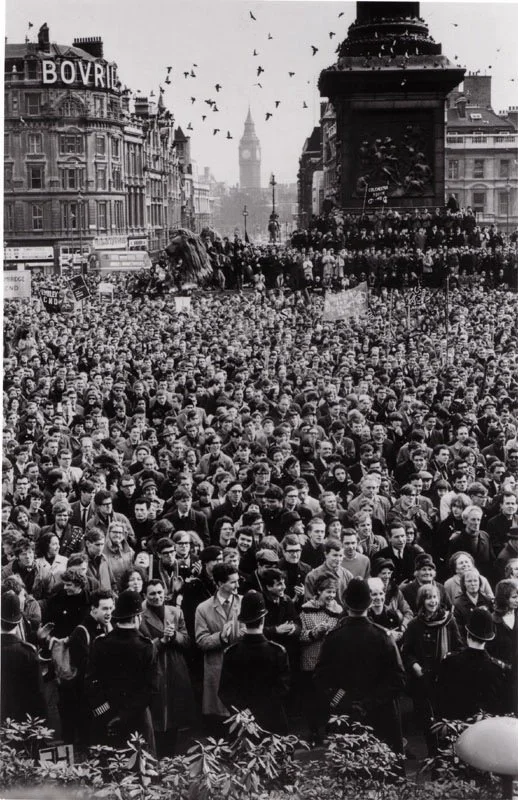
Trafalgar Square, end of the CND Rally from Aldermaston to London, 1964 by John ‘Hoppy’ Hopkins

Dr Martin Luther King, Oxford Peace Conference, 1963 by John ‘Hoppy’ Hopkins
By June 1967, Britain’s fertile and diverse counterculture took much of its inspiration from Hoppy - he was the closest thing the movement ever had to a leader and became known as the ‘King of the Underground’. Revolutions are, almost by definition, factional, but during those golden years, the working-class anarchists, vaguely aristocratic bohemians, musicians, crusaders, poets and dropouts were united in their respect and affection for Hoppy.
His status as a leader of this amorphous movement had led to his downfall - Hoppy’s flat was raided, a small amount of hash was found, leading to his arrest and a prison sentence of nine months.
At his trial, he attacked the prohibition of drugs and, having been branded a “pest to society” by the judge, was handed a ludicrously vindictive jail term in Wormwood Scrubs Prison. Outrage at the sentence inspired a “Free Hoppy March” to Trafalgar Square, ubiquitous graffiti and a full-page protest in the Times, paid for by Paul McCartney, calling for legalisation of marijuana, signed by many illustrious names – including all four Beatles. Despite being a major cause célèbre, it didn’t get a day knocked off Hoppy’s sentence.
“I served six months in the Scrubs. Mick and Keith were also there after their drug bust. I said hello, but they were only there for two or three days. They had friends in all the right places!”
— Hoppy
At the end of the 60s, Hoppy turned to video as an art form and educational tool, researching the social uses of video for UNESCO, the Arts Council etc. Later on, he worked as a technical journalist, co-authored distance-learning video training courses, explored macro photography of plants, co-authored academic papers and just never stopped being cool.

Tattoo Bill, Portobello Road, Notting Hill, London, c.1964 by John ‘Hoppy’ Hopkins

ON DISPLAY: A Man and His Horse by Lieke Zweekhorst

Evening Serenity by Lieke Zweekhorst
Elliott Gallery is excited to present:
A Man and His Horse
by Lieke Zweekhorst
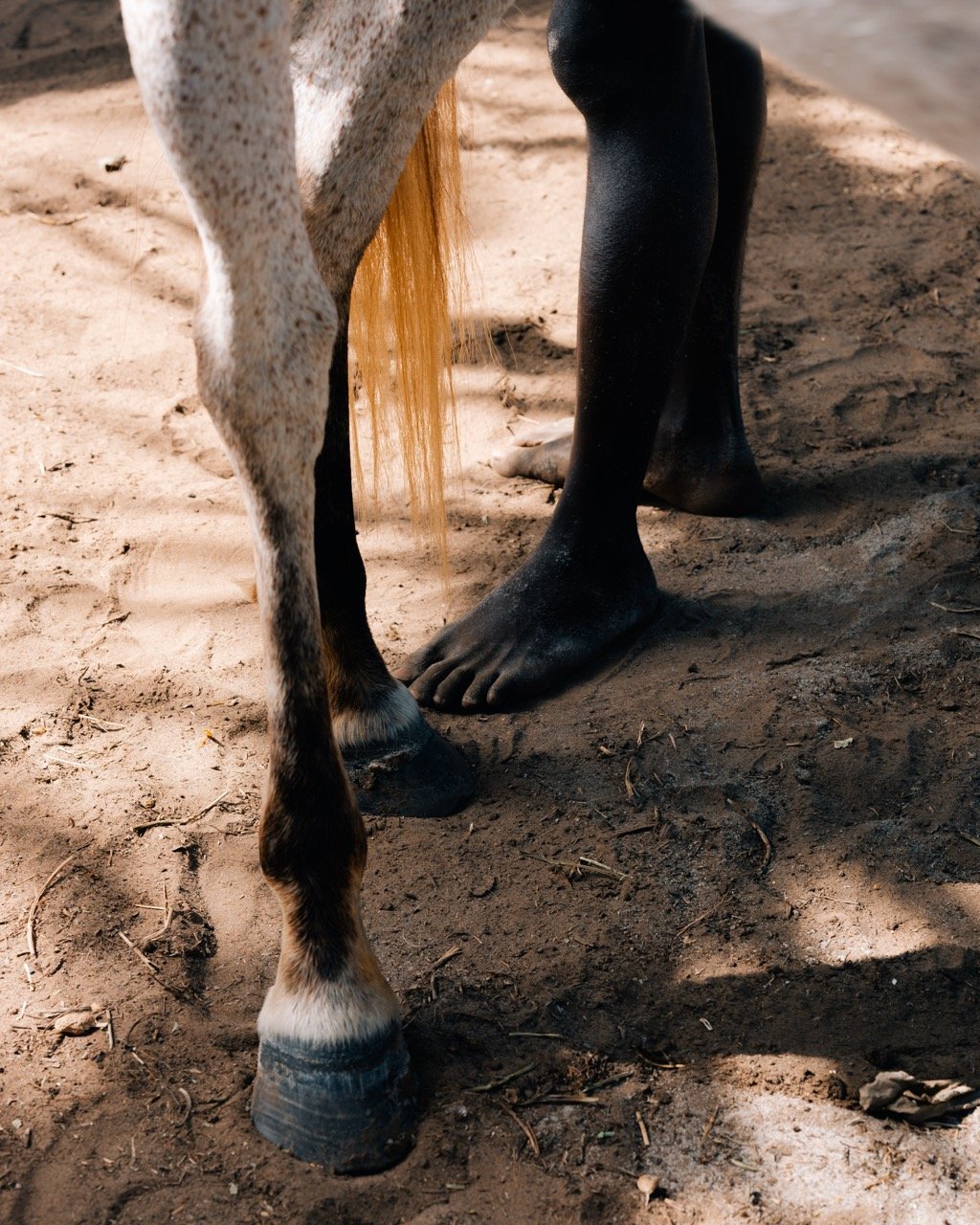
A Man and His Horse was inspired by a spontaneous encounter on the Gambian coast, where Lieke observed a man named Roony swimming in the sea with his horse, Marischa. Struck by their unique bond, she initiated a conversation with Roony and learned about their daily lives, where they share a deep relationship based on trust and mutual respect. This poetic series captures the essence of their connection, inviting viewers to focus on the intimate relationship between the two beings without the distraction of their socioeconomic conditions.

Familiar Touch by Lieke Zweekhorst

Open Call Winners' Exhibition

Elliott Gallery is excited to present the winning series of our Open Call for Exhibition Proposals:
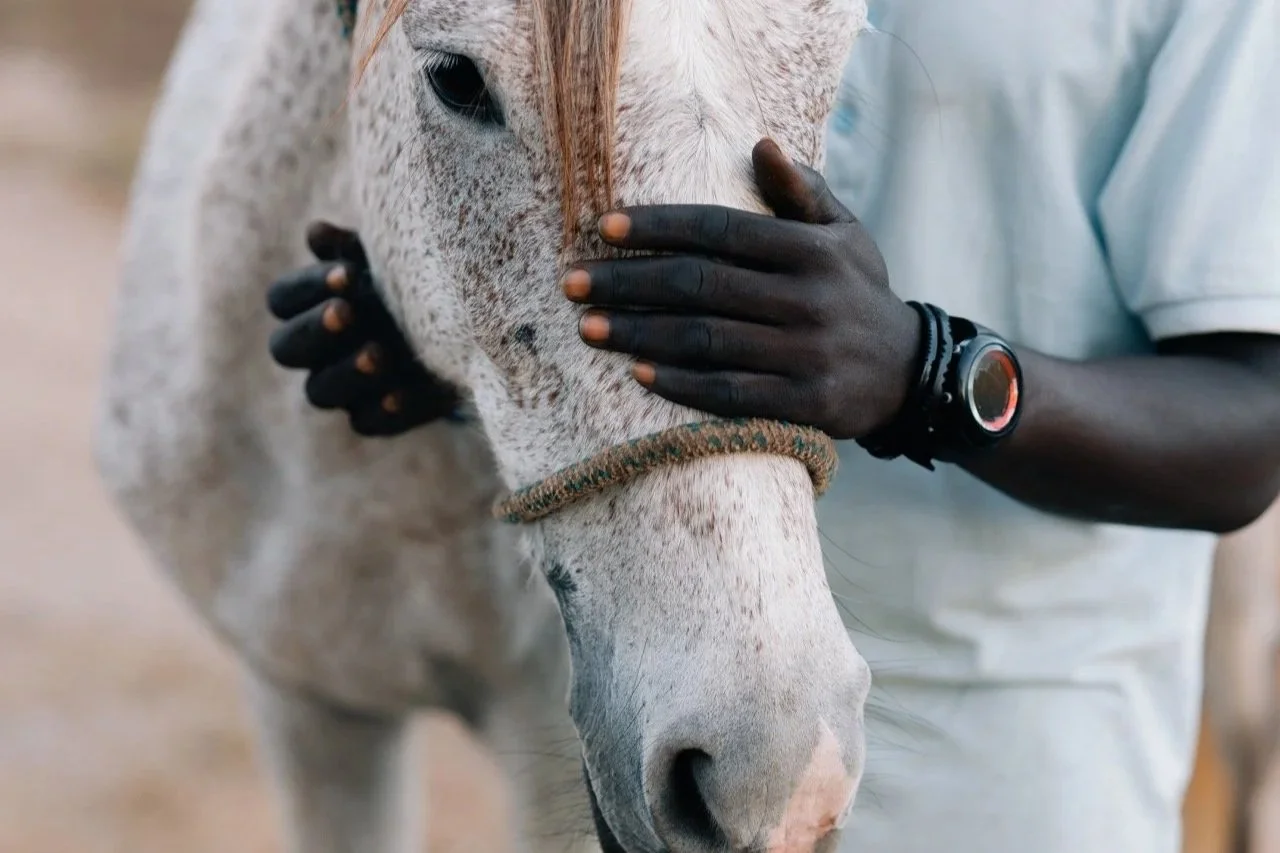
A Man and His Horse
by Lieke Zweekhorst

Nothing Gold Can Stay
by Matthew Ludak
The exhibition opens on Saturday 24th August 2024, from 17.30 to 19.30, in presence of the Artists. On view until 21st September.
A Man and His Horse by Lieke Zweekhorst
Lieke Zweekhorst, an emerging contemporary photographer based in Delft, The Netherlands, delves into the profound connection between a man and his horse in this beautiful series created in Gambia.
A Man and His Horse was inspired by a spontaneous encounter on the Gambian coast, where Lieke observed a man named Roony swimming in the sea with his horse, Marischa. Struck by their unique bond, she initiated a conversation with Roony and learned about their daily lives, where they share a deep relationship based on trust and mutual respect. This poetic series captures the essence of their connection, inviting viewers to focus on the intimate relationship between the two beings without the distraction of their socioeconomic conditions.
Through intimate portraits and thoughtful compositions, Lieke’s images evoke a sense of both alienation and connection, reflecting her genuine curiosity and engagement with the world around her.
Nothing Can Stay Gold by Matthew Ludak

Matthew Ludak, an emerging photographer based in the United States, delves into the intricacies of human relationships and societal structures through his powerful imagery. His background in journalism and documentary photography informs his work, providing a unique perspective on contemporary issues.
Nothing Can Stay Gold is a documentary photography project that takes a closer look at how economic globalization has left its mark on former industrial cities and struggling small towns across America.
Inspired in part by Matthew’s family history of living and working in a small mining town in Western Pennsylvania, this project delves deep into the intricate tapestry of economic desperation, resilience, beauty, and transformation that defines these often-overlooked corners of society. Additionally, the project aims to draw attention to the environmental impact wrought by the steel and coal industries, examining the lasting consequences on the landscapes and communities that once thrived alongside these industrial giants. The protagonists of the project are the small towns and rural communities that once hummed on the pulse of factories, mills, and mining. Nothing Gold Can Stay examines the interplay between economic shifts and the lives of those who have weathered the storms of change. At the heart of this work lies an exploration of the fleeting nature of beauty and the unwavering resilience of individuals in the face of adversity. The title itself, borrowed from Robert Frost's poem, encapsulates the essence of impermanence that underpins each photograph. Image by image, the project seeks to capture the timeless essence of these communities, revealing a quiet beauty in the still moments of everyday life.
Streets once bustling with life now stand deserted, buildings once humming with activity now echo with silence, and rusty cars become relics of a vanished time. The photographs serve as an ode to the symbiotic relationship between physical space, culture, and history, offering viewers a glimpse into what make these places unique. By focusing on the present state of neglected areas, we are reminded of their once idealised pasts. The worn-out parking lots, forgotten homes, empty storefronts, and abandoned factories stand as symbols of an America that has evolved over time. Ultimately, this project serves as a reminder that within the ruins of the past lie seeds of renewal and growth. Nothing Gold Can Stay implores us to cherish the moments of quiet beauty that remain amidst the march of progress, and to honor the resilience of those who have faced adversity with unwavering grace.
ON DISPLAY: Burnthouse Lane by Michelle Sank

Elliott Gallery is excited to present our forthcoming display and book launch:
Burnt House Lane by Michelle Sank
A documentation of the close- knit community, urban and rural landscapes of Burnt House Lane, an historic housing area near Exeter, UK.

Burnt House Lane by Michelle Sank. Published by Dewi Lewis Publishing.
The Burnthouse Lane estate was first dreamt up by Exeter Council in the idealistic 1920s to rehouse impoverished people from the West Quarter slum. Designed along Garden City lines and purposely self-contained it was a place for working-class families to live. In the 1980s, Margaret Thatcher’s Right to Buy scheme meant that some of the properties became privately owned, but Burnt House Lane is still referred to as a council estate. The deprivation it was supposed to overcome has continued to haunt it, but the isolated nature of the estate and its intricate labyrinth of lanes, have also made for positives, such as a close-knit community and a sense of solidarity among the residents.
“Often considered a no-go area in the past, my experience has been completely different – it is one where I have been welcomed and embraced within the community. It is this positivity that I wanted to highlight. I have always been drawn to this area because of the way it embraces diversity and the individuality that emanates from this – both in the way people express themselves but also how this is reflected in the adornment of their properties which for the most part have identical fabric, but which are charged with a personal stamp in the gardens, in the windows and even in the wall faces - my use of strong colour and light accentuating this sense of celebration.”
- Michelle Sank

Coinciding with the official launch of her latest publication Burnthouse Lane, published by Dewi Lewis Publishing. The book and series are exploring this historic and diverse community of Burnthouse Lane, revealing a positive focus on the individuality of residents and their environments.
Ode to Elegance by Jacques Henri Lartigue

Florette, Lac d'Annecy, 1943 by Jacques Henri Lartigue
Elliott Gallery is proud to present:
Ode to Elegance
by Jacques Henri Lartigue

Florette, Venice, May 1954 by Jacques Henri Lartigue
On view from 18th May to 10th August 2024 at Elliott Gallery.
‘Lartigue’s photography neither denounced nor demonstrated. At a time when the medium rejected all assessment based on purely aesthetic considerations, he simply yielded to beauty as a source of contemplation’
- Claire Stoullig

On the set of the film 'Les Adventures du Roi Pausole, Cap d'Antibes, 1932 by Jacques Henri Lartigue
Florette in the Morgan, Provence, France, 1954 by Jacques Henri Lartigue
Born in 1894 into a privileged family in Courbevoie, France, Jacques Henri Lartigue received his first camera, a Kodak Box Brownie, at the age of seven, igniting a lifelong passion for photography. He immediately began capturing the world around him, focusing initially on his adoring family and his nanny. What started as a documentation of cherished memories and moments of happiness evolved into a visual autobiography that spanned his entire life.
Despite lacking formal training, Lartigue possessed an innate talent for composition and storytelling, evident even in his early works depicting the leisurely pursuits of his family and friends. His photographs exuded joy, spontaneity, and nostalgia, offering a candid glimpse into the privileged world of Belle Époque France. The world, despite the unsettling changes happening around him, was portrayed as a perfect and beautiful place full of joy and happiness.

Sylvana Empain, Juan-le-Pain, August 1961 by Jacques Henri Lartigue
From his early photographs of family and friends to his depictions of sports, aviation, and car races, as well as the stunning beaches of Antibes, La Garoupe, and Biarritz, Lartigue's lens captured a diverse array of subjects, making him one of the most prolific and established photographers of the 20th century. Having always maintained a primary identity as a painter, he refused to consider himself anything other than an amateur photographer, a perspective which undoubtedly influenced his artistic approach.
Ode to Elegance focuses on the timeless allure and charm found in Lartigue’s models throughout his entire career. Notably, his portraits of the beautiful women who populated his life, including his three wives —Bibi, Coco and Florette— serve as a poignant reflection of his personal journey and artistic vision.
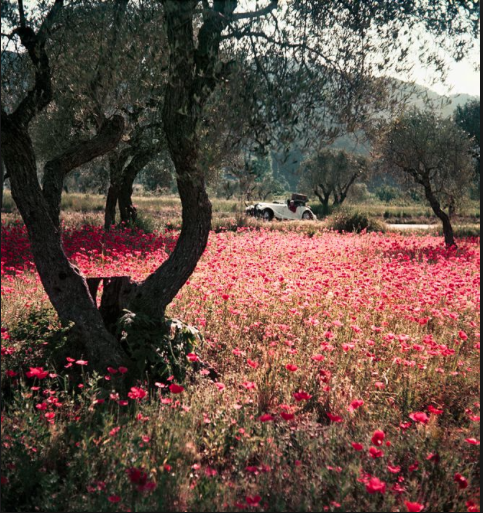
Florette in the Morgan, Provence, France, 1954 by Jacques Henri Lartigue
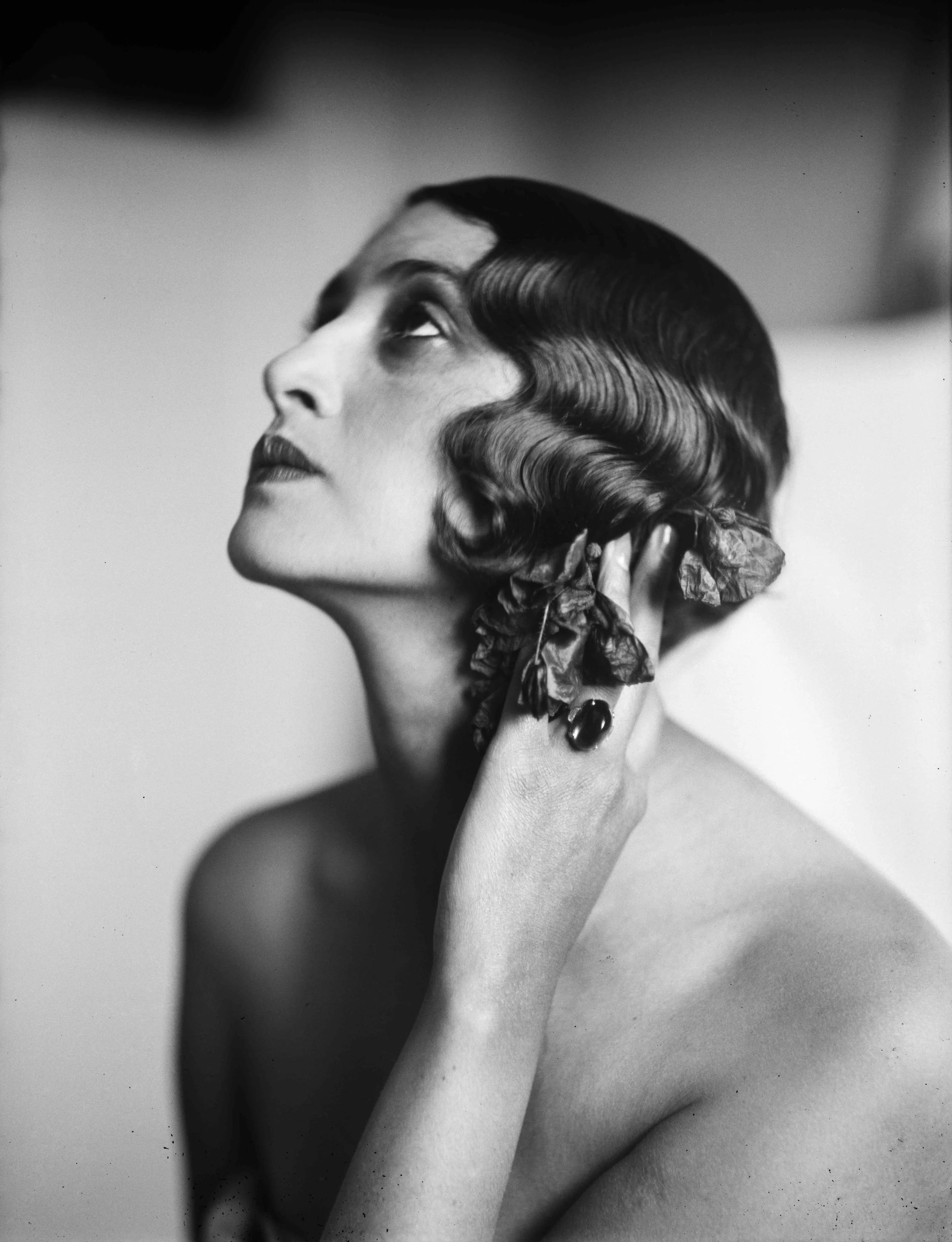
Renée, Juan-les-Pins, May 1930 by Jacques Henri Lartigue

ON DISPLAY: Framing the Beat by David Corio

De La Soul, The Apollo Theatre, Harlem, 1993 by David Corio
Elliott Gallery is excited to present:
Framing the Beat by David Corio
A selection of our favourites from David Corio’s retrospective exhibition held at Elliott Gallery in 2023.
Siouxsie Sioux of Siouxsie & The Banshees, Woolwich, London, UK, 1981 by David Corio
On display in the Elliott Gallery’s library until June 2024.

This Time Tomorrow by David van Dartel in New York

Elliott Gallery, in collaboration with KLOMPCHING Gallery in New York, presents:
This Time Tomorrow
A curated selection of works by David van Dartel
On view from 7th March to 26th April 2024 at KLOMPCHING Gallery, in New York.
Romeo, 2022 by David van Dartel
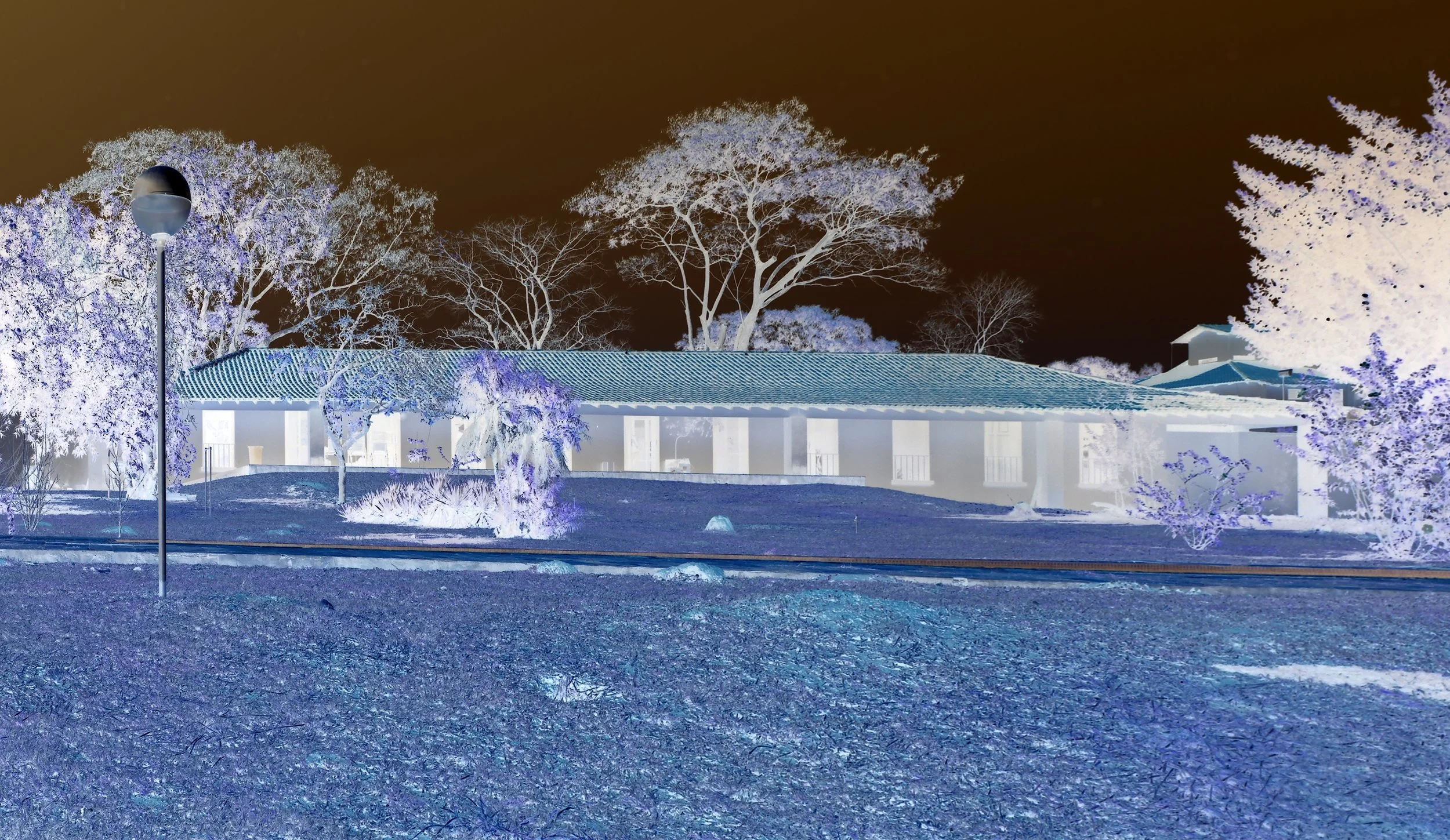
Imagem Secundária: Oscar Niemeyer and the Ghosts of Modernism

Elliott Gallery presents the latest body of work by British photographer Jason Oddy:
Imagem Secundária
Oscar Niemeyer and the Ghosts of Modernism

House, Casa Niemeyer, Brasilia, Brazil, 2017 by Jason Oddy
Elliott Gallery is pleased to present a solo exhibition by Jason Oddy, his first in Amsterdam for almost a decade. In this new body of work the British photographer continues his investigations of uncommon places such as the Pentagon and ex-Soviet sanatoria, by lifting the veil of the Brasilia home of legendary modernist architect Oscar Niemeyer.
Unlike almost every other of Niemeyer’s 600-plus buildings, the house he designed for himself while helping build Brazil’s new capital looks to the past rather than the future. Its clay-tiled roof and long south-east facing verandah, make Casa Niemeyer seem like nothing so much as a typical Brazilian farmhouse. Oddy encountered it on the eve of an exhibition of his own work there. When he arrived the place had been shuttered for 20 years. Apart from a few rudimentary pre-show preparations, the architect’s onetime home appeared largely untouched.
Punctum (Thonet), Casa Niemeyer, Brasilia, Brazil, 2017 by Jason Oddy
“I was particularly interested in how Niemeyer himself might have occupied the house. As I wandered around I started to ask myself what sort of imprint this legend of modernism might have left behind; in the built-in cupboards that lined the corridors and bedrooms; in the collection of his favourite Thonet chairs; in the asymmetric swimming pool that snakes through the garden like a broken-off fragment of his nearby futuristic city; even in the salmon-pink bath.
[…] I came across an article describing how a few months prior to my exhibition in Brasilia the then President of Brazil Michel Temer had moved out of the Niemeyer designed Palácio da Alvorada, the head of state’s official residence. Apparently he no longer wanted to live there because he believed the Alvorada was haunted. I began thinking about ghosts, and in particular the ghosts – however improbable – of modernism. I wondered if they too might have been lurking somewhere in Casa Niemeyer. And whether the photographs I’d taken there might provide some sort of clue as to their existence.
- Jason Oddy, wallpaper*

Wardrobe VIII, Casa Niemeyer, Brasilia, Brazil, 2017, by Jason Oddy

Wardrobe IV, Casa Niemeyer, Brasilia, Brazil, 2017, by Jason Oddy
While working on Imagem Secundária Oddy started perceiving these images almost as phantasmagoric relics. Ones which if turned around and viewed in a certain way might give up their secrets.
“By transforming modernism’s timeworn concrete trope into something more diaphanous, might it be possible to see past the apparent world to the ghosts of recent history? Not to then flee from them as Temer did, but rather to acknowledge them, and attempt to understand whatever it was – warning, admonition or promise – they might be trying to impart.”
Alongside the work from Casa Niemeyer, Elliott Gallery will show Spectre, a single large-scale photograph made at Niemeyer’s French Communist Party Headquarters in Paris, where Oddy also showed his series on Niemeyer’s Algerian period. Like a delirious ‘mise en abyme’, the exhibition Imagem Secundária appears as the final reflection in a vertiginous hall of mirrors.

Froukje

Elliott Gallery and David van Dartel are excited to announce our upcoming surprise, pop-up exhibition: Froukje. A new exhibition with photography by David van Dartel coming in January 2024, for only three weeks.


Framing the Beat by David Corio

Public Enemy, Hyde Park, London, England (November 2, 1987) by David Corio
"Making portraits of people you are in awe of, people like Anthony Burgess and James Brown, Robert Altman... There was something, like an energy from doing that sort of work."
– David Corio

Nina Simone, Ronnie Scott's, London, UK, 1984 by David Corio
Elliott Gallery is thrilled to host ‘Framing the Beat’, a retrospective exhibition of Music Photography by David Corio, opening in October 2023.
From Hip-Hop to Punk Rock and from powerful concert shots to intimate portraits, David has captured some of the most influential and iconic musicians of the last forty five years. Public Enemy, Nina Simone, Bob Marley, B.B. King, Nick Cave, PJ Harvey, The Cure, Run DMC, Grace Jones… just to name a few! His personal notes of each shoot offer a brilliant and deep insight of his subjects and his experience with them as well.
Initially as a freelance photographer, David started his career in the early days of the Punk Rock movement in London. In those early days, he would go to gigs around the city taking photos, which he would then have to turn around and print for the next morning. Soon enough, his extraordinary talent and skill caught the attention of publications and media, ultimately leading him to work as a commissioned photographer.
His work is featured on more than 500 record sleeves and is published in various magazines and newspapers. NME, The Face, Time Out, Black Echoes, the Daily Telegraph, New York Times, Rolling Stone and Mojo are only some of them.

Bob Marley, Last London show, Crystal Palace Bowl, London, UK, 1980 by David Corio
“I first started taking photographs probably when I was 5 years old. I remember seeing my granddad printing in a dark room he built under the stairs at his house. He was just doing contact prints, but there was something really exciting about seeing these little 2-inch square prints develop. And that hasn’t left me... The whole getting into a dark room is still something exciting, about seeing a print appear – particularly if it comes out well! That can be really exhilarating!”
– David Corio
Photography (NOT) to Wear - Part II by Antoni + Alison

Tractor by Antoni + Alison
Back in 2003, Elliott Gallery opened its doors as one of the very first, purely Fine Art Photography Galleries in The Netherlands, with an extraordinary exhibition by the internationally renowned British Fashion design duo, Antoni + Alison.
Twenty years later, we couldn’t be more thrilled and excited to welcome their fabulous work back in Amsterdam and celebrating our Anniversary in the best way we could ever imagine! So, Elliott Gallery is honoured to present:
Photography NOT to Wear - Part II
A solo exhibition by Antoni of Antoni + Alison


Donna No.1 by Antoni + Alison
Throughout their career, spanning more than 40 years, Antoni + Alison have studied to understand and work with the History of Fashion and for the past decade, the placement of fashion on a body. The draping of fabric, the height and placement of a line, the disguising or accentuating of a figure. The placement of a bow (or a tractor). Imagining how a Photograph can be worn in the best way possible.
This knowledge of both Photography and Fashion leaves them in a unique position to use the two in harmony, in order to balance a piece of work - whether it will be hung on the body or the wall. The cut of each dress has been meticulously worked out to be the most appropriate for the wearer, the photograph and the onlooker. All designed to not disturb the print, but equally make the wearer and the viewer happy and intrigued.


“Our fashion work has given us certain rules to follow. Like working with seasons and visually changing our work to follow each season. Our photographic work allows us to break certain rules. Like photographing the heaviest of items (the tractor or a heavy wool) and placing them on the lightest of fabrics, or making light even lighter, with our net, gauze or sky work.”
- Antoni Burakowski
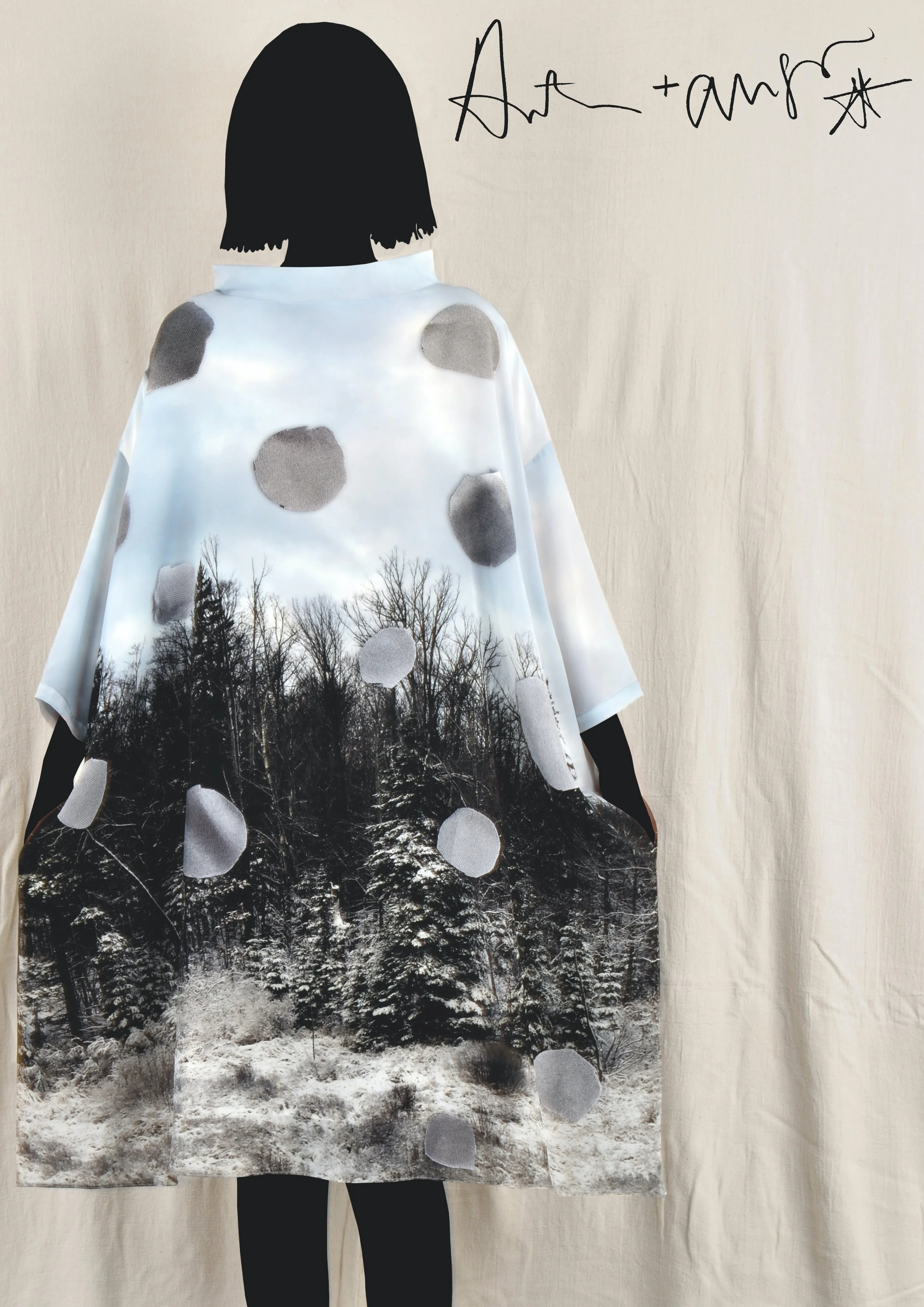
The Exhibition Opening will take place at Elliott Gallery on Saturday 27th May 2023 (17.00 to 20.00) in presence of the Artist.
The exhibition will be on view until 23rd of September.
Please, contact us at info@elliott.gallery for press inquiries. Antoni Burakowski is available for interview.
What Once Was by David van Dartel

Elliott Gallery is excited to announce our upcoming exhibition ‘What Once Was’, an exhibition of new works by David van Dartel. After the remarkable success of his first series ‘Op Vlieland’ and his first book ‘This Time Tomorrow’, David van Dartel presents his new body of work.
A vivid portrait of young adults in several European countries, carefully stylised, but still very close to Van Dartel’s sense of friendship. The series raises questions about the classical discourse of masculinity.
A Declaration of Love by Stella Gommans

A Gorgeous Mess by Stella Gommans
Elliott Gallery is excited to announce our forthcoming exhibition ‘A Declaration of Love’ by Stella Gommans.
Taking inspiration from the mastery of Dutch Golden Age painters and by blending this with 20th century photographers and their use of light, Stella Gommans’ resulting work is poetic, aesthetic, elegant and minimalistic. For Gommans – a former dancer and a largely self-taught photographer, nature in its broadest sense is an unfailing source of inspiration.

Be the Reason by Stella Gommans

SHOW + SPEEDWAY 72 by Henry Horenstein

Flag, Thompson Speedway, Thompson, Connecticut, 1972 by Henry Horenstein
Elliott Gallery is excited to announce the exhibition of living photography legend, Henry Horenstein. Focusing on two impressive, separate series of his portfolio, SHOW + SPEEDWAY 72, we aim to offer a glimpse into his distinctive and extraordinary body of work.
American photographer, teacher and author Henry Horenstein describes himself as a documentary photographer, focusing mainly on fringe, working-class and under-recognised communities. Exploring subjects of heritage and storytelling, he manages to offer intimate and exciting insights into different places and eras, such as the race car drivers of the 70s and modern burlesque performers of New Orleans.

Can Do!, Thompson Speedway, Thompson, Connecticut, 1972 by Henry Horenstein
In SPEEDWAY 72, Horenstein dutifully records and preserves the world in a small-town of New England in 1972. Inspired by the great chroniclers of the oddities of urban life, Brassai and Weegee, Horenstein documents the old, beat-up cars customised for racing, the nostalgic styles of the car drivers and their loyal fans.
In opposition to the rough and rusty portraits of the SPEEDWAY 72, Henry explores the neo-burlesque movement of the early 2000’s in his SHOW series. Starting in New Orleans, he experimented shooting legends like Dita Von Teese and Catherine D’Lish and gradually he dived deeply into the burlesque culture. To Henry, modern burlesque performers embody the traits of true artists – creativity, passion and determination to fulfil their vision of the world in song, dance, humour and narrative. They are different from everyone else, and they proudly show it. Living on the margins, the best of today’s burlesque artists – as well as drag, fetish and sideshow performers, have a signature vision, strong message and execution.

Jackie Beat, California Institute of Abnormalarts (CIA), Los Angeles, CA, 2007 by Henry Horenstein

Henry Horenstein (b.1947) studied history at the University of Chicago and earned his BFA and MFA at Rhode Island School of Design, where he has held the position of Professor of Photography since the 1970s. A student of legendary photographers including Harry Callahan, Aaron Siskind, and Minor White, Horenstein cites these figures in encouraging his compelling approach to composition and subject matter. Renowned curators and colleagues, including celebrated photographer Nan Goldin discuss Horenstein's influence and talent that set him apart.
His work is collected and exhibited internationally, and he has published almost forty books, including two instructional texts used by hundreds of thousands of photography students over the past 40 years. Horenstein's legendary work has been widely recognised, the Smithsonian Institute listing him as one of the ten defining figures in the history of photography alongside icons like Julia Margaret Cameron, Dorothea Lange and Richard Avedon.

Count to Ten: a personal curation of gallery favourites
A group show curated by one of the gallery’s former staff members.
How Deeply Must One Bury a Secret One Wishes to be Discovered?
A solo exhibition of the GUEST series by Christopher Bucklow

Cars Cars Cars
Created in partnership with Republiek Gallery this collaborative exhibition hosts several artists across our two collections, tracing the car as a trusted vehicle, plaything and cultural icon across the decades. Our group show pays homage to the enduring power of the car, its cultural meanings and its visual significance.

Winter 2021/2022
Photography by Jacques Henri Lartigue, Norman Parkinson, Christopher Bucklow and more.

Spring 2021: Light vs. Dark
A vibrant tribute to colour in contemporary photography, showcasing some of the gems from the gallery’s extensive archive.

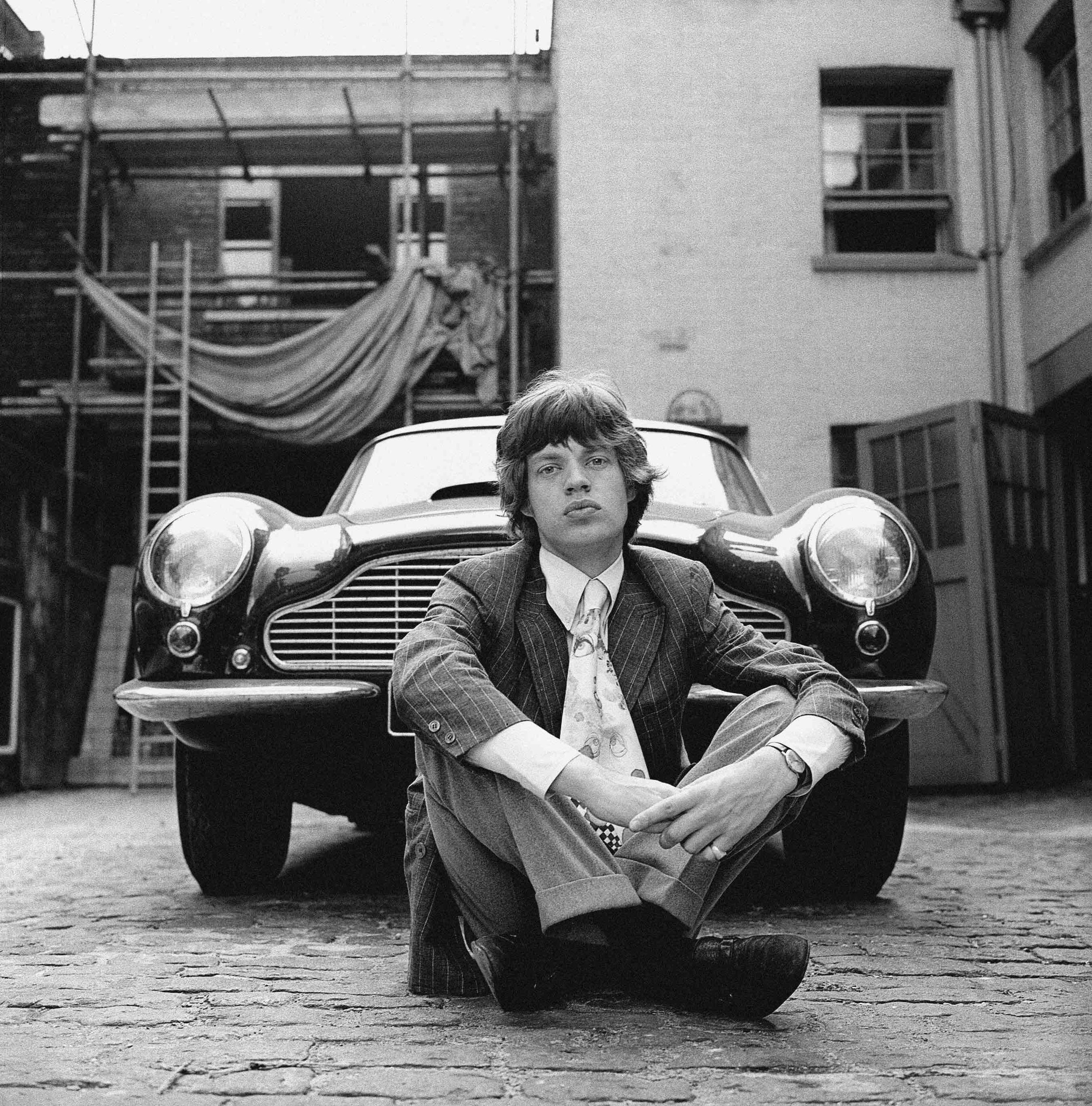
Licht Gevoelig - Light Sensitive
Two Separate Series Focusing on Light and Layering
by Annelie Bruijn & Barnaby Irish