
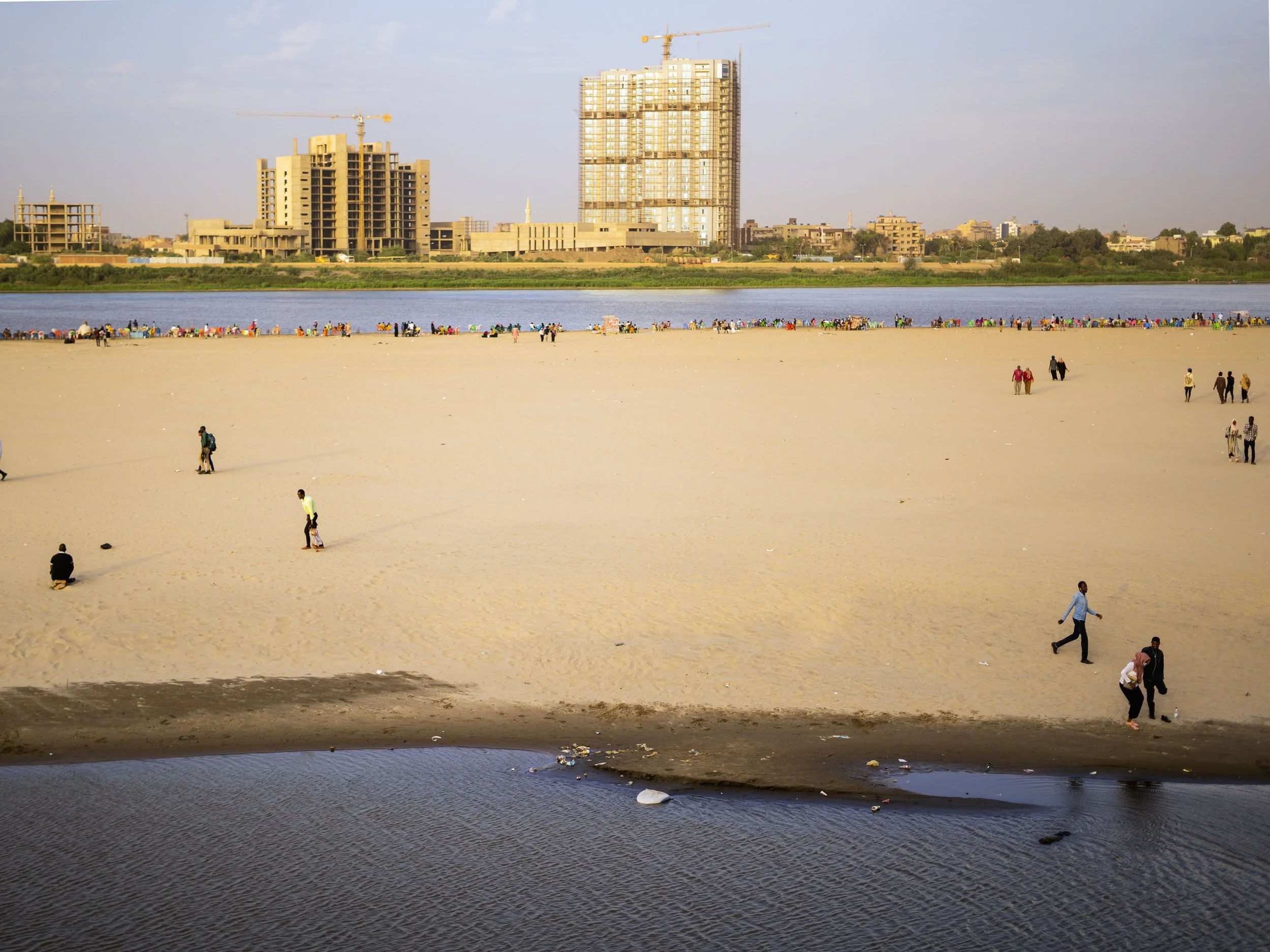
By the River
by Ala Kheir
Curation and interview by Eirini Alexandrou
Elliott Gallery is thrilled to present one of the winning series of our Open Call for Exhibition Proposals 2025:
By the River by Ala Kheir
A portrait of Khartoum, the Memory of a City (2020-2022)
Since the outbreak of war in Sudan in 2023, images of Khartoum have become synonymous with conflict, destruction, and displacement. The world has largely watched the city through the tragic lens of warfare. Yet, the work of Ala Kheir in By the River offers a vital counter-narrative, portraying a city defined by life, intimacy, and profound human connection.
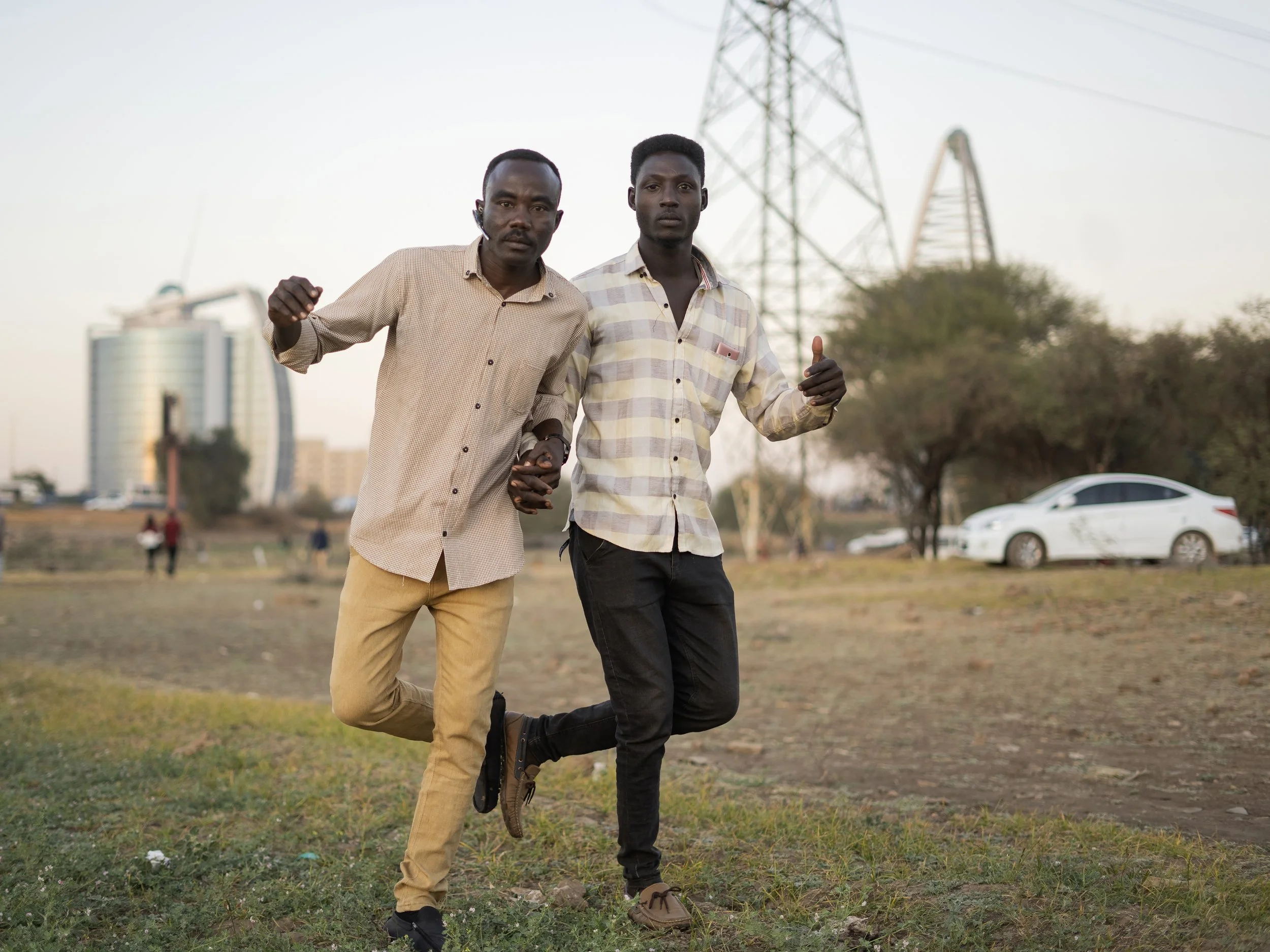
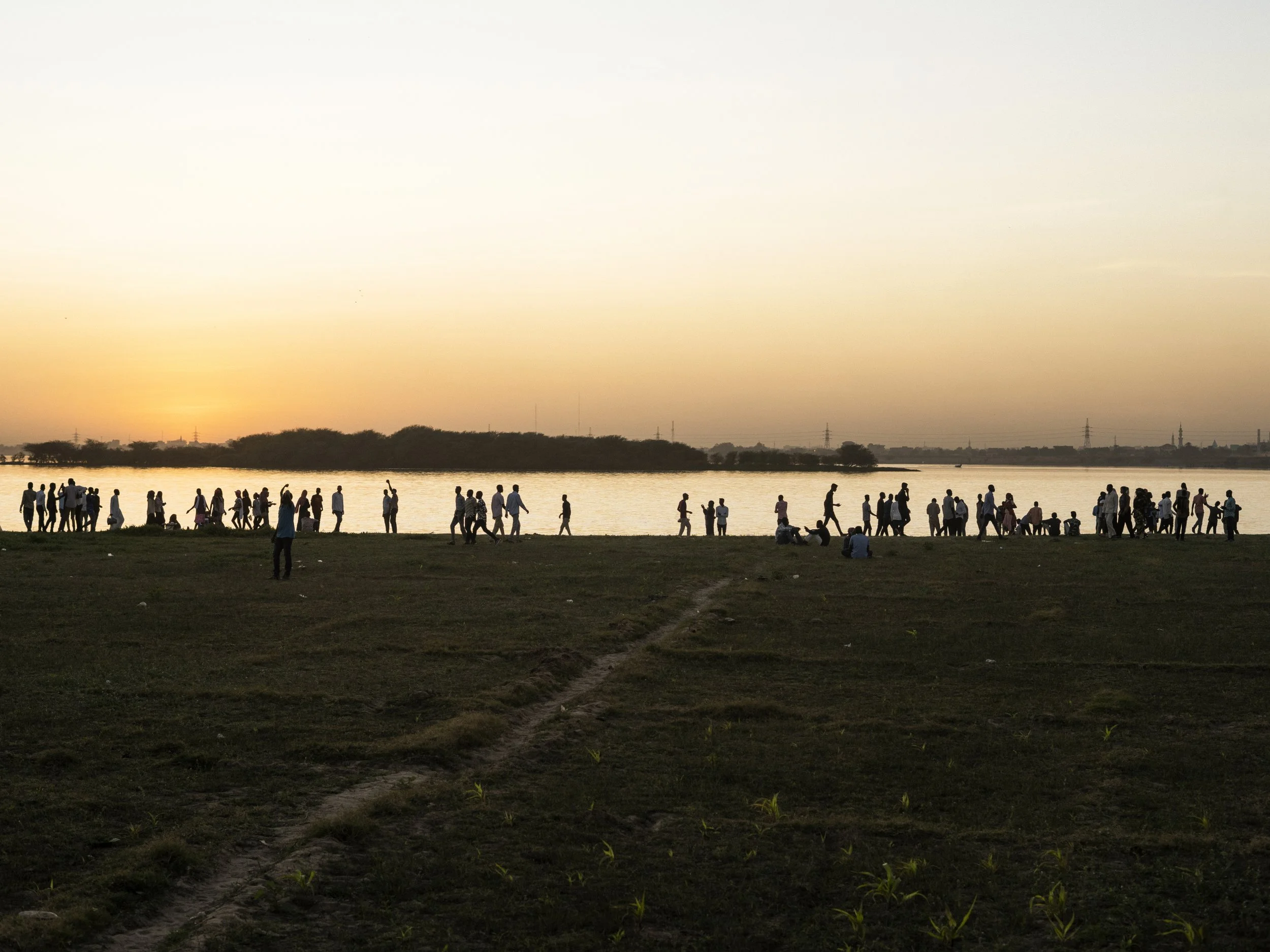
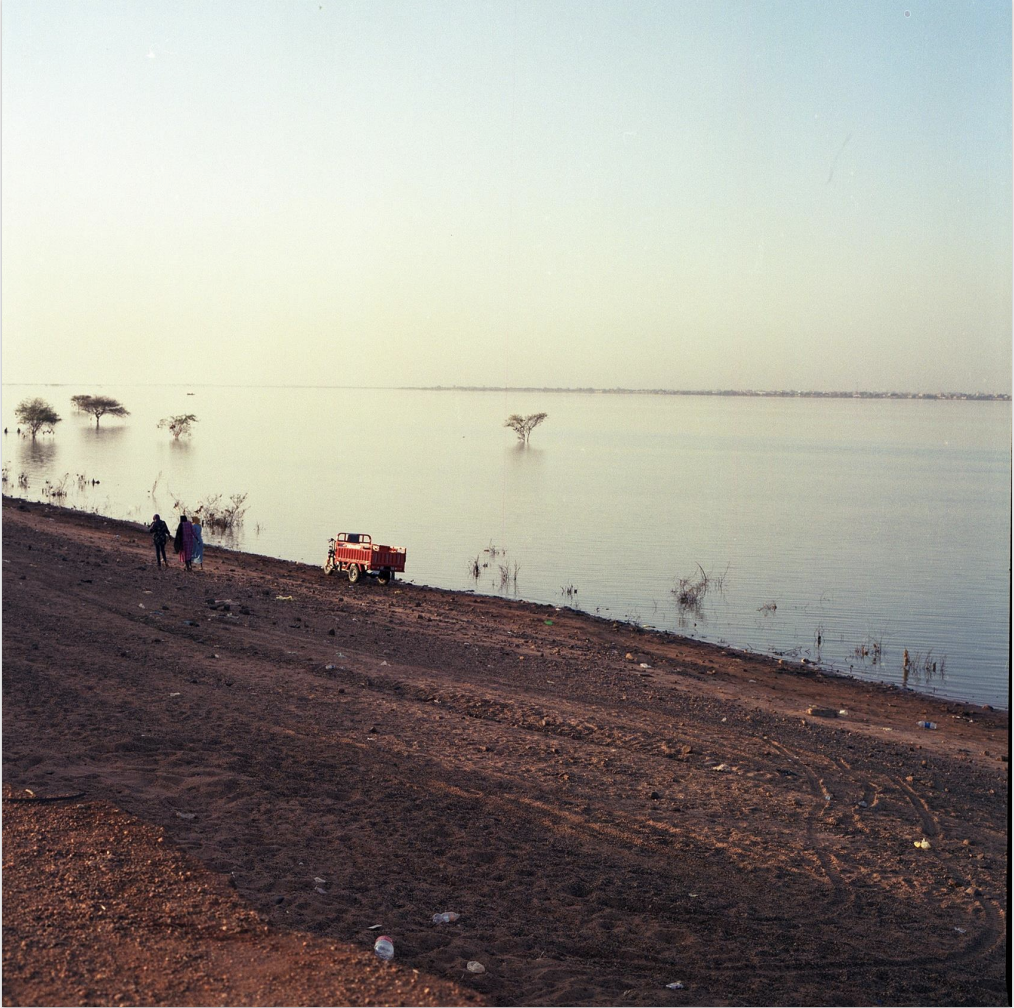
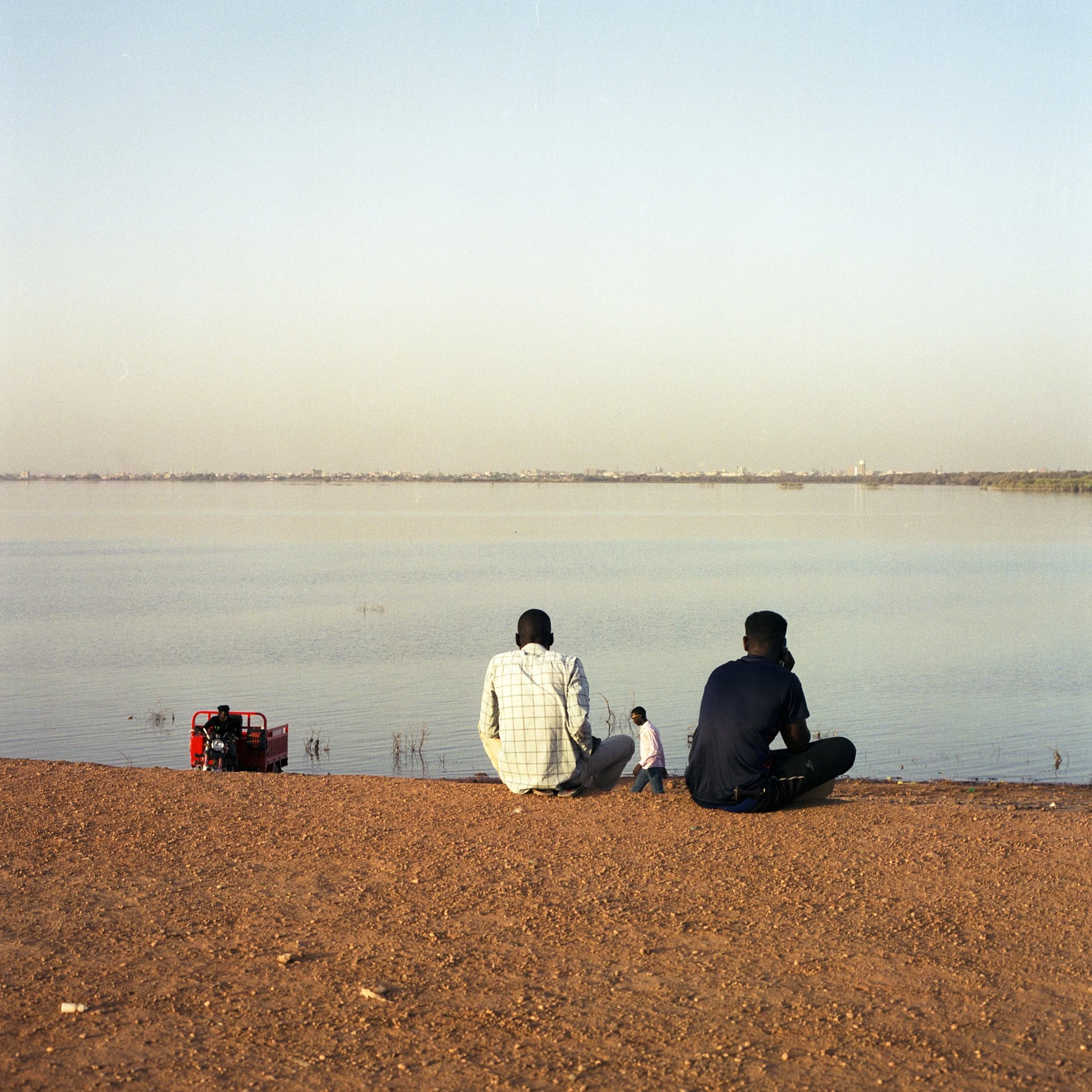
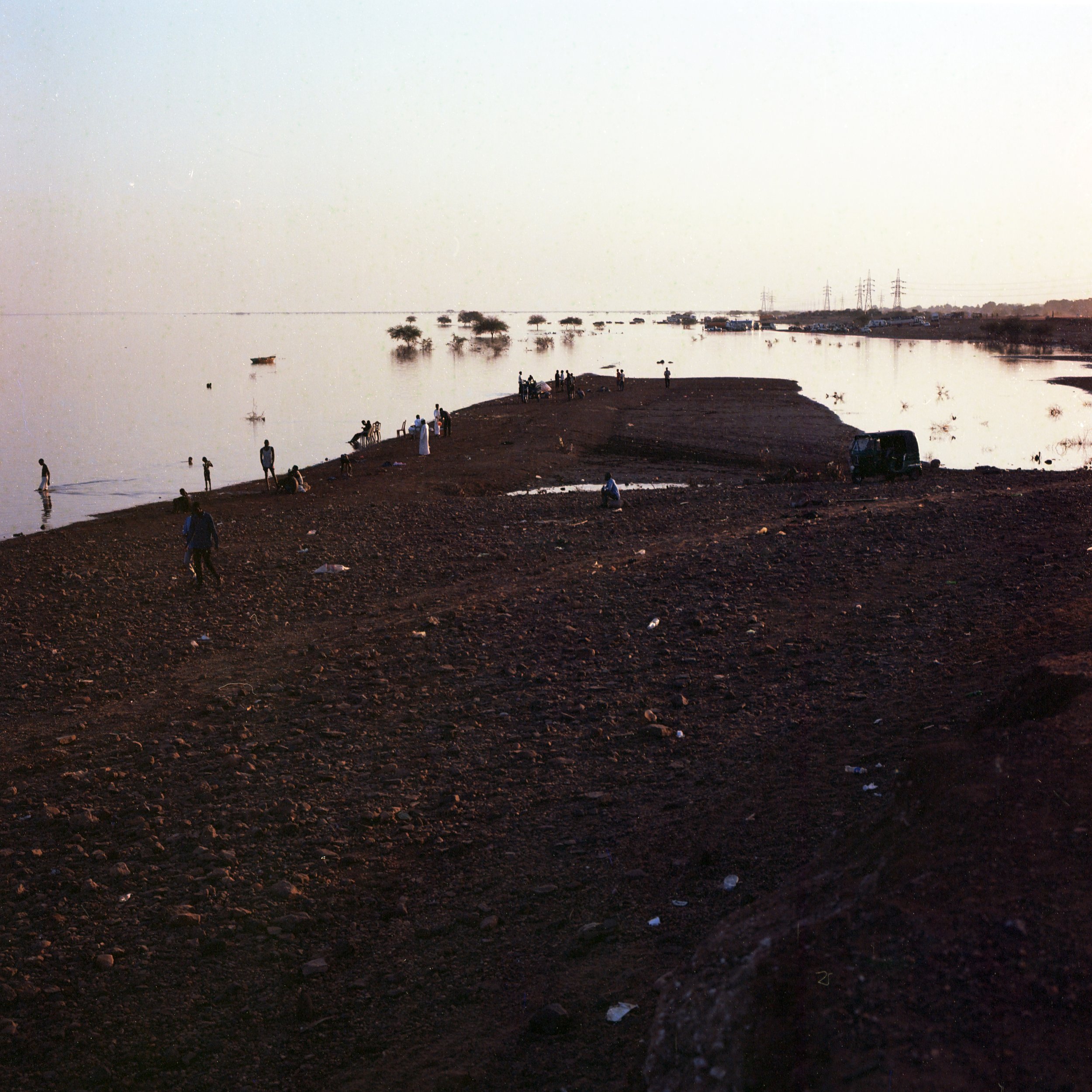
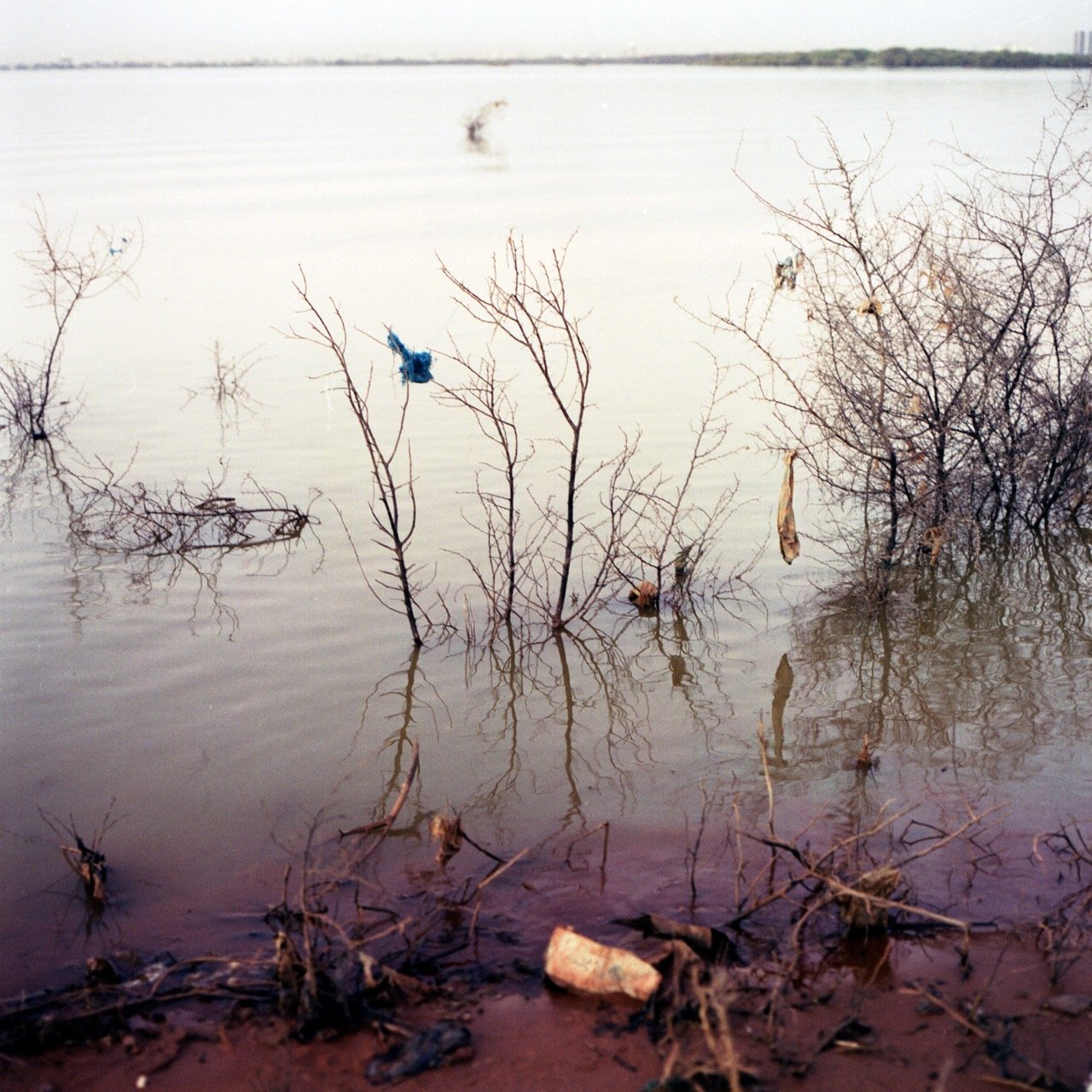
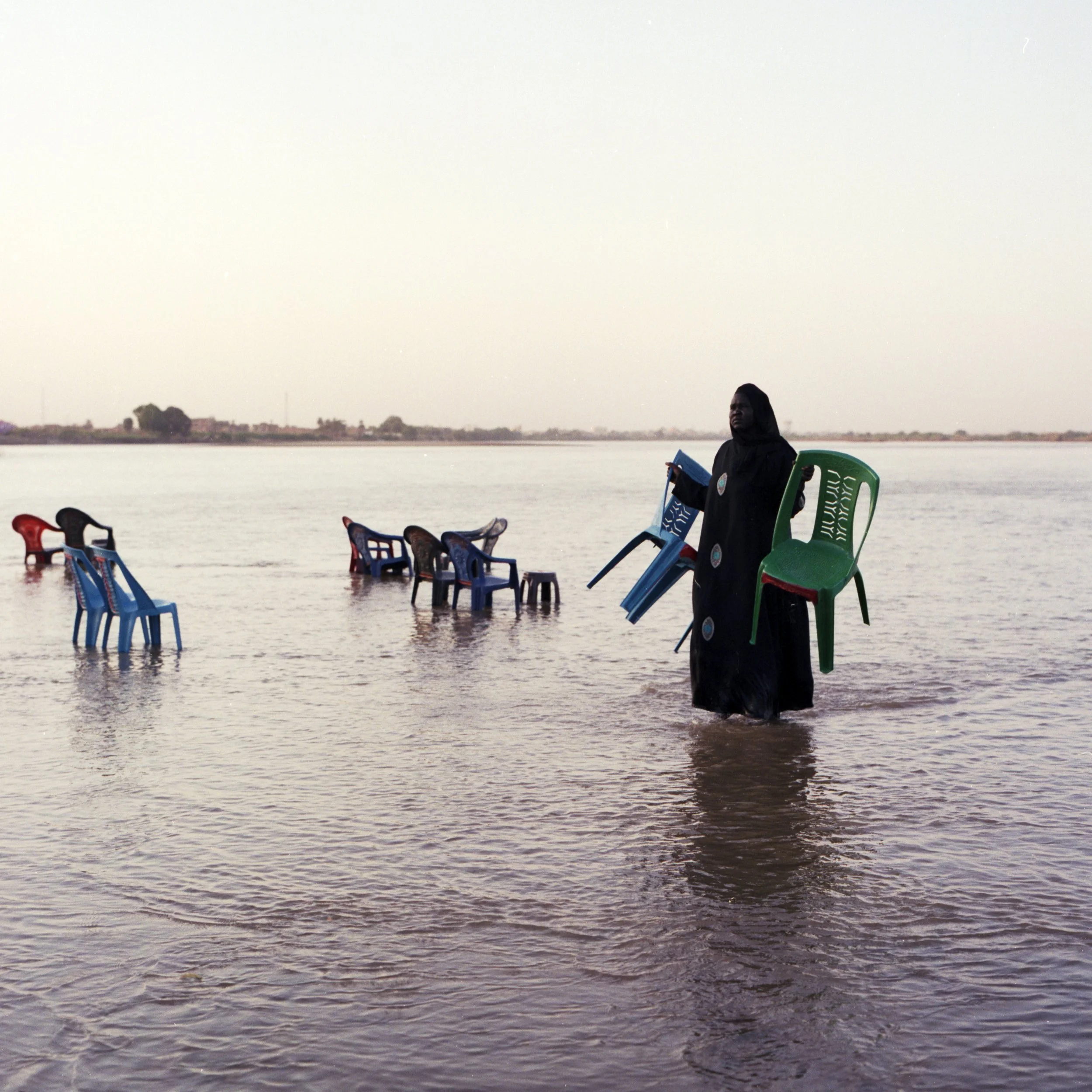
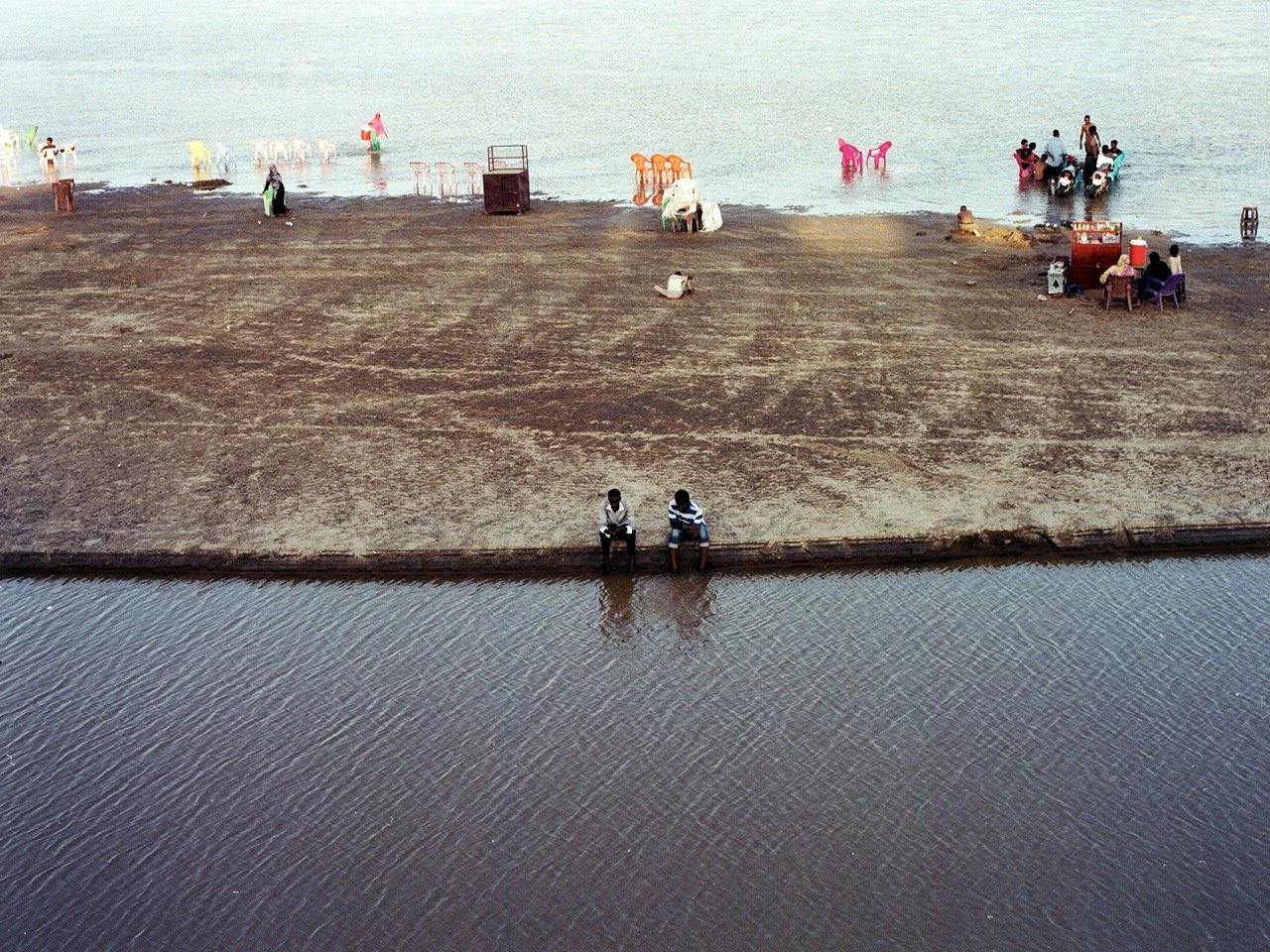
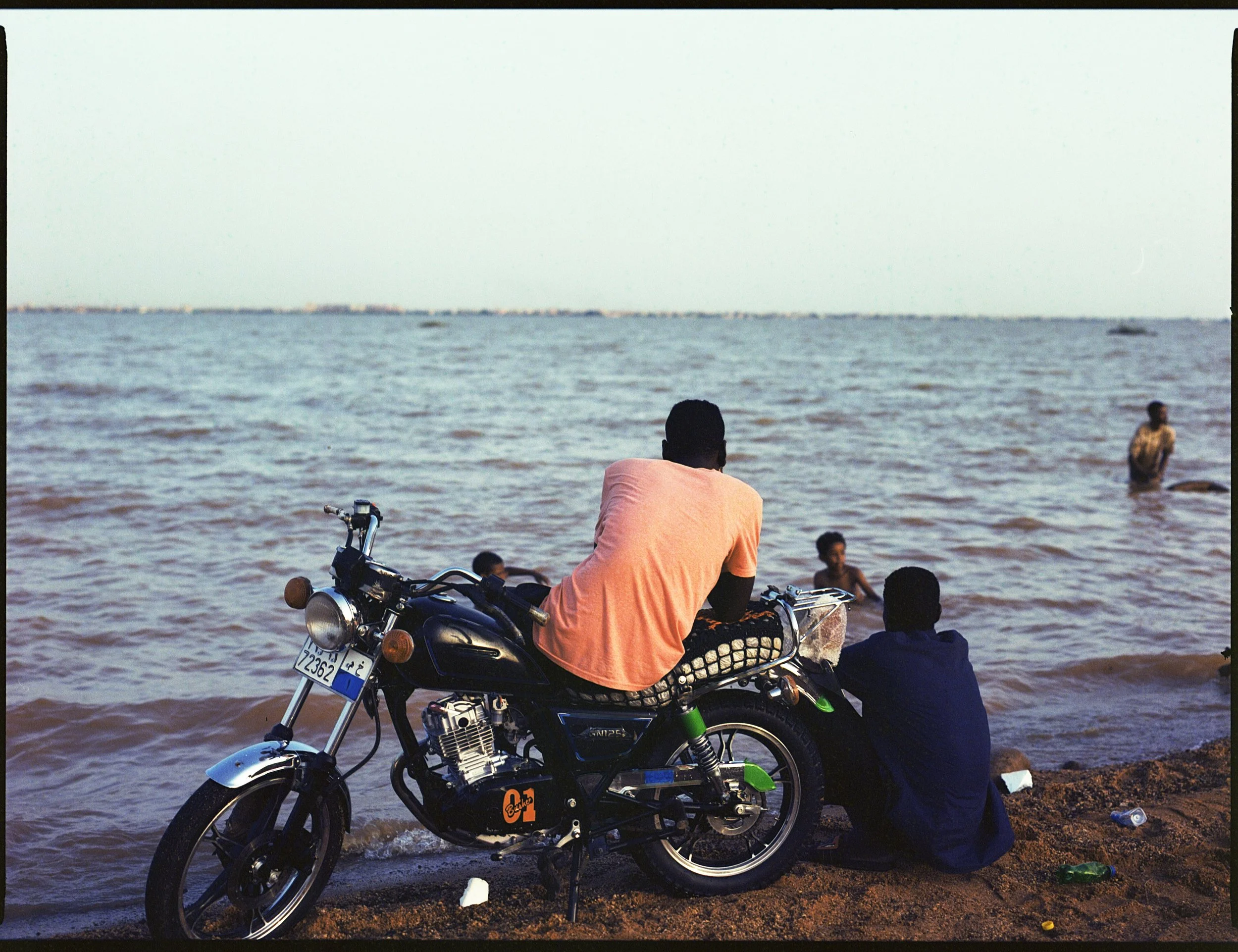
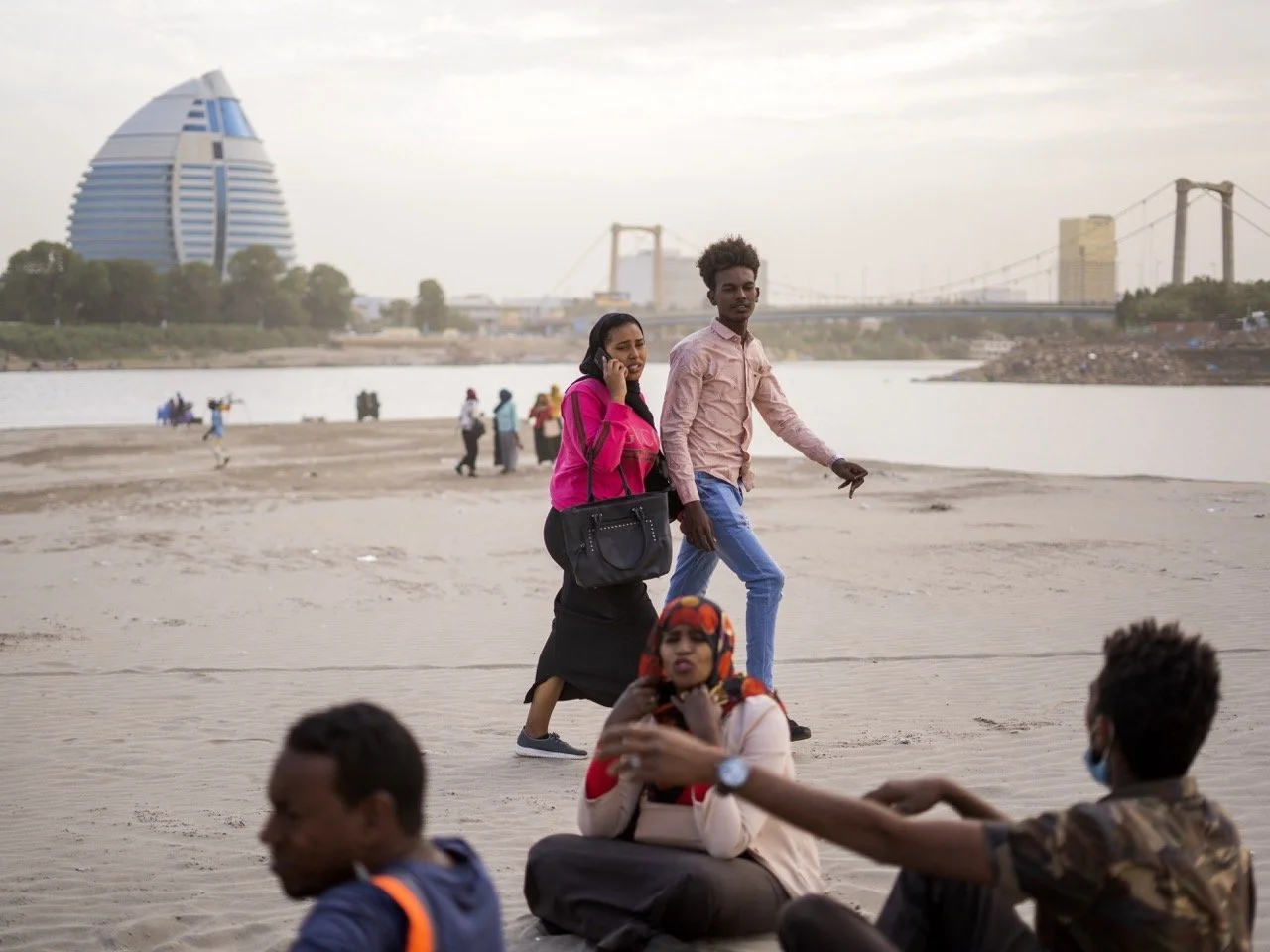
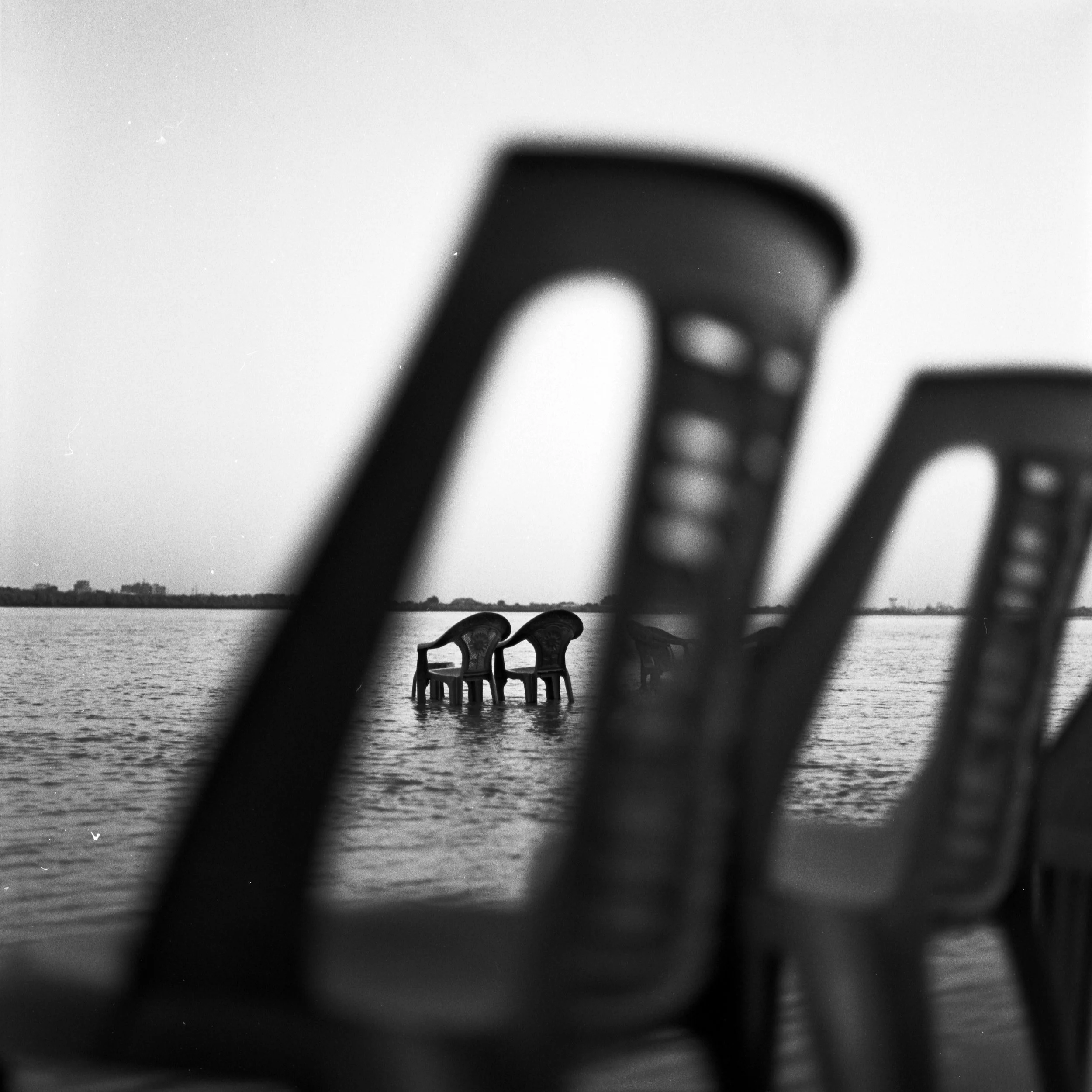
Ala Kheir’s photographs intentionally step away from documenting the violence of the present. Instead, they preserve the city’s soul through its most defining feature: the Nile. Captured over years of quiet observation, Khartoum is depicted not as a war zone, but as a living, breathing sanctuary of shared human experience. Here, the riverbanks are reimagined as spaces of collective peace, convergence, romance, and childhood innocence.
By juxtaposing these moments of serenity against the harsh reality of current events, By the River becomes an act of artistic resistance. It challenges us to look beyond the headlines and remember what is being protected, what is missed, and what survives in the collective memory of a people. It stands as a tender, fragile testimony to a home that remains vividly alive in the hearts of those forced to look at it from a distance.
The exhibition concludes with a short interview with the artist.
“I was born in the far west of Sudan, which is very distant from the Nile, in fact very distant from any body of water. When my family moved to Khartoum, I was five years old, and everything changed. Khartoum is a city defined by meeting, by the convergence of the Blue Nile and the White Nile as they become simply the Nile. Long before I understood geography or history, I understood that something important happened there.
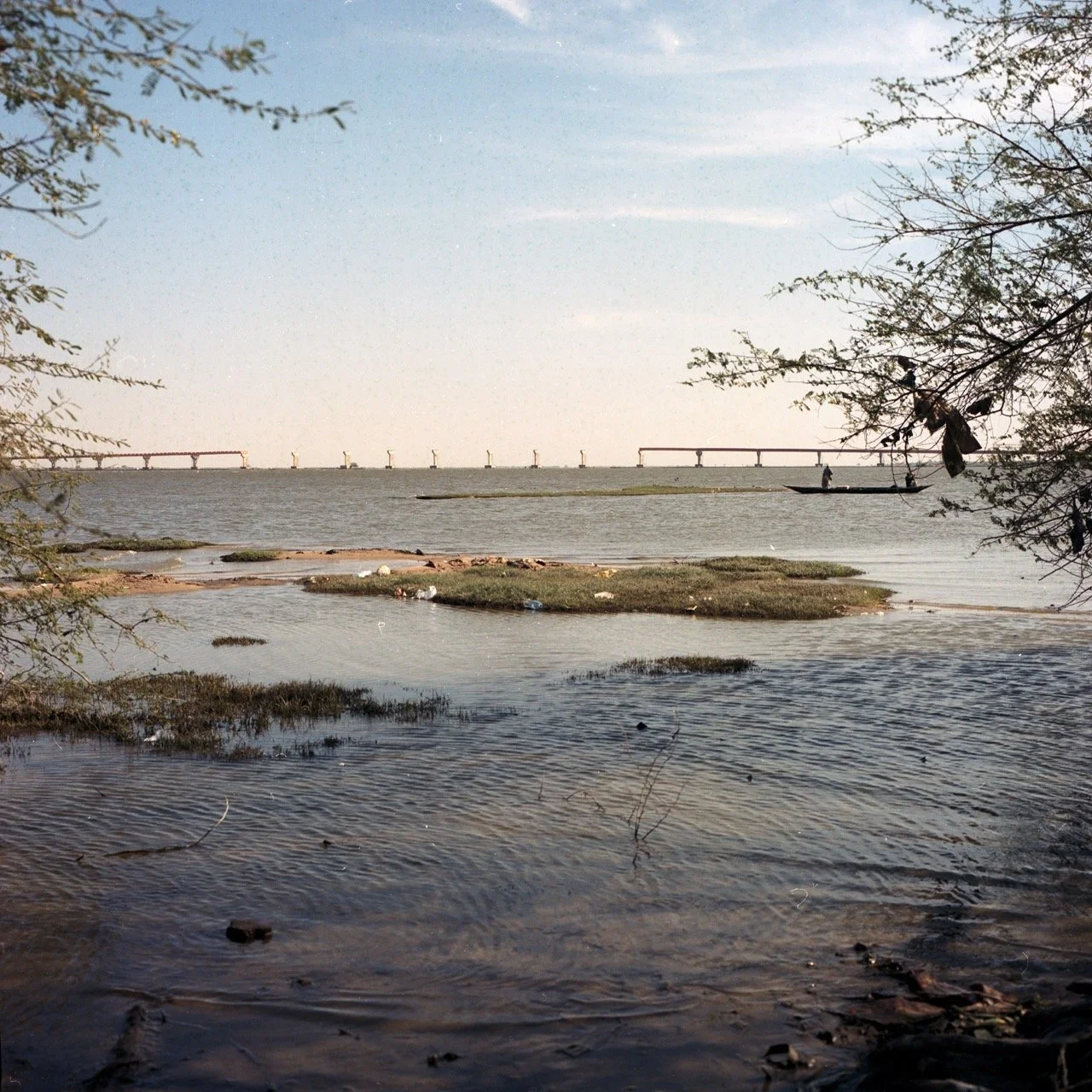
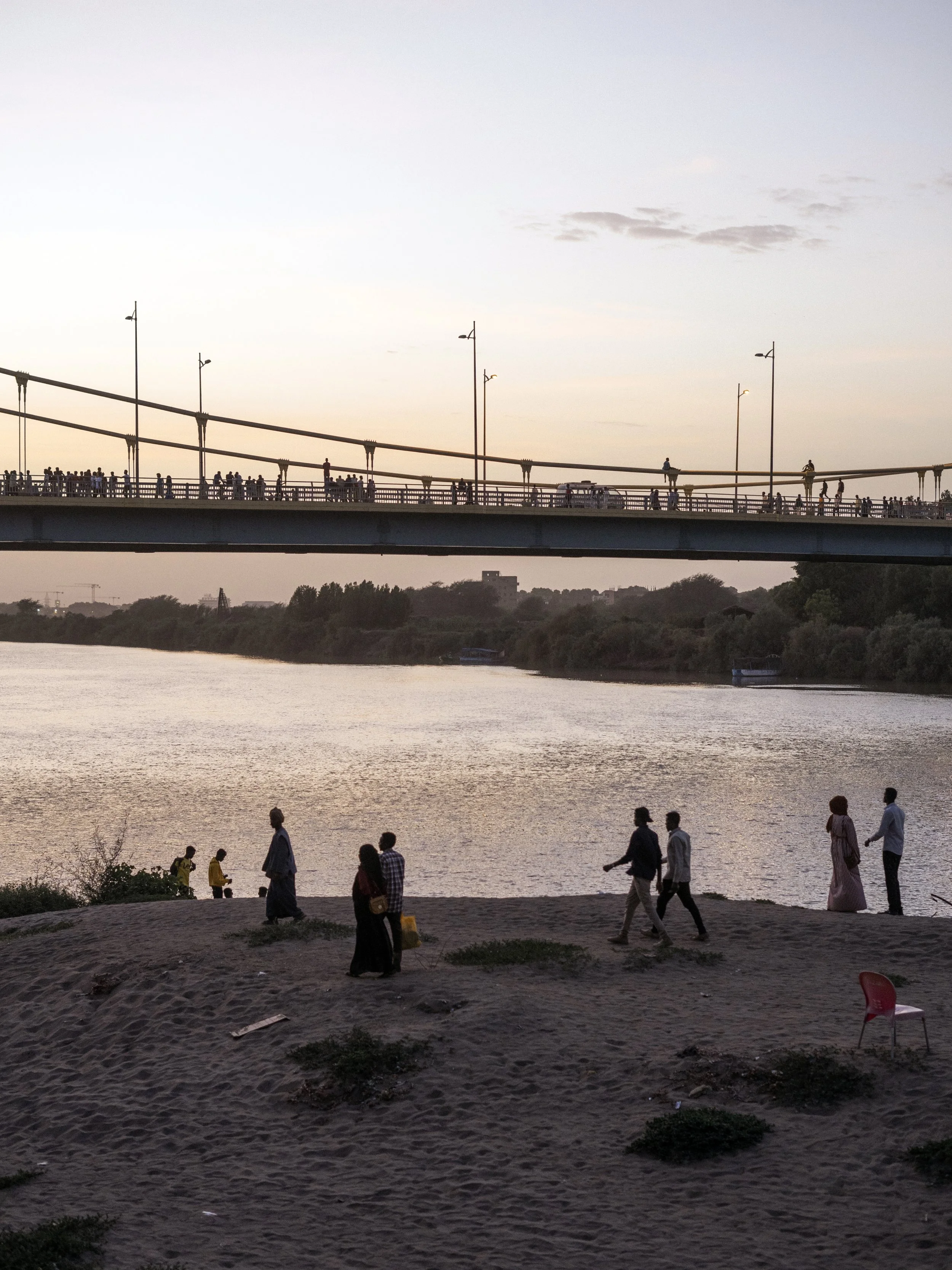
Crossing the river became a ritual of childhood. On buses with my parents, or during school trips, the moment we approached the bridge, the atmosphere in the bus would shift. Children who had been loud only seconds before would fall silent. Faces turned to the windows. The river asked for attention. It demanded stillness. I remember watching it pass beneath us while the cooler air sets the mood.
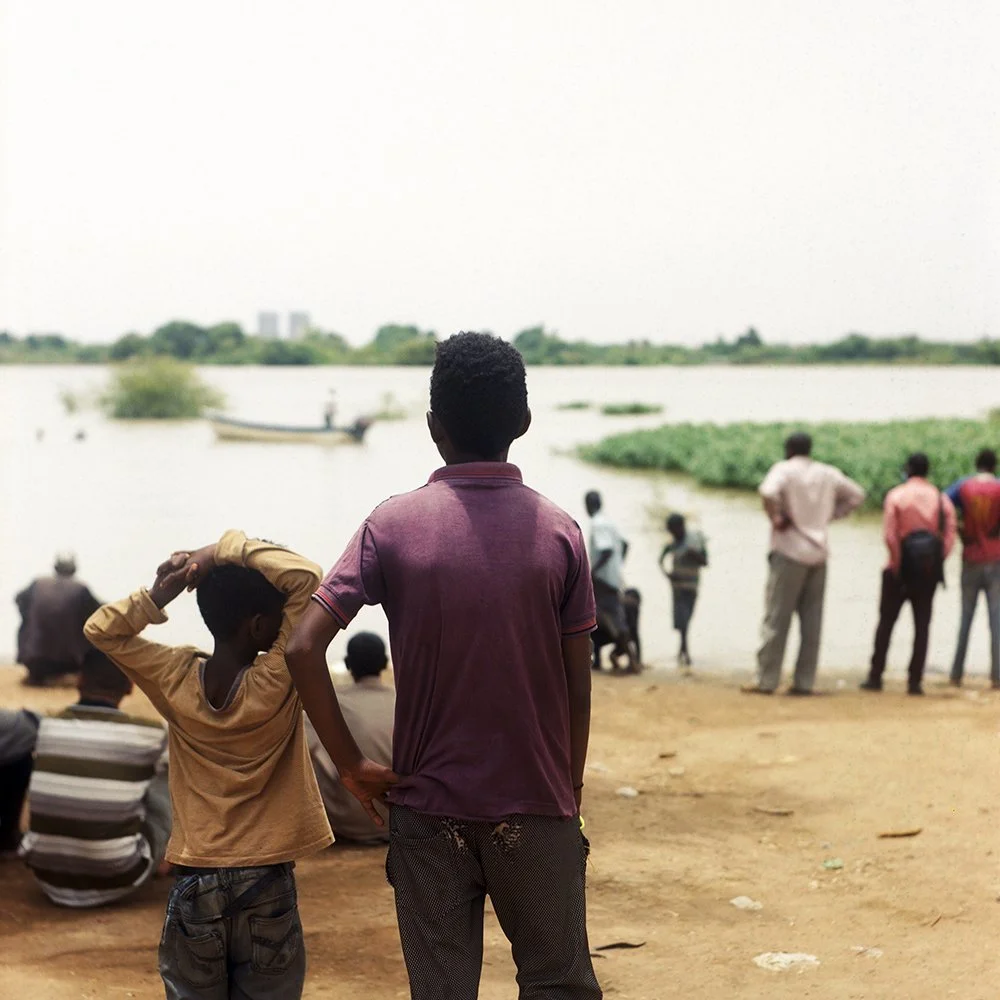
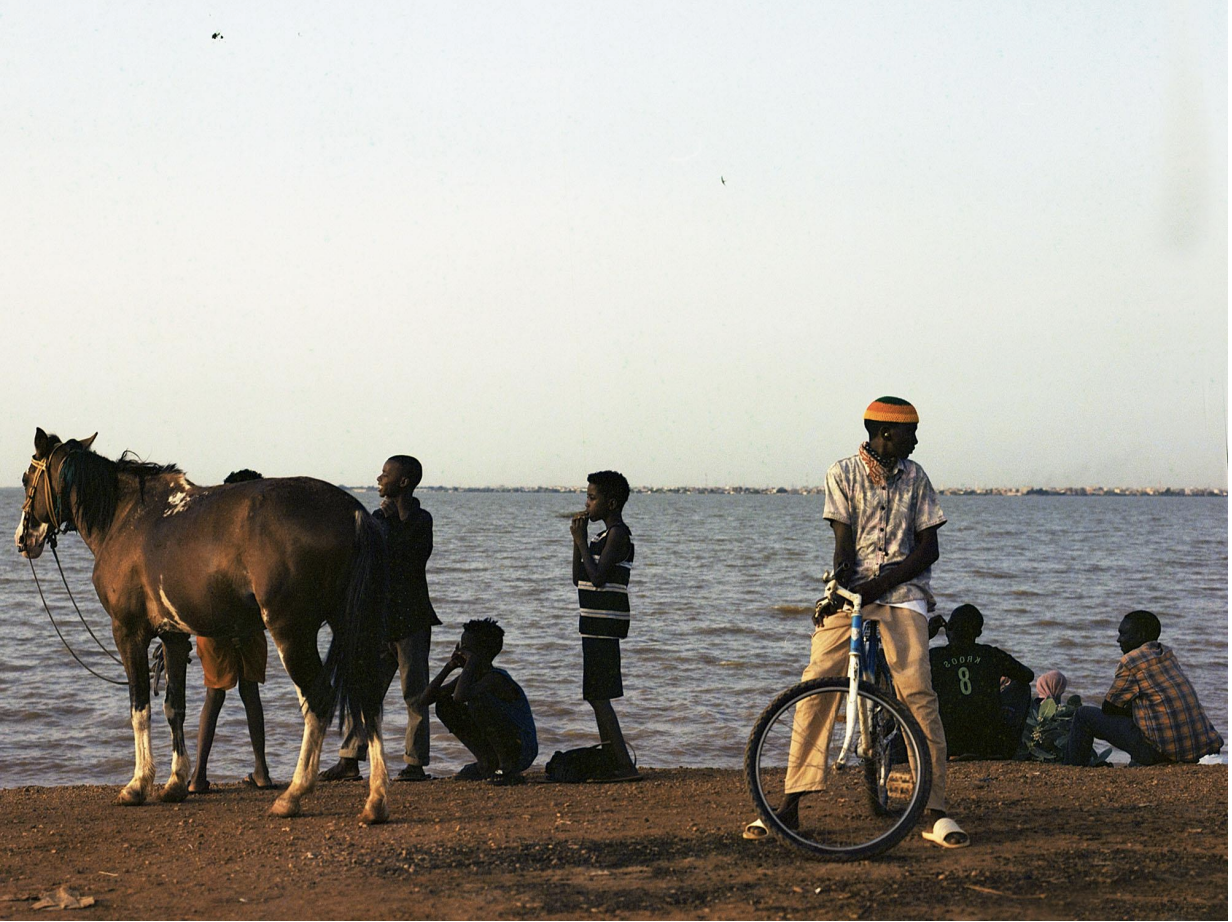
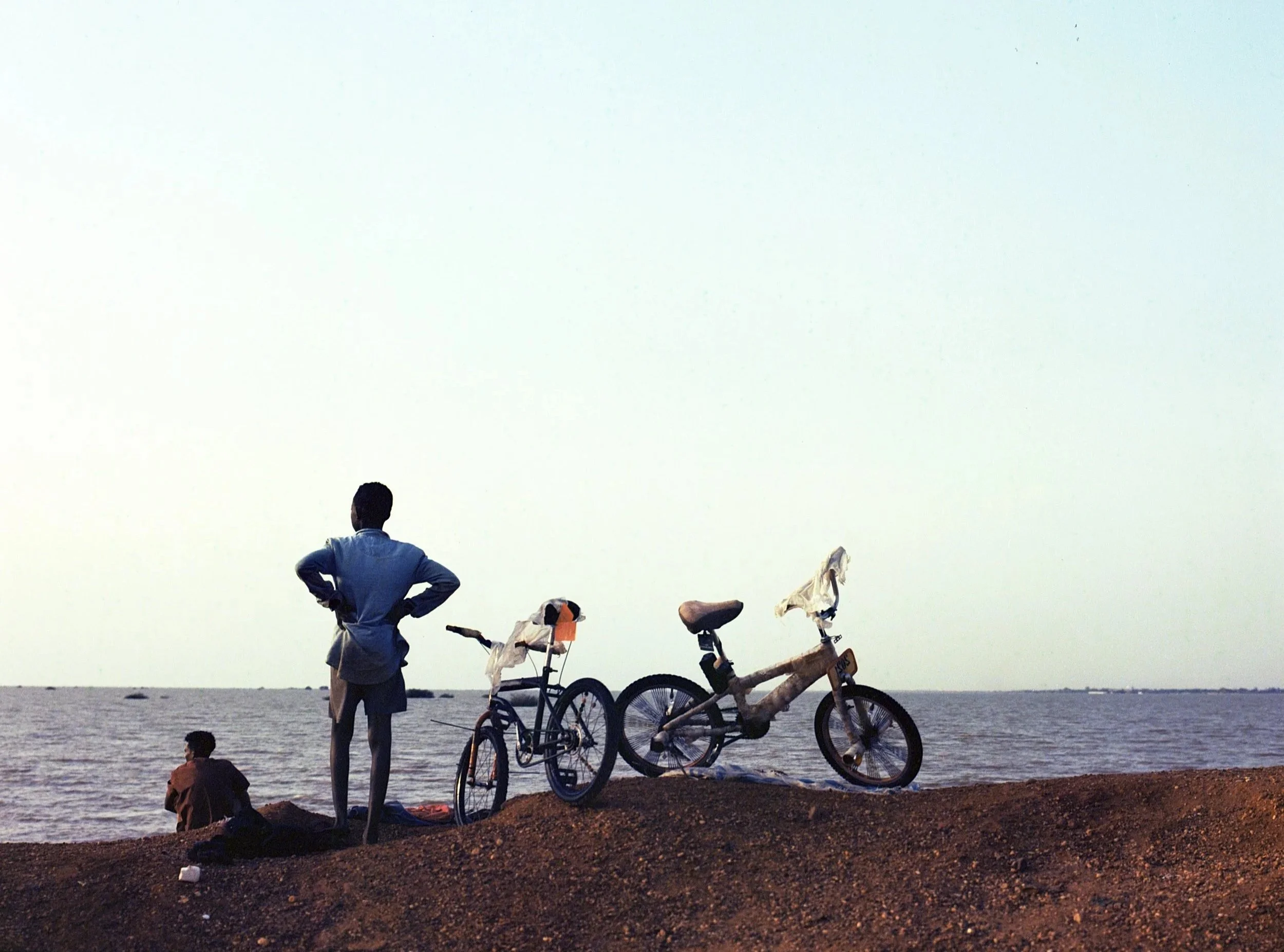
I grew up in Omdurman, and as I grew older, the river moved closer to me not physically, but emotionally. Like many Sudanese families, ours carried a quiet fear of the Nile. Parents warned their children about its strength and unpredictability. Boys were not meant to go there alone. But being boys, we went anyway. We rode bicycles across long distances under the sun just to reach the banks, where hours passed without measure. The river became a place of friendship, risk, freedom, and discovery. It was where time slowed, and where the city seemed to breathe differently.”
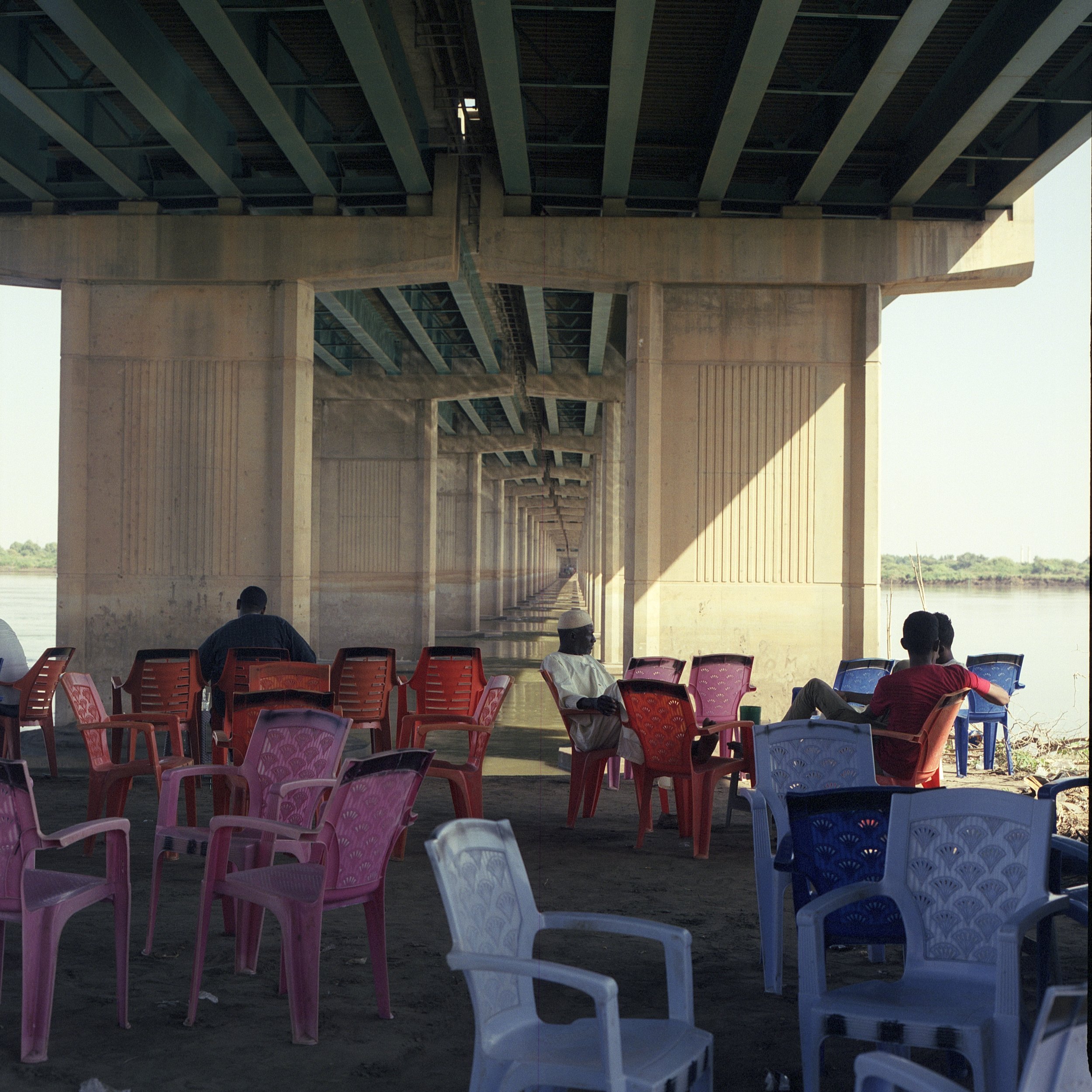
“In Khartoum, the Nile is more than a river. Its banks form the most open and shared public space in the city, a place where differences soften, where strangers become neighbours for an evening, where families gather, lovers walk, vendors wait, and people sit quietly with their thoughts as the light changes over the water. Each stretch of the river carries its own rhythm, its own atmosphere, its own memory. I returned to these places again and again over the years, sometimes with intention, sometimes simply because they called me back.”
“Photography entered this relationship slowly. At first, I carried the camera as a companion. Later, I began to understand that what I was photographing was not only the river itself, but the fragile and continuous conversation between people and place. The Nile became a space where I could observe the city without interruption, where I could watch how bodies move through public space, how silence exists inside crowds, how belonging is performed in small gestures. Often I photographed. And othertimes it was enough simply to sit and remain present.
Through this series, I am trying to trace these quiet encounters between myself and the river, between the city and its people, between memory and the present moment. The photographs are not only about landscape or public life; they are about proximity. They are about the act of returning. They are about learning how a place slowly becomes part of your way of seeing the world.
Since April 15, 2023, Khartoum has been living through war. The riverbanks that shaped these memories. These shared spaces have become distant and inaccessible. Places that once held movement and conversation now exist in another condition, one I cannot fully reach from where I stand today. Looking at these images now, they no longer feel like simple documents of everyday life. They feel like fragments of an unfinished dialogue. They carry questions I cannot yet answer.
Distance has changed the meaning of the photographs. What once felt like observation now feels like testimony. What once felt ordinary now feels fragile. The river remains, but my relationship to it has shifted. Home has shifted.
By the River is an attempt to remain in conversation with Khartoum even while being away from it. It is a way of holding onto the memory of shared space, of light on water, of evenings along the banks where the city gathered without needing permission. And I am still hopeful that one day I will return to those places, sit again beside the river, and continue the long, quiet exchange that began when I was a child looking through the window of a moving bus, watching the Nile pass beneath me.”
Capturing true intimacy in public spaces can be difficult. How did you navigate using your camera to ensure people felt safe, seen, and comfortable sharing these quiet moments with you?
The short answer is "Time".
One of the advantages I had while working on By the River was time. This was a project I photographed over many years. I kept returning to the same places along the Nile, often without a specific agenda. Photography is often associated with intrusion, but I was interested in creating images that respected people's presence. Sometimes that meant speaking with people before making a photograph; other times it meant keeping a respectful distance and waiting for a moment that felt genuine. What is also unique about these spaces is that they are often frequented by the same people, including me.
Looking at these photographs from a distance today, do they bring you comfort and grounding, or do they deepen the grief of what is currently out of reach?
I think they do both. On one hand, these photographs bring comfort because they remind me of a Khartoum that was full of life, connection, and simple everyday moments. At the same time, they deepen the sense of loss. What was once an observation of everyday life has become a memory.
The photographs remind me not only of what has been lost, but also of what is worth rebuilding and returning to.
You describe these photos as 'fragments of an unfinished dialogue.' If you could stand on the banks of the Nile today, knowing all that has transpired, what is the first photograph you would take?
I would probably make a very simple photograph. Not of destruction or the visible traces of war, but of people returning to the river. The project was interrupted by war, but the conversation between the city, its people, and the river is not over. The first photograph I would take would be one that speaks about resilience, return, and the possibility of belonging again.
Your photographs offer a peaceful contrast to the devastating reality of Khartoum today. Did you intend them as a form of preservation from the start, or did their meaning only shift after the conflict began?
When I started, I was not thinking about preservation in the archival sense. I was simply photographing the river as a place that I loved and kept returning to. The Nile was part of my everyday experience of Khartoum, and the project grew out of a personal curiosity about how people used these spaces and what they revealed about the city and its people. The meaning of the work changed after the war. Looking at these photographs now, I realize that many of the things I took for granted. As someone who had to leave Sudan, the photographs have become deeply personal. They are not only images of a city; they are reminders of my own life there. So while preservation was never the intention, the work has become a way of holding on to a Khartoum that exists in my memory. And I am grateful for having experienced and documented those moments before everything changed.
About Ala Kheir
Ala Kheir (b.1985) is an acclaimed Sudanese photographer, curator, and educator, based between Sudan, the United Arab Emirates, and Uganda. Through his photography, he creates personal perspectives and narratives that reflect his immediate surroundings.
Ala has been actively engaged with the Sudanese photography archives, researching, archiving, restoring, and exhibiting the work of photographers like Elsharif Aboud and Abbas Habiballah. He has also been involved in training and networking for photographers in Africa, notably with the Centers of Learning for Photography in Africa in Johannesburg, South Africa. This network brings together African platforms active in photography education, where the members exchange ideas and teaching methodologies, and also learn as trainers.
Currently, Ala runs The Other Vision (TOV), a photography platform that focuses on photography education and training in Sudan, through which he assists young photographers and connects Sudanese artists to the rest of the continent. Through TOV, he engages with the public in an attempt to address social issues and change in Sudan. As the co-founder of the Sudanese Photographers Group, he has spent over a decade mentoring emerging talent and expanding the photography landscape in East Africa. His own documentary practice centers on identity, territory, and social change, and his work has been exhibited widely at international biennales and festivals.
Ala Kheir is invited to collaborate with BredaPhoto Festival 2026 (11 September - 25 October 2026) as a curator, to showcase the work by six Sudanese photographers: Wala Yassin, Ammar Abdalla Osman, Ammar Yassir, Hashim Nasr, Musab Abushama, and Fatima Alam.