
Rituals of the Everyday
Bedmaking by Madelon Hooykaas
Curated by Katya Gubareva
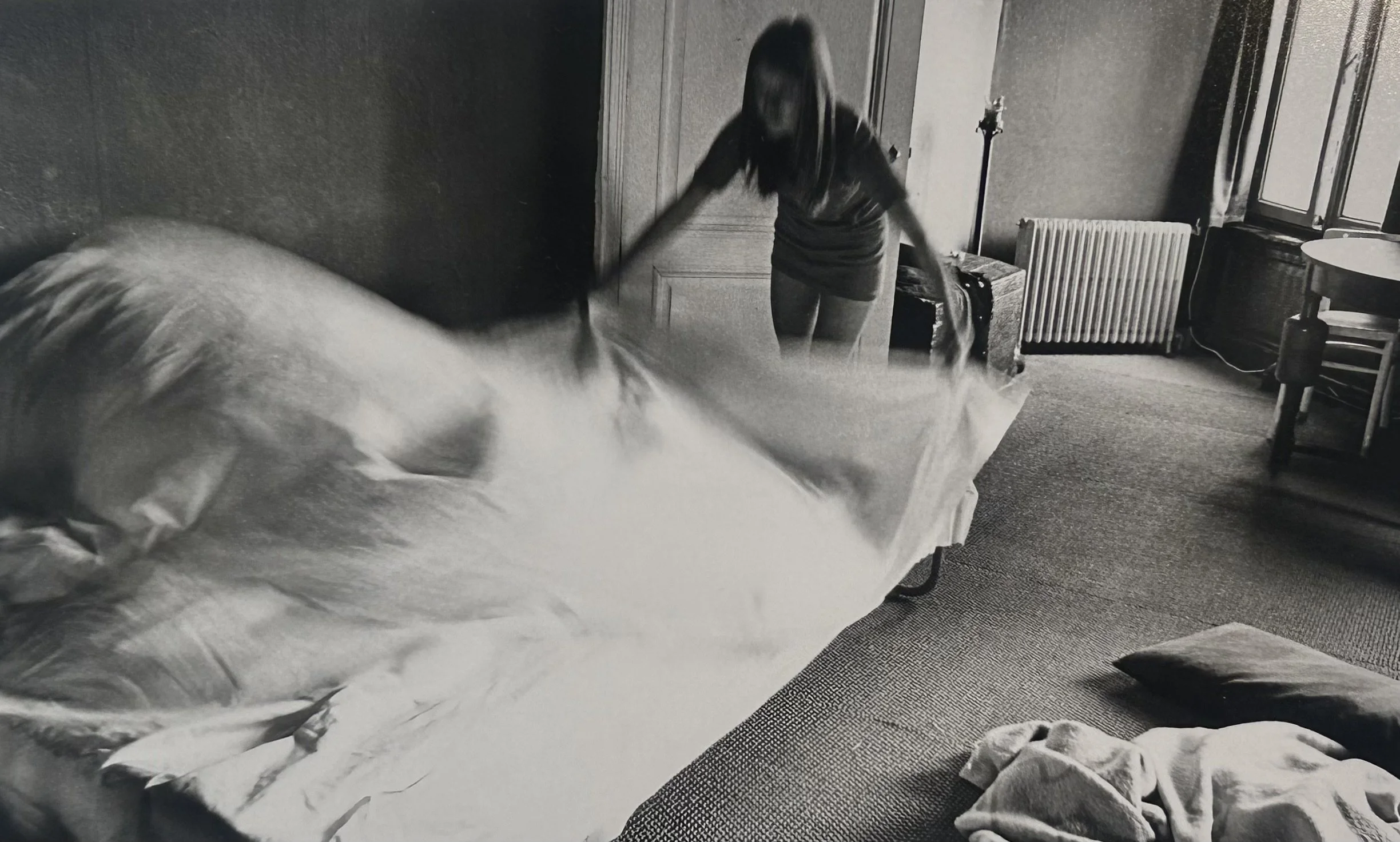
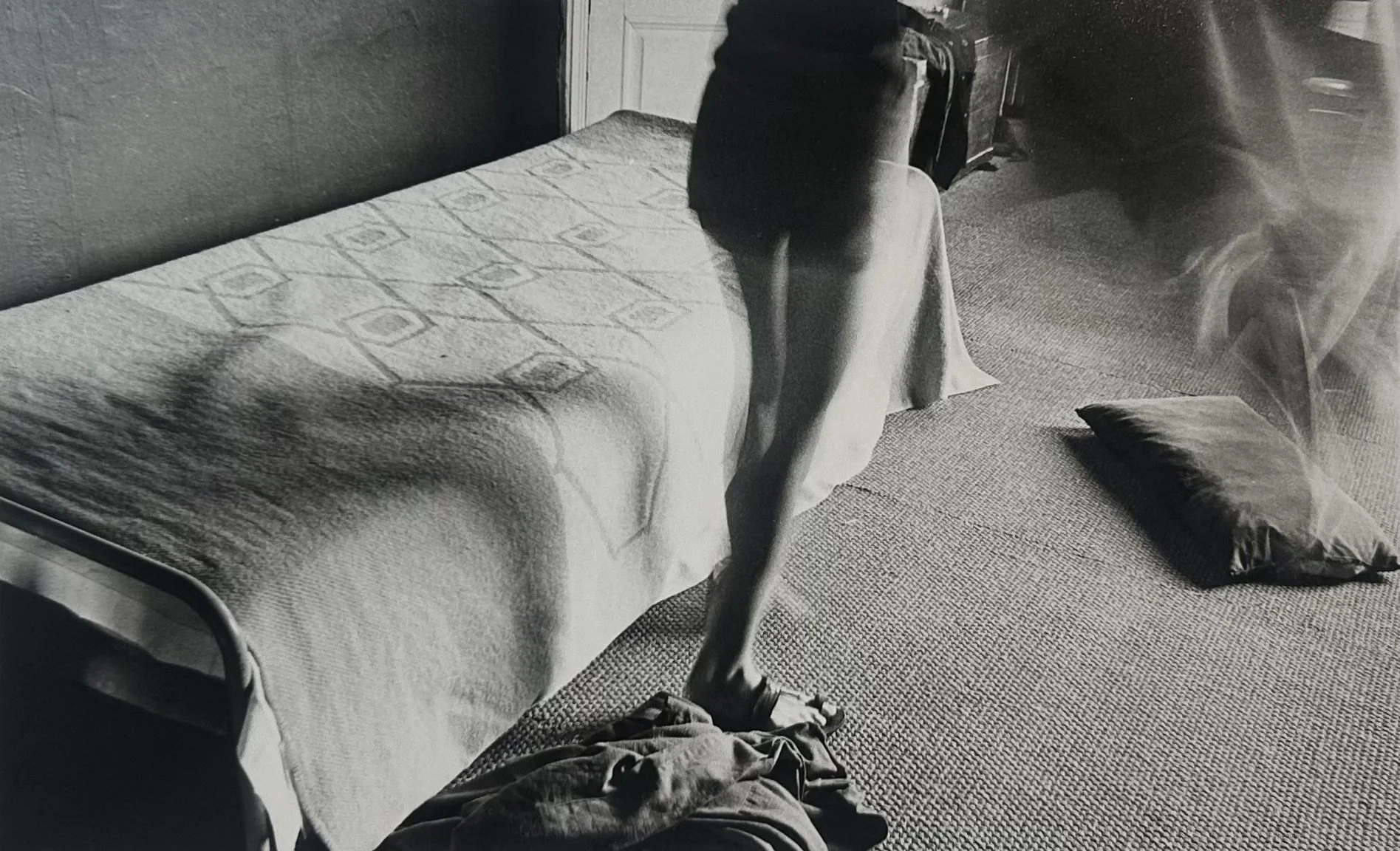
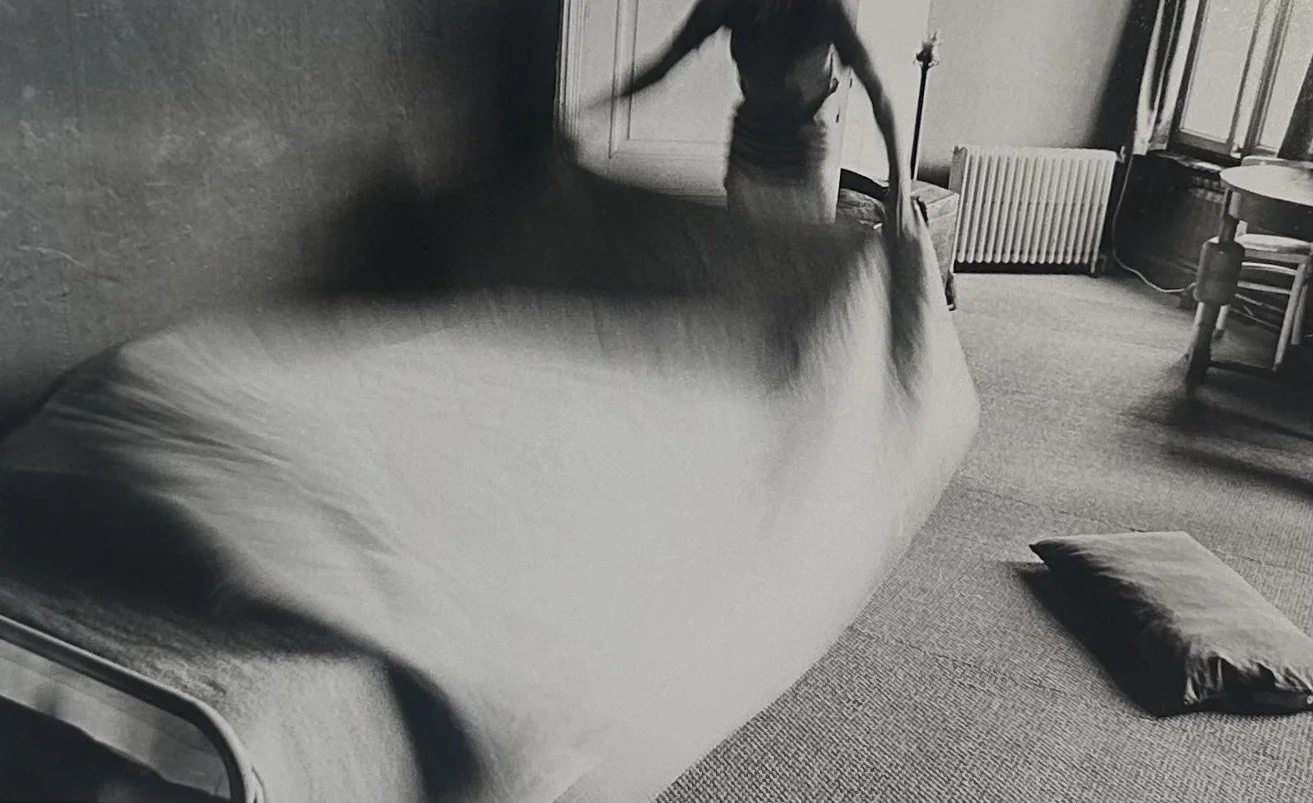
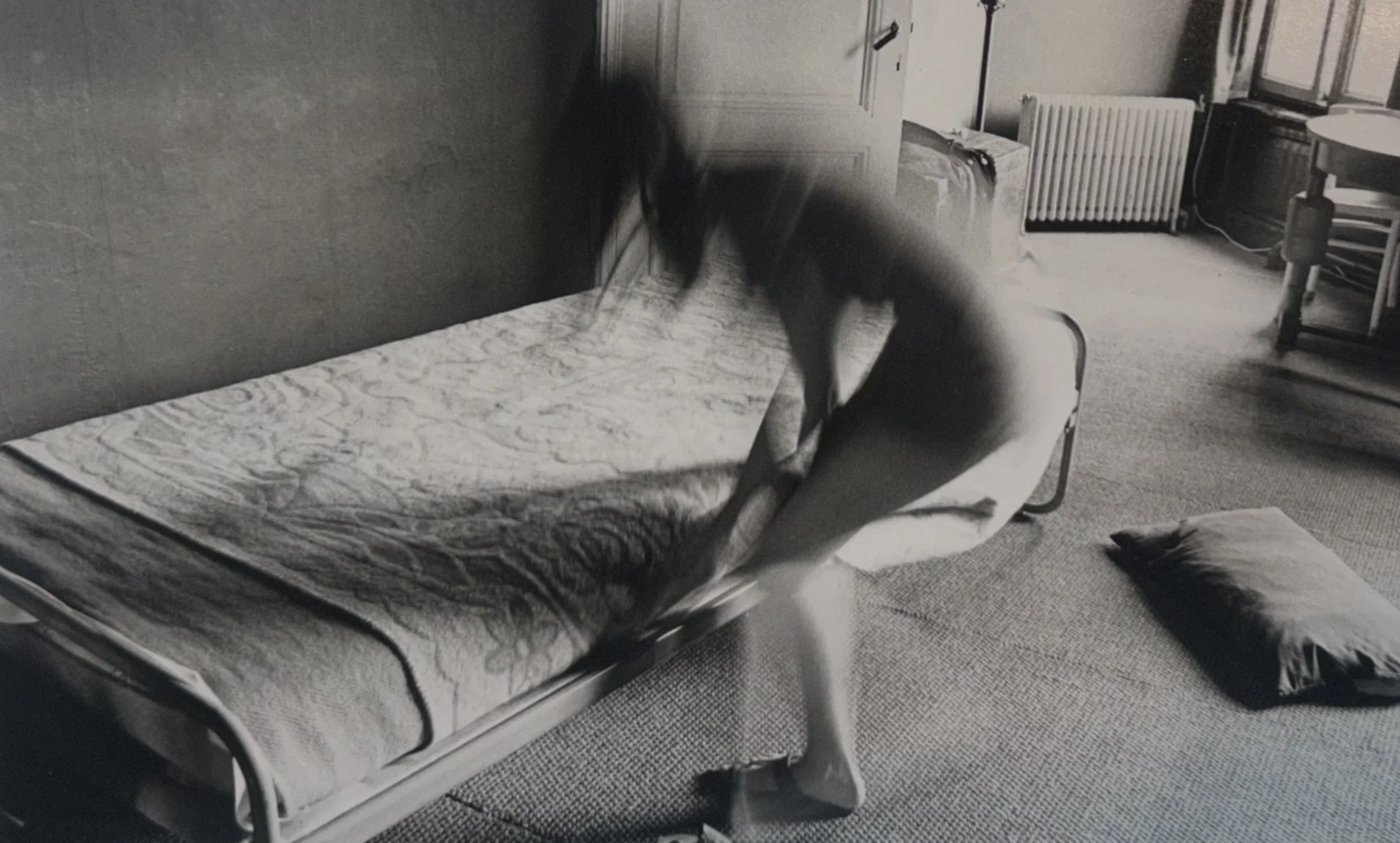
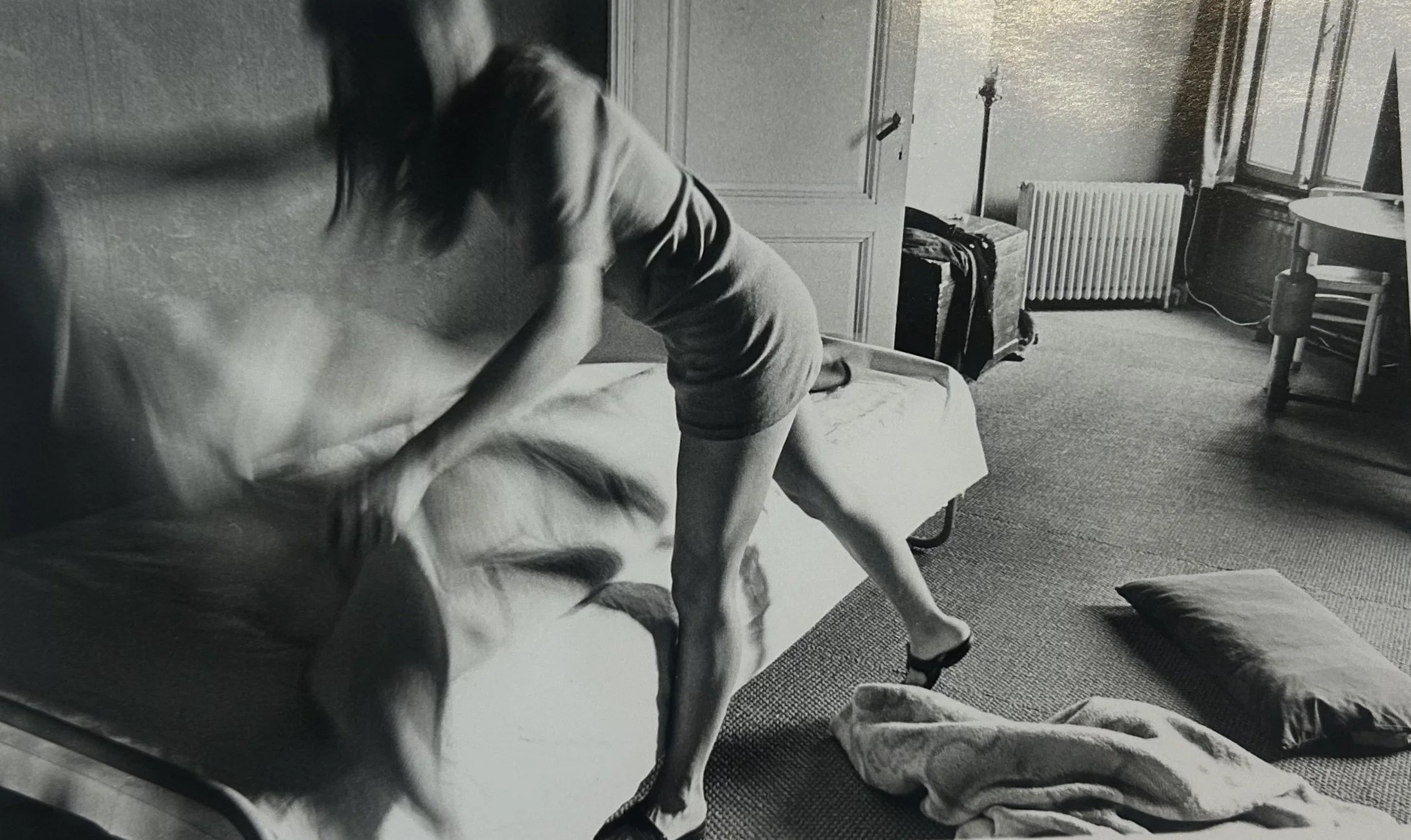
Bedmaking centres on a photographic sequence made by Madelon Hooykaas in the early 1970s that transforms a familiar domestic action into a study of time, perception, and attention. Rather than presenting everyday life as incidental, the work examines how routine gestures structure lived experience – exploring how meaning can emerge through attention and time.
“Most people don’t think anymore when they do these kinds of rituals… it’s really about being aware of what you are doing.”
“I had a specific interest in the daily things around me.”
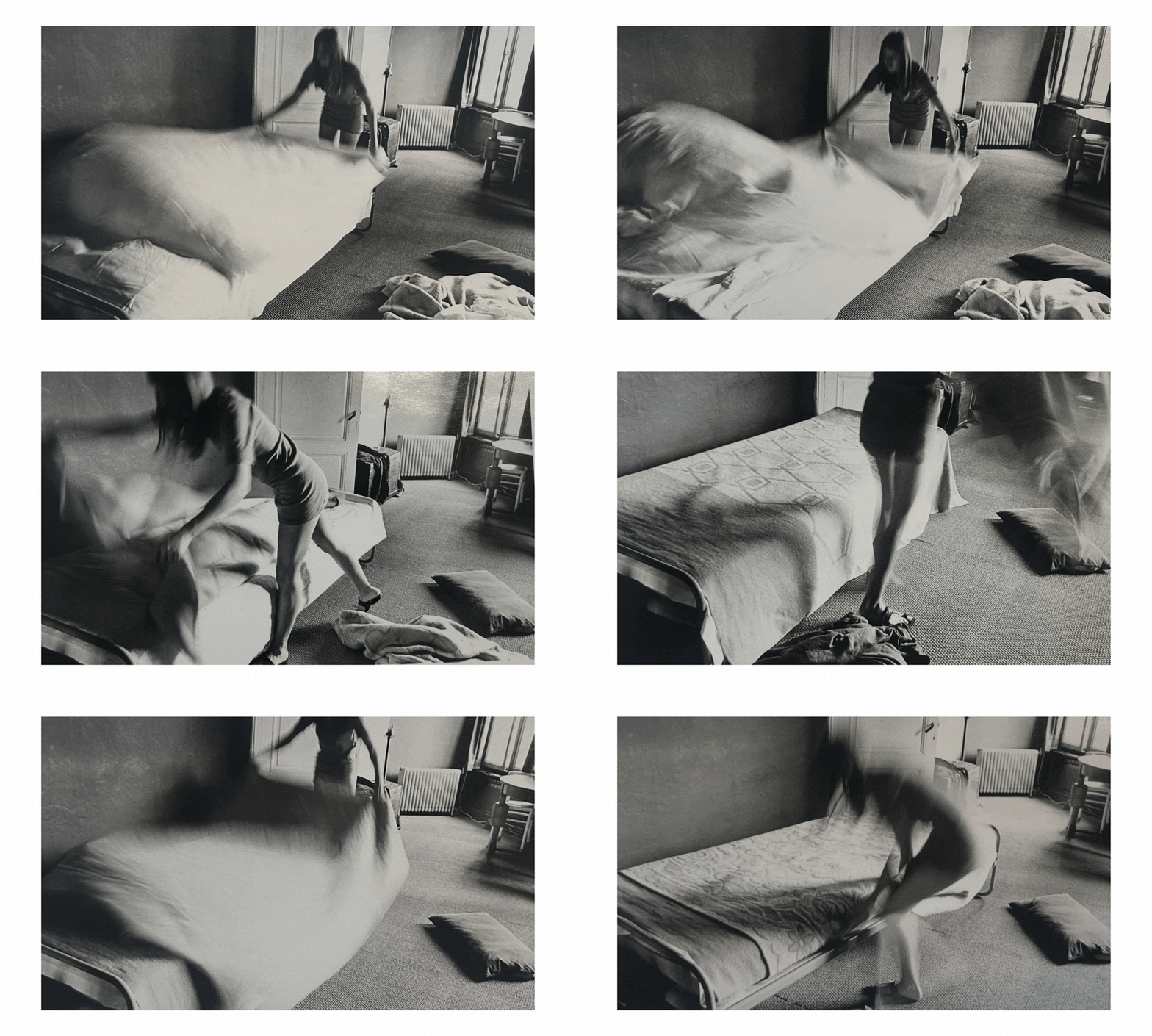
Bedmaking is a black-and-white photographic sequence that documents the act of making a bed across several frames. The work’s photographic technique is central to how movement is conveyed. Rather than isolating a single moment, the images suggest duration through slow exposure, allowing slight blurring to register the movement of hands and fabric. As Hooykaas explains, “I wanted to make the photos with a very slow exposure… because then you see the movement of the sheet.” The material conditions of analogue photography also shape this approach. Working with film required careful consideration of each exposure, since the number of images was limited and the process of developing and printing demanded time and precision. Hooykaas recalls that “film was just 36 images,” emphasising the deliberate nature of analogue image-making.
Although materially photographic, the structure of Bedmaking reflects a strong relationship to moving-image thinking. The sequence presents movement through a progression of images, positioning the work between photography and film. Hooykaas described the sequence as “already like a film,” indicating its origin in a cinematic approach to time and action. The work translates motion into stillness while preserving a sense of temporal continuity. However, the images themselves do not move; instead, it is the viewer who is prompted to connect them, supplying the sense of motion that unfolds across the sequence.
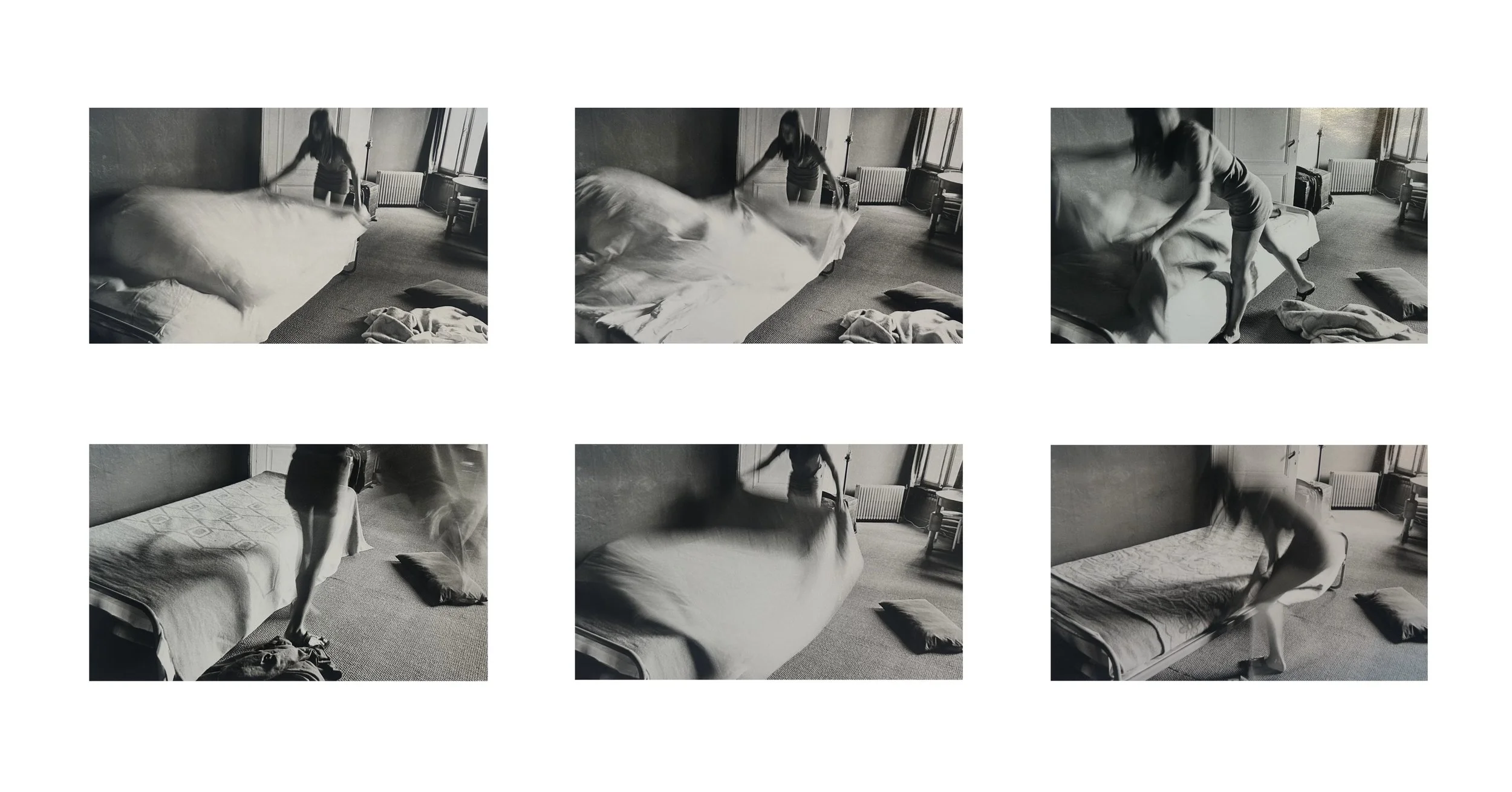
Madelon Hooykaas, Bedmaking, 1972, Vintage Hand Printed Silver Gelatin
“I wanted to… show, convince the viewer that it is also really about time.”
“What I find interesting is that the work was made in ‘72 and that it’s still so relevant now…it is kind of timeless.”
This emphasis on viewer engagement expands the role of perception within the work. The traces of motion visible in each frame encourage viewers to mentally reconstruct the gesture of bedmaking. As the gesture depicted is widely familiar, viewers recognise the movements involved and mentally reconstruct the action across the sequence. The work therefore unfolds through recognition as much as observation, as viewers connect the photographed gestures to their own routines and experiences. In doing so, the act becomes a visual rhythm of movement and form rather than merely a practical task. Looking becomes an embodied act, suggesting that movement is not fully contained within the images themselves but emerges through the interaction between image and viewer.
Within Hooykaas’s broader practice, Bedmaking can be understood as an early exploration of themes that continue throughout her work. Although she began with photography, she later expanded into film, video, and multimedia installations. Across these media, her practice consistently investigates light, movement, and perception. In this context, Bedmaking represents an early articulation of her ongoing interest in how time and perception can be shaped through images.
The act of making the bed draws attention to the everyday, suggesting that meaning can emerge from the smallest movements of daily life. The slower method aligns with the structure of the work, emphasising patience and attention to small gestures. Looking becomes both temporal and embodied, connecting perception, memory, and routine. At the same time, the work continues to resonate in contemporary contexts. As Hooykaas notes, it remains “still so relevant now… it is kind of timeless,” with the universality of everyday rituals contributing to this lasting relevance. In a visual culture defined by rapid image production and consumption, the work’s emphasis on slowness and attentive looking gains renewed significance.
Bedmaking ultimately reminds us that attention itself can transform the ordinary into something newly visible.
A heartfelt thank you to Madelon for generously taking the time to share her insights, reflections, and experiences.
Madelon’s exploration of perception and process continues in her publication The Artist as Explorer, offering a deeper insight into her wider practice.

Dedicated to art as her form of expression, Dutch artist Madelon Hooykaas has spent the past sixty years exploring new lands, cultures, aesthetics, and experimenting with multimedia.
Product Details
Paperback
Published by Jap Sam Books in 2023
269 pages
ISBN: 978-1-94-92852-99-1
VAT included in price.
Pay in 3 interest-free payments. Klarna available at checkout.
Pickup at the Gallery is available.
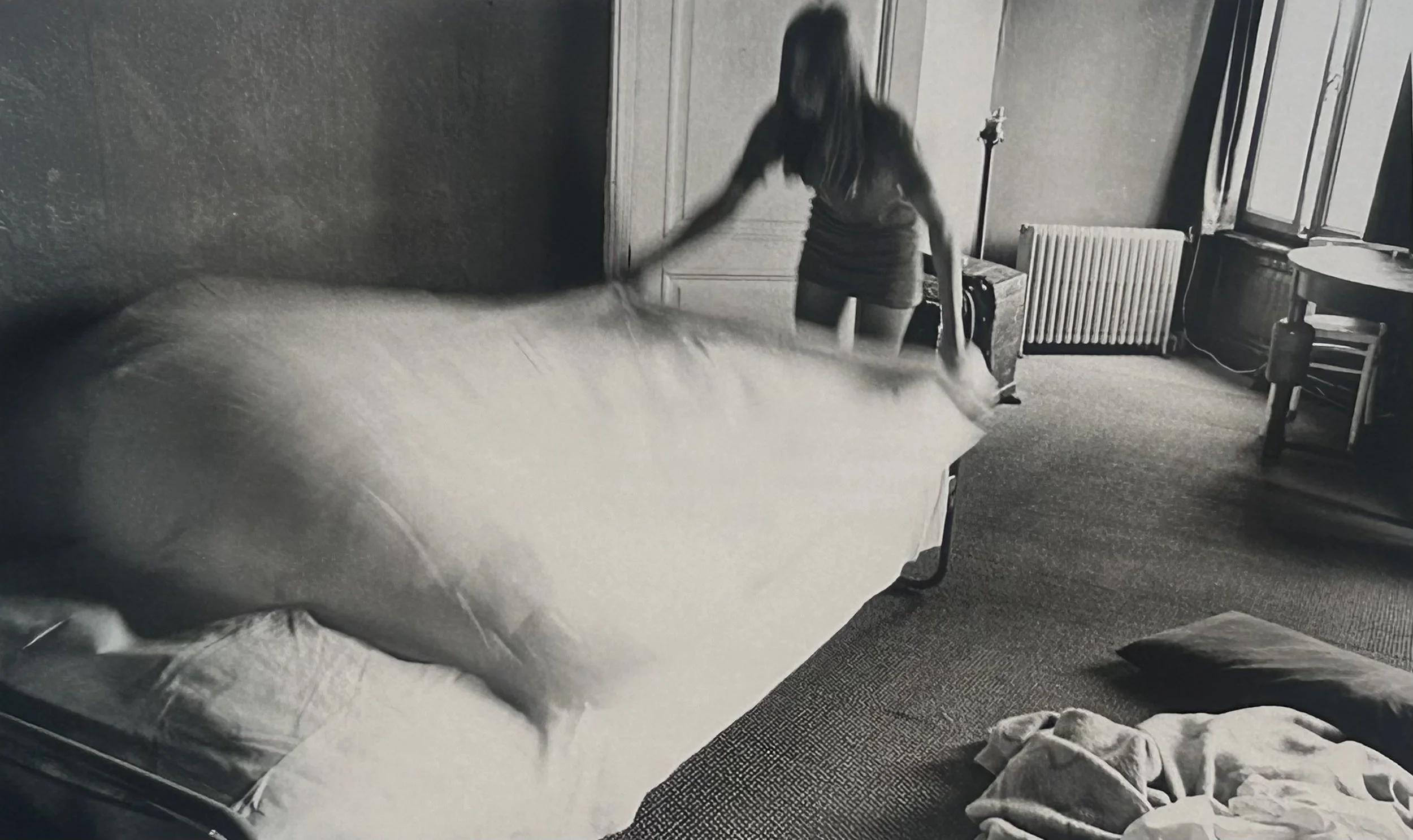
All photographs in this exhibition are available to purchase. Please contact Elliott Gallery for availability and prices.