
And Now The People Know
by Leticia Valverdes
Curation and interview by Eirini Alexandrou
Elliott Gallery is thrilled to present one of the winning series of our Open Call for Exhibition Proposals 2025:
And Now The People Know by Leticia Valverdes
Mercury Contamination in the Amazon through the Eyes and Hands of Brazil’s Indigenous Munduruku People
Valverdes’ work represents a distinct departure from traditional documentary photography. She does not act as an outsider who simply visits, documents, and leaves with a community's images. Instead, she enters into a deep interaction with the Munduruku people, inviting them to co-create and actively giving them the space and the platform to speak. Through this collaborative approach, she amplifies their voices on a global stage, drawing urgent attention to their ongoing struggle against illegal gold mining and mercury contamination.
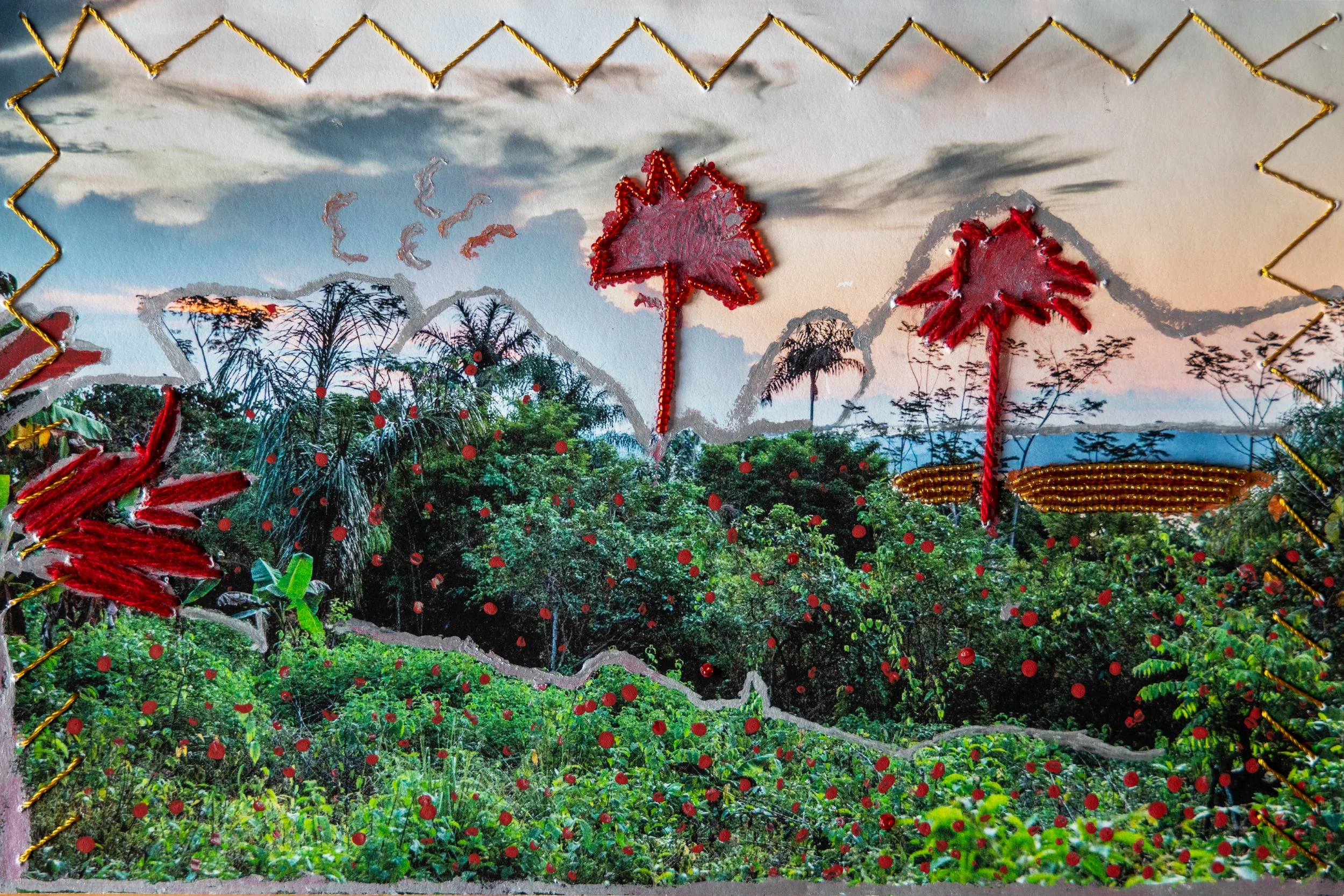
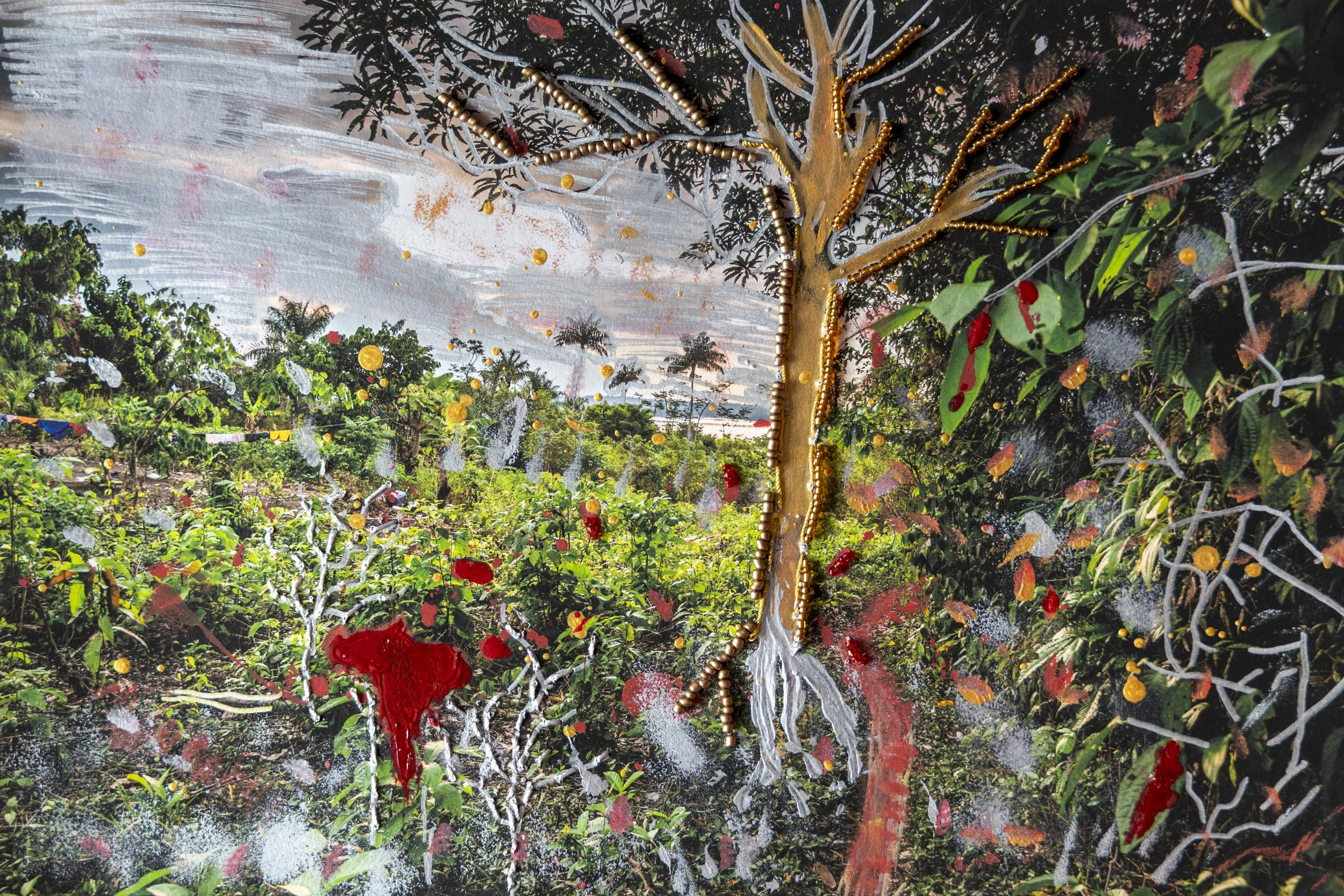
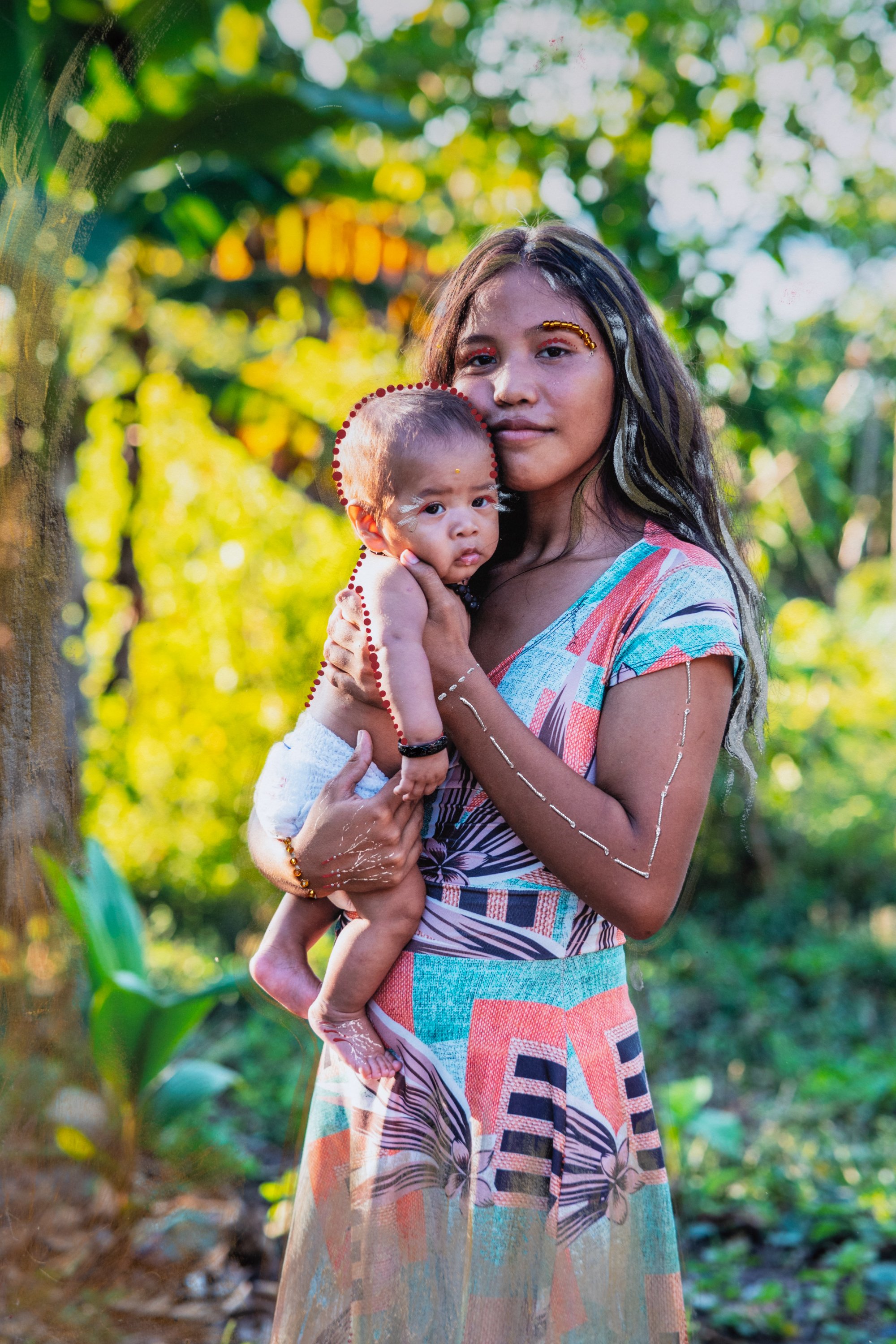
There is a powerful antithesis at the core of this series. Valverdes manages to address a horrific ecological and human tragedy, yet the resulting images are incredibly vibrant and full of colour. By combining photography with physical forest materials, raw earth, and traditional pigments, the works transform the grim reality of destruction into something visually stunning and, in a way, deeply hopeful.
By grounding this work in the immediate crisis of the Munduruku, the series exposes the unseen violence of the global climate emergency. The project serves as a reminder that environmental destruction in the Amazon is intimately linked to international financial markets and consumer choices. Yet, by turning a protest against an invisible poison into an intergenerational act of creation, the process also became a vital space for community healing, resistance, and shared joy.
The exhibition concludes with a short interview with the artist.
This collaborative approach grew out of a deep, twenty-year history of working in the Amazon. Over the past two decades, Valverdes has balanced editorial photojournalism for titles like The Sunday Times with producing major documentaries, including recent stories on female environmental leadership for the BBC’s Planet Earth 3. However, during the pandemic lockdowns, she found herself at home as a mother of three children under twelve, watching from afar as the Brazilian government neglected the pandemic and attempted to dismantle constitutional environmental laws.
Realising her children needed to learn about this reality and the danger facing the ecosystem, she invited them to print and transform images from her vast Amazonian archive. Using fire, gold, blood, earth, and leaves in affectionate interventions, the project became a way to sensitively educate them about an imminent tragedy, touching on a profound sense of grief and impotence while still showing them the beauty of the forest. The resulting series was titled And Now My Children Know.
This current project forms the direct second chapter to that work, allowing the two series to explicitly "talk" to each other. When Valverdes later brought the original archive interventions back to the Amazon, the indigenous people admired the work previously done with her kids. Because of that connection, the Munduruku youth chose And Now the People Know as the name for this next phase.
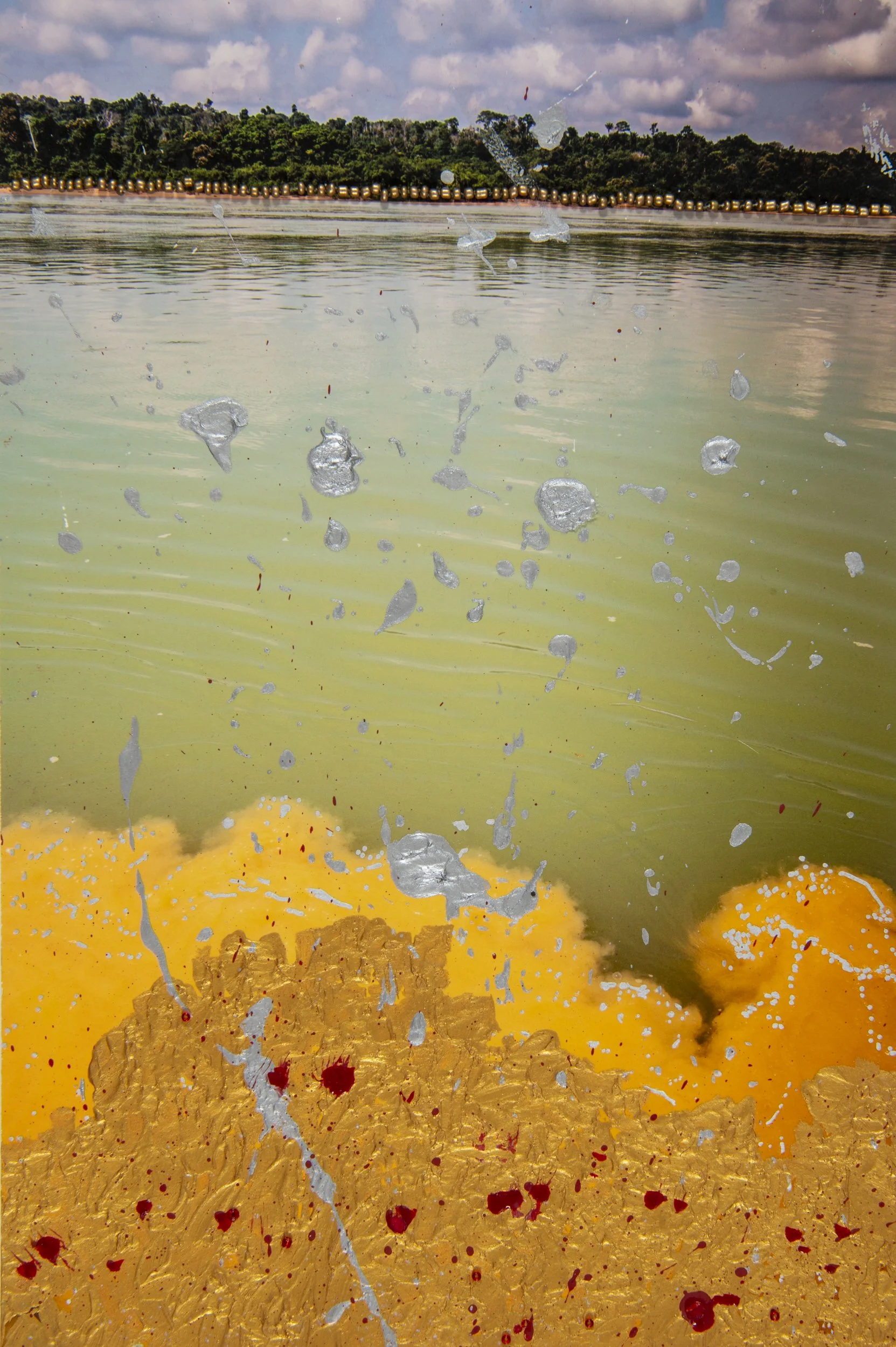
By returning the printed portraits directly to the Sawré Muybu village, she sheds the conventional journalistic lens and hands the physical canvas over to the community, shifting the narrative from a private family reflection into an active, global platform. The immediate reality driving this artwork is incredibly urgent. Illegal gold mining has quietly saturated the Amazon's rivers with mercury, a silent poison that has bioaccumulated within the food chain. The contamination has become so severe that local women live with the heartbreaking terror of getting pregnant, fearing the permanent neurological damage the invisible heavy metal passes to their unborn children.
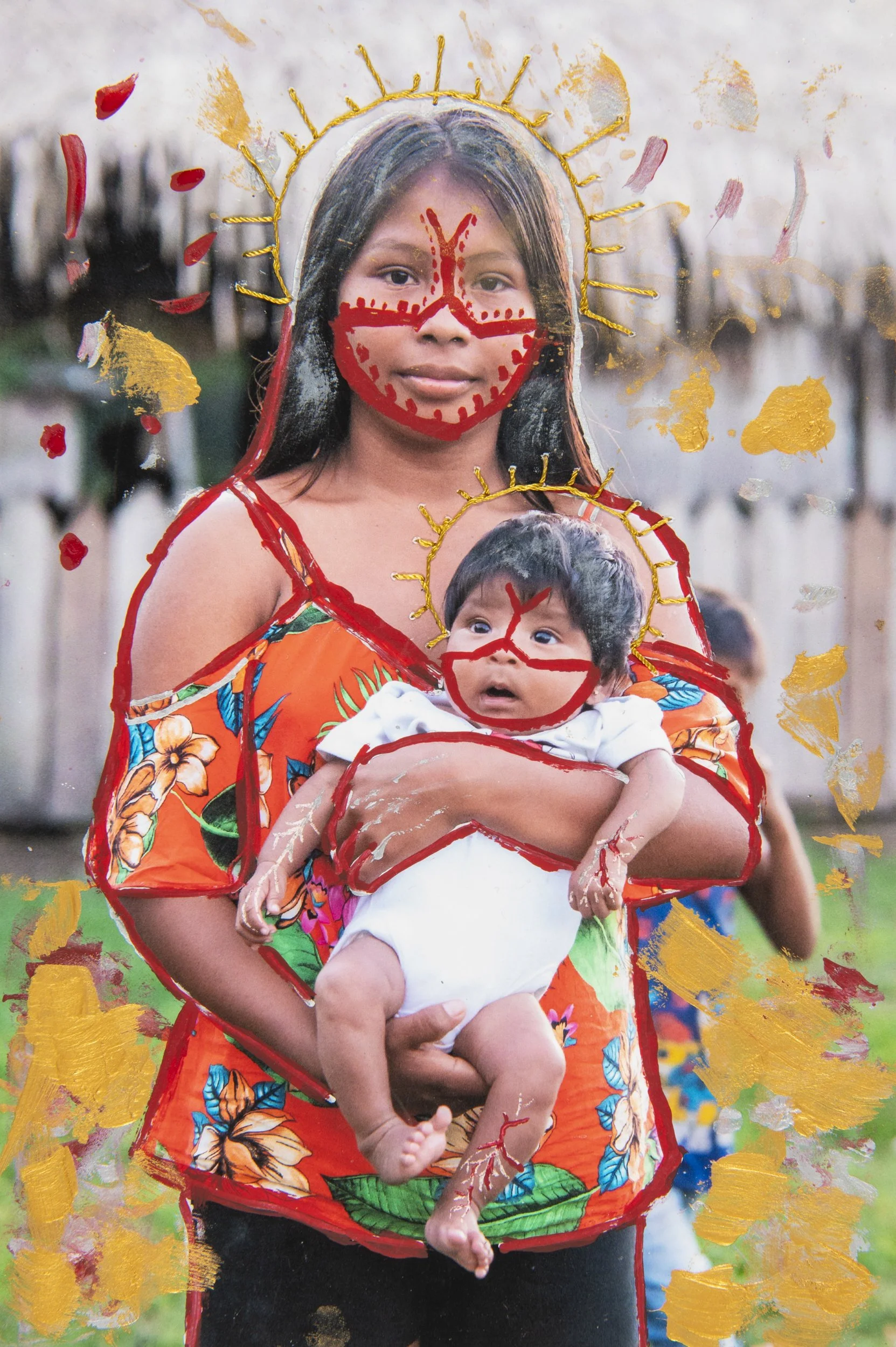
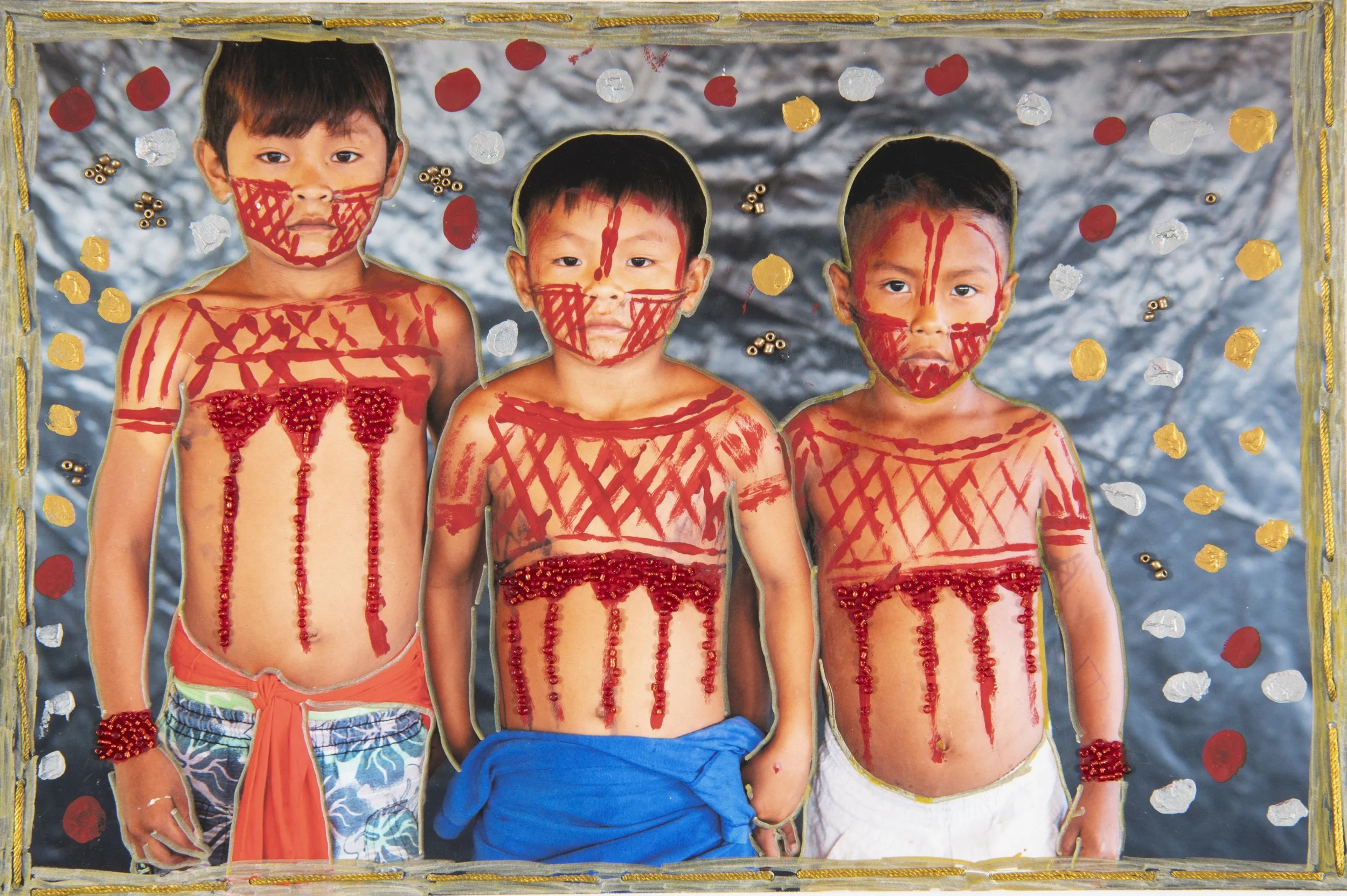
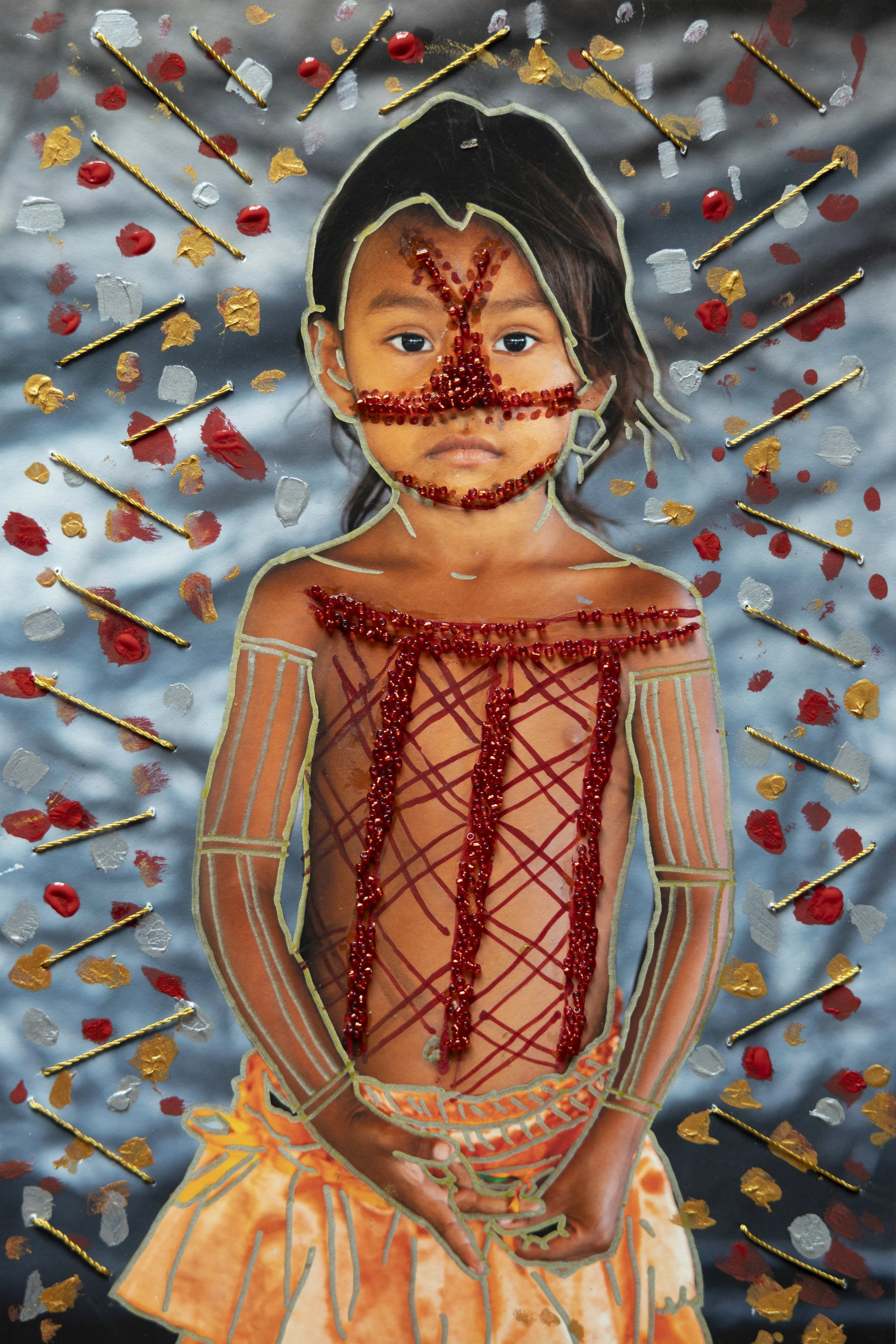
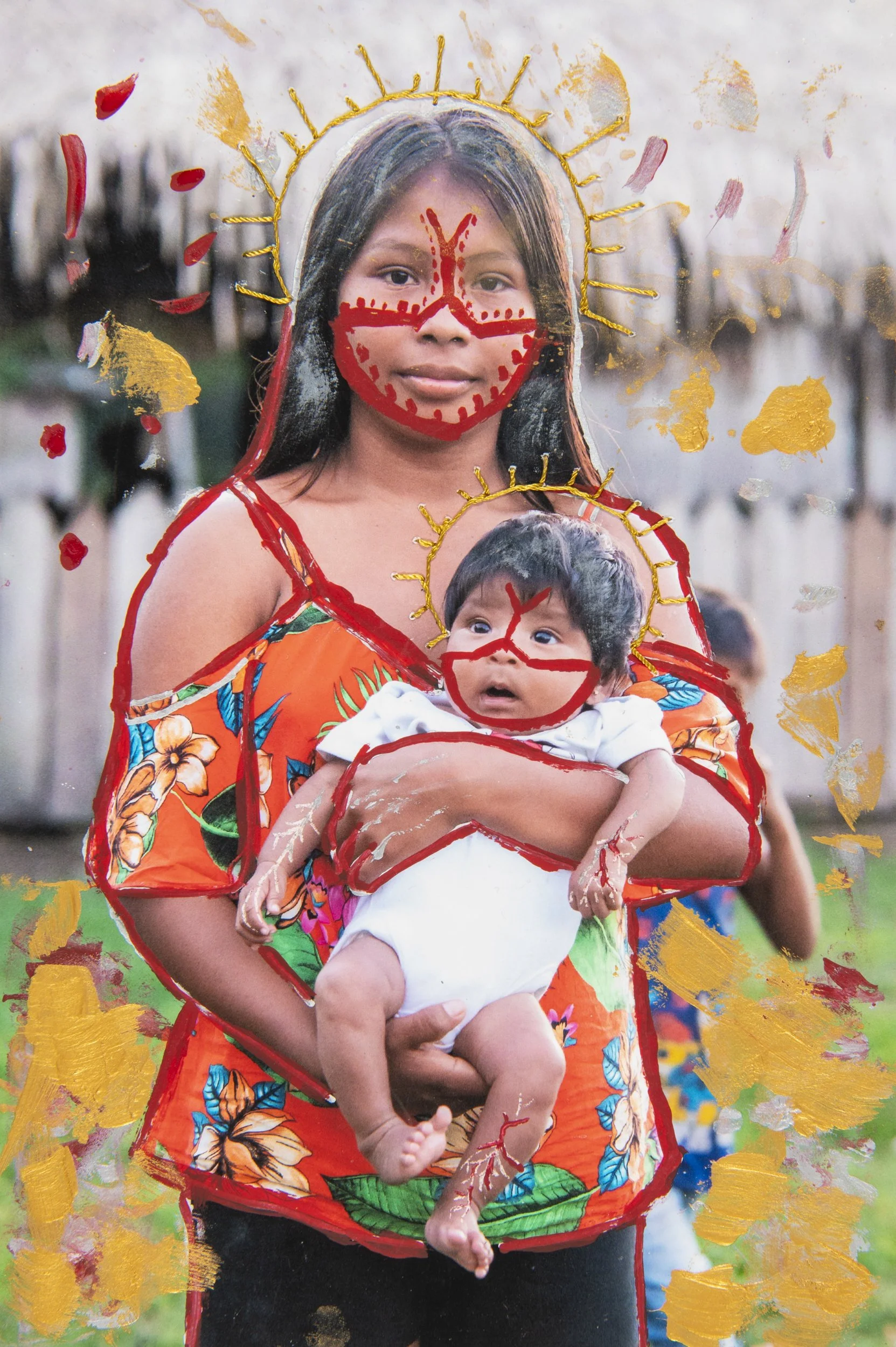
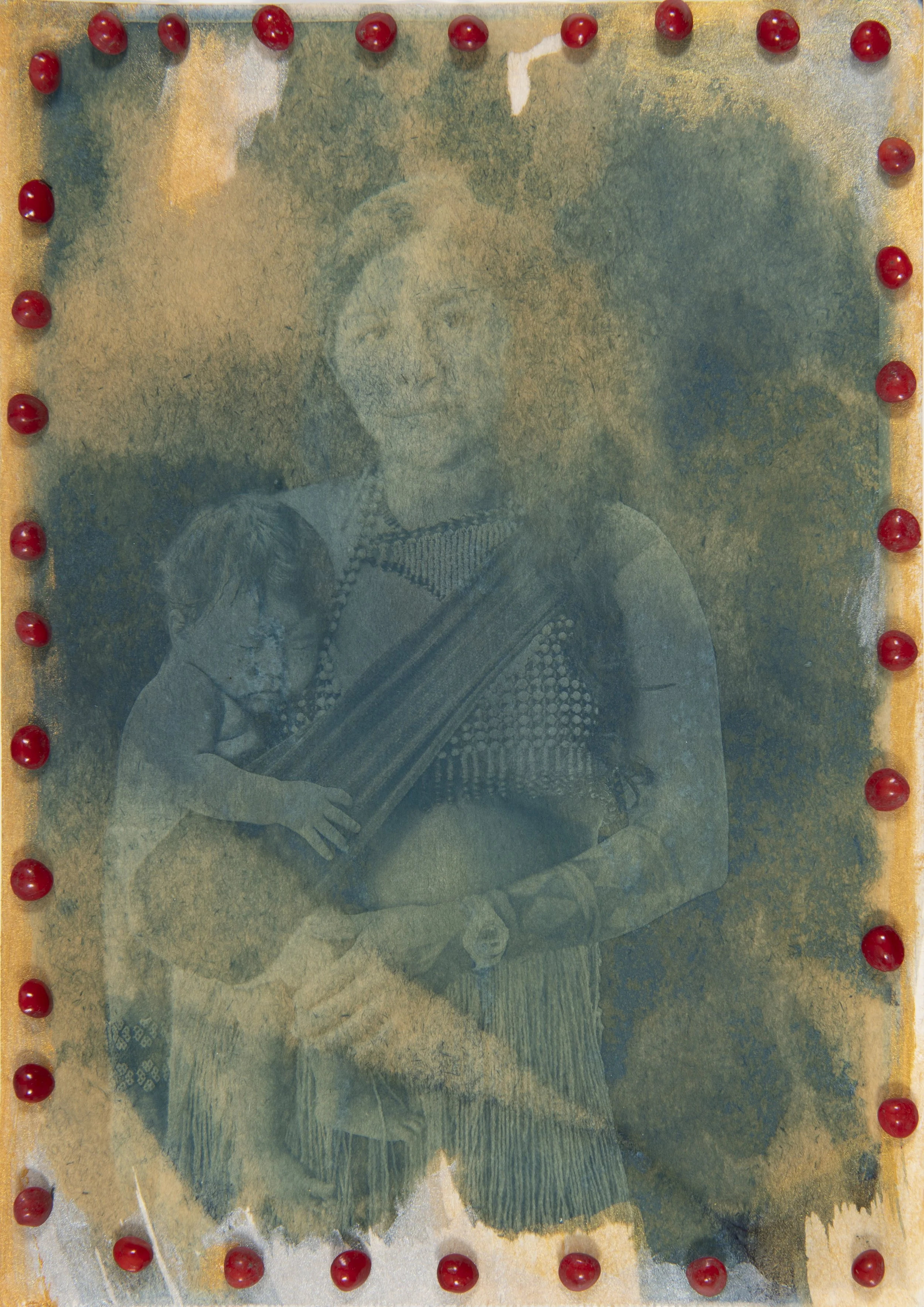
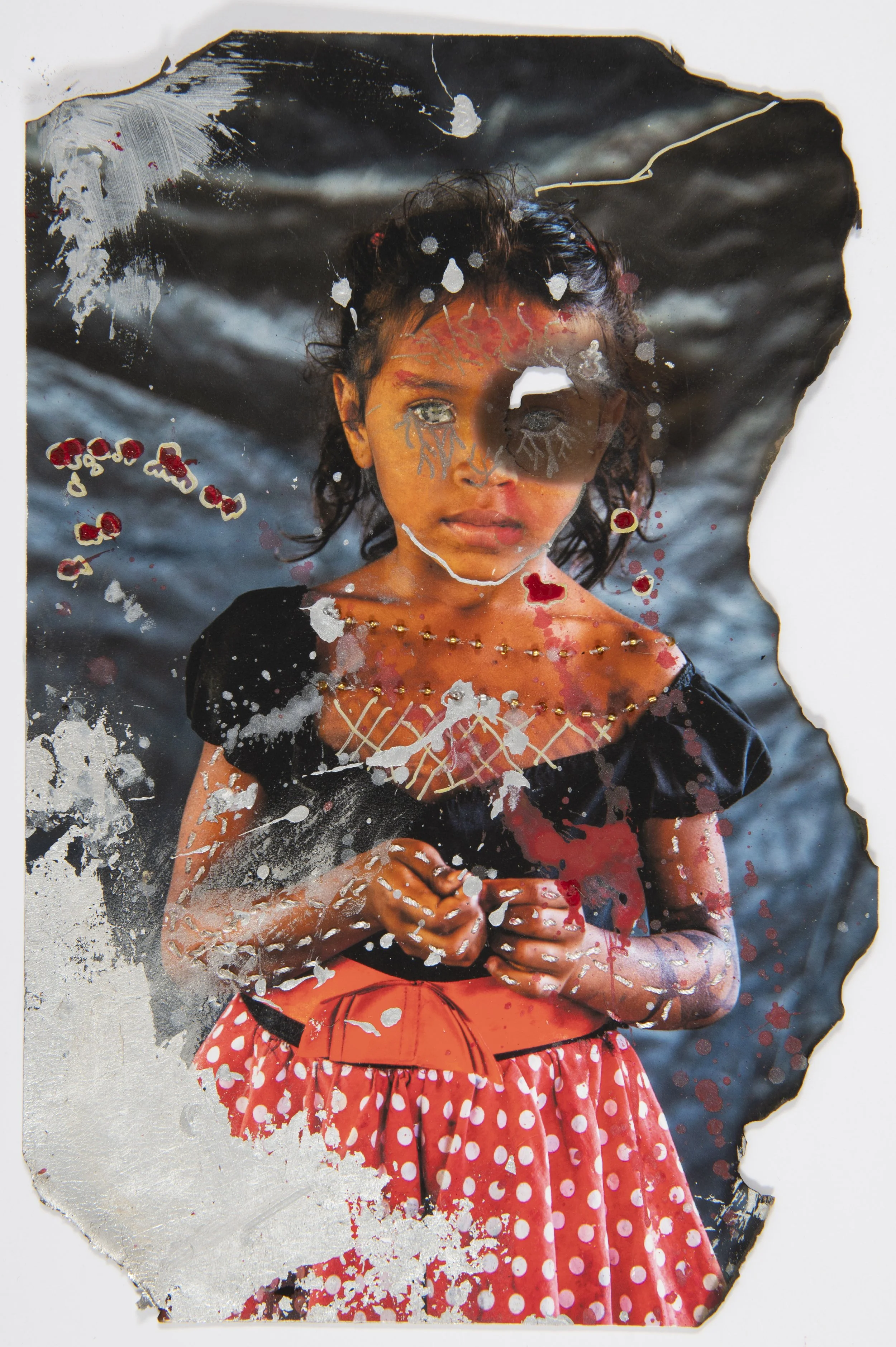
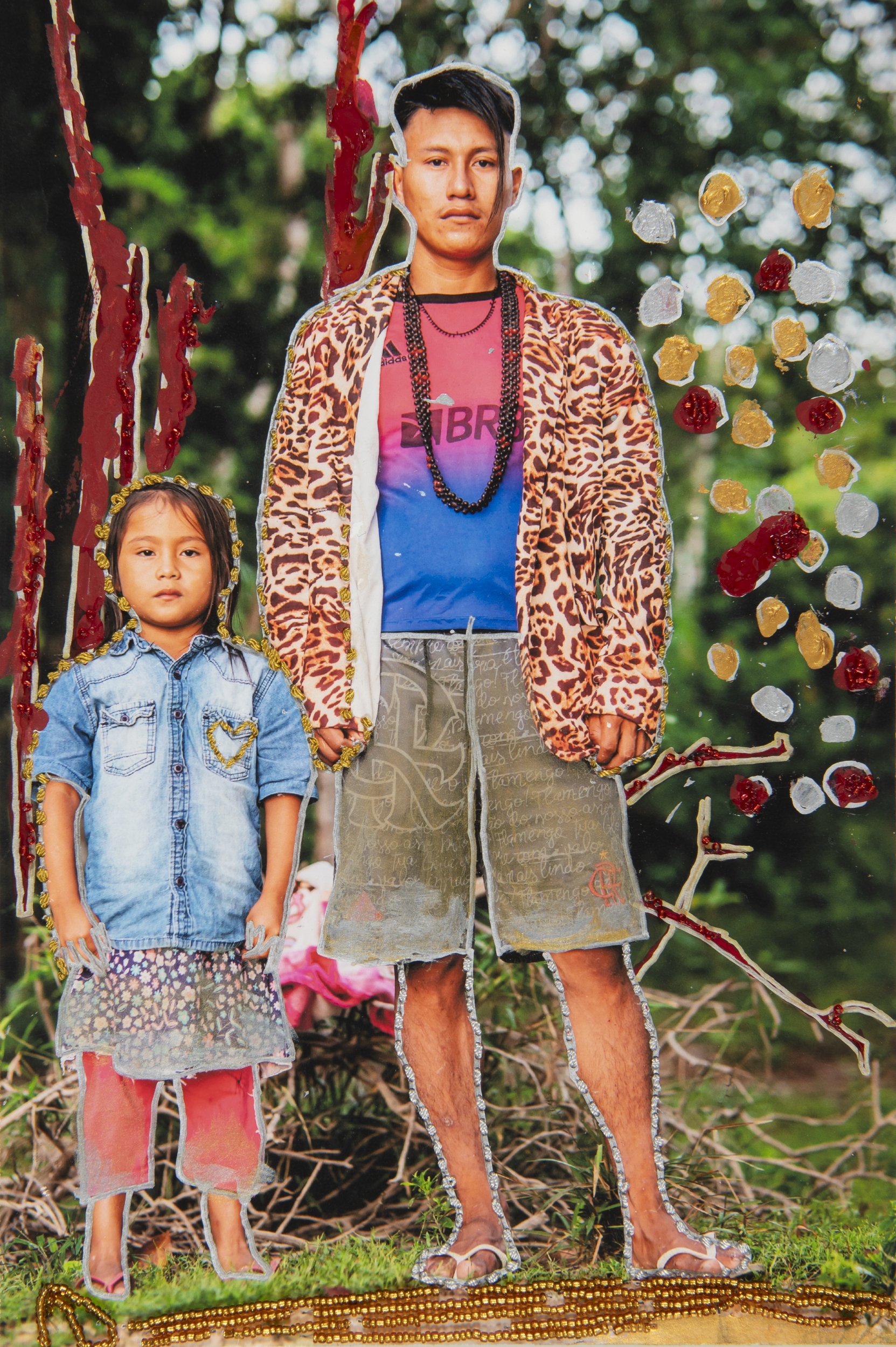
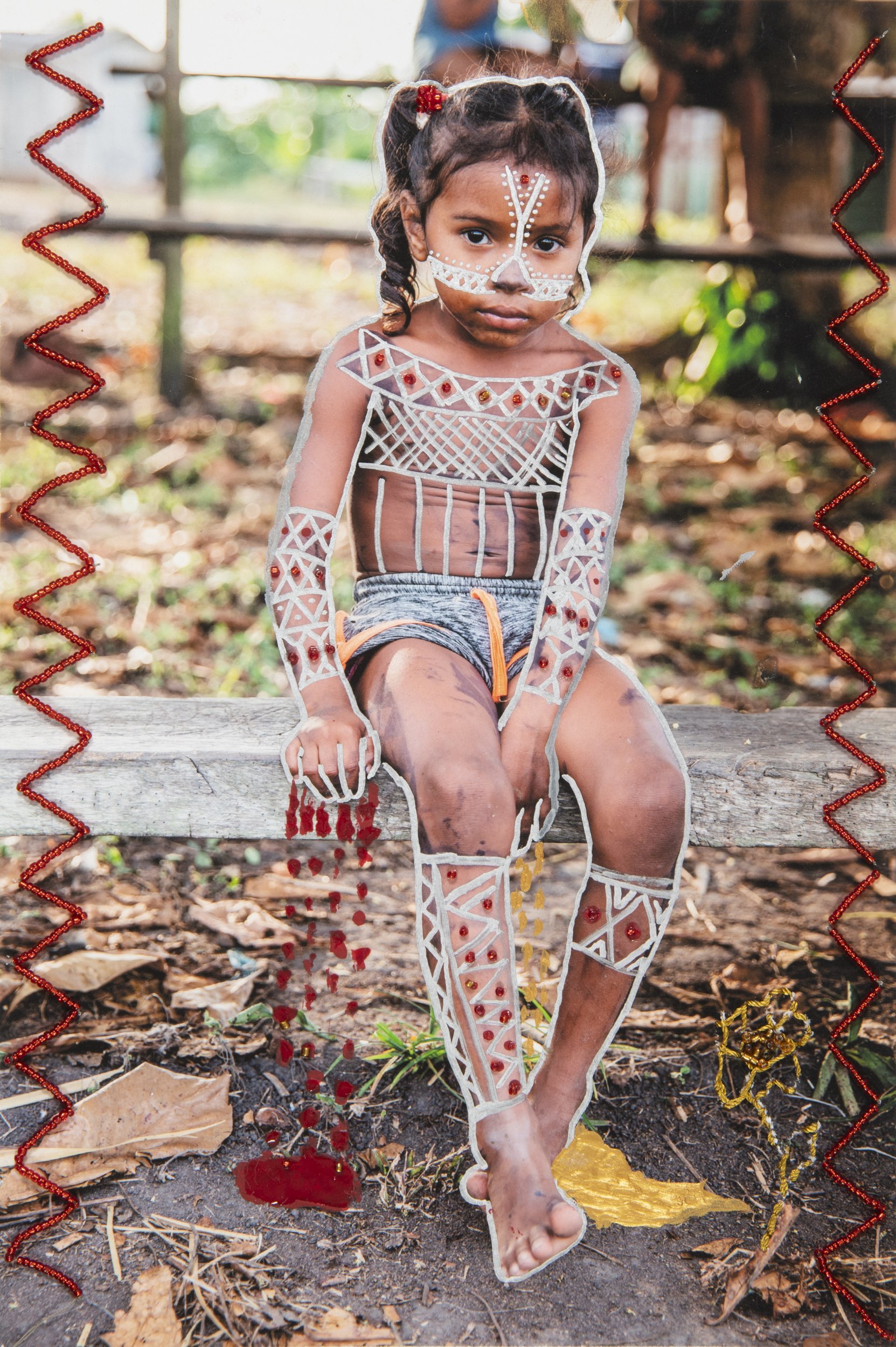
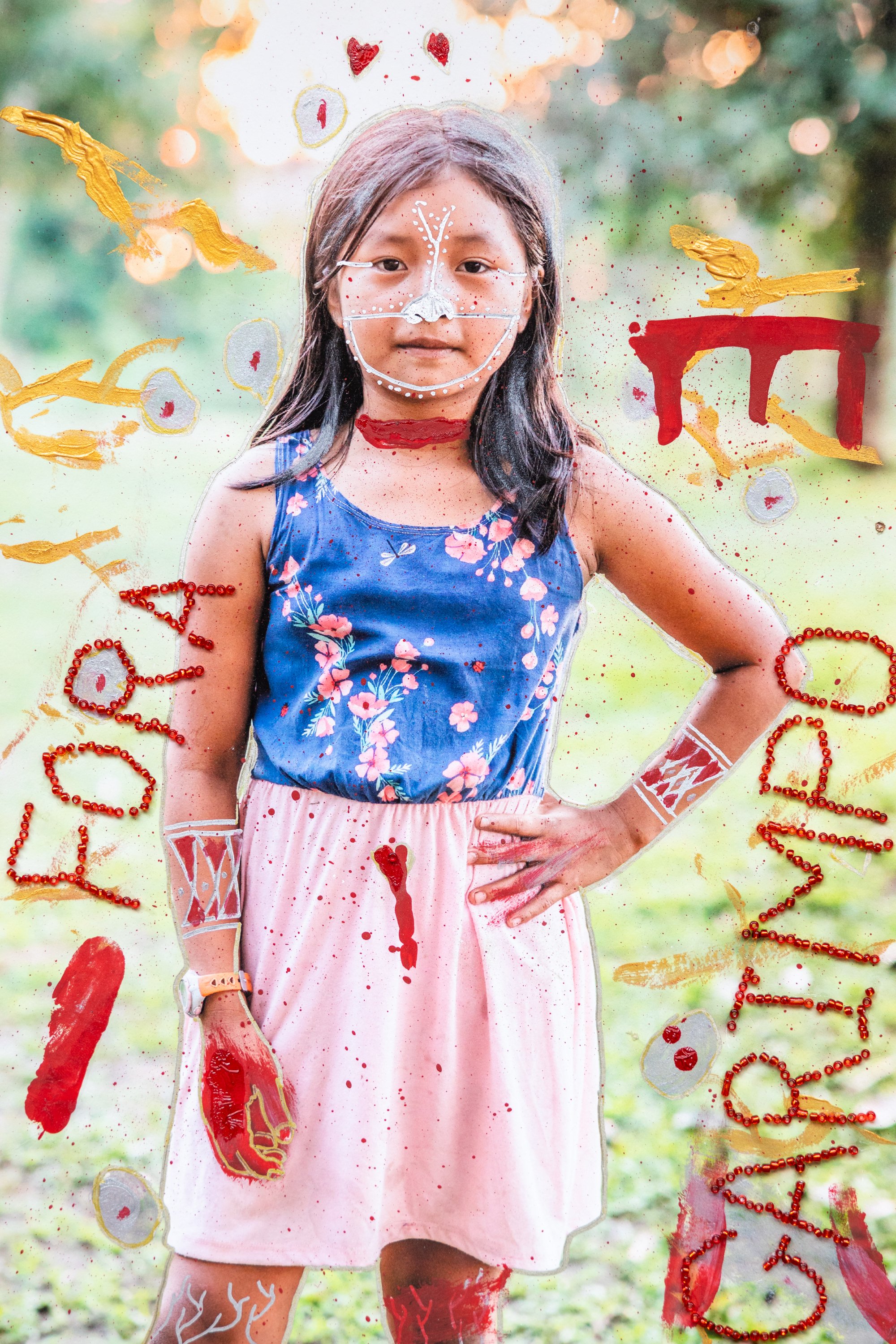
Instead of leaning into standard images of victimization, the community fights this quiet erasure with an explosion of physical texture. By slashing vibrant gold paint, traditional red urucum pigments, and hand-stitched beads across these images, they visually drag the hidden poison to the surface, combining the grief of an environmental crime with the beautiful, resilient joy of an unyielding culture.
“The series was born from a desire to create space for the voices of those living at the frontline of the climate crisis, the people who protect the forest for us all but pay the highest price for its destruction.
The process began with an invitation: to create art together.
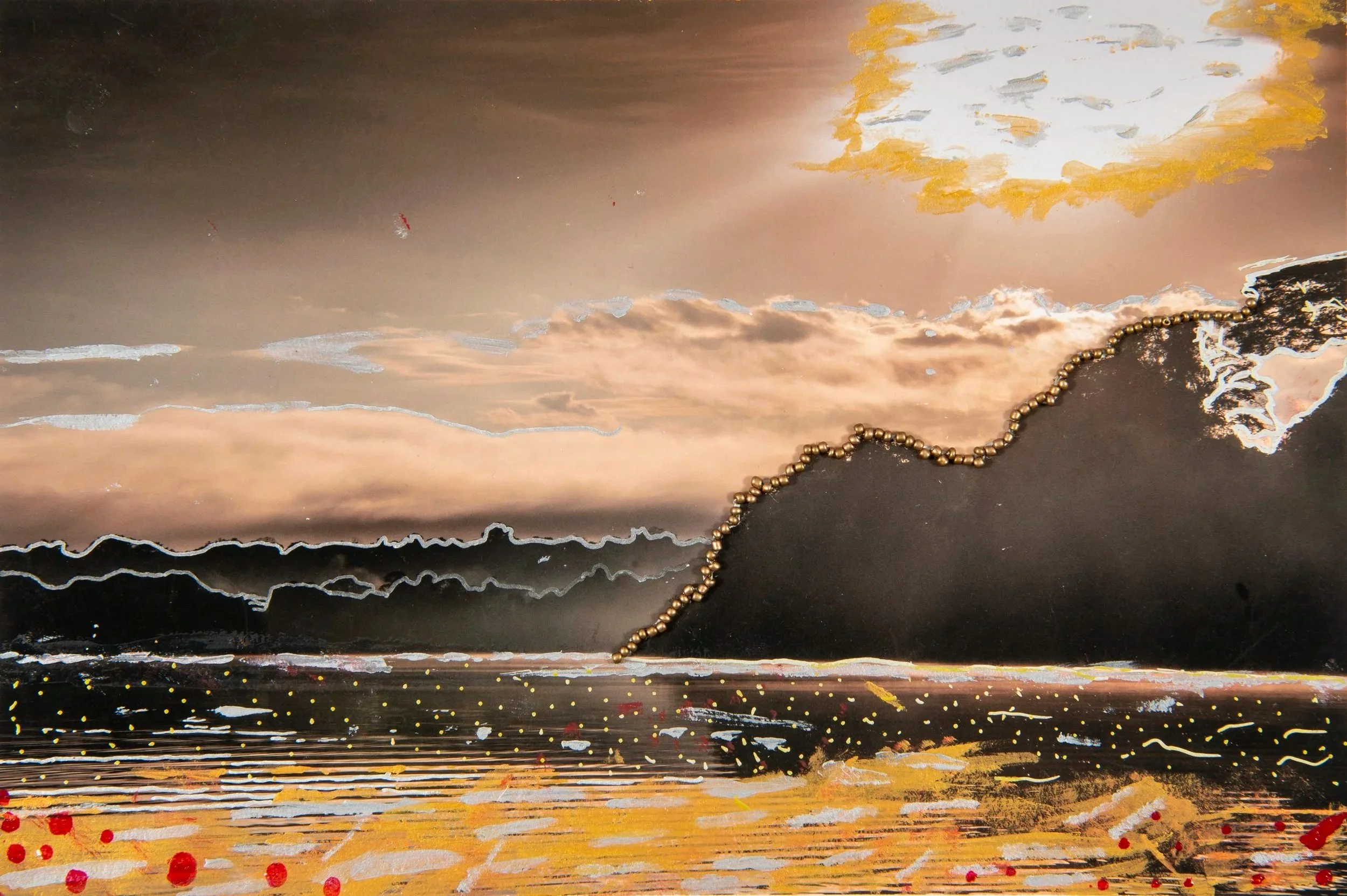
I returned to the village carrying printed portraits and landscapes from previous visits. Rather than presenting them as finished works, I offered them back to the community as material, as ground for intervention and reflection. Together, we explored one of their most urgent realities: mercury contamination in their bodies, their rivers, and their forest.
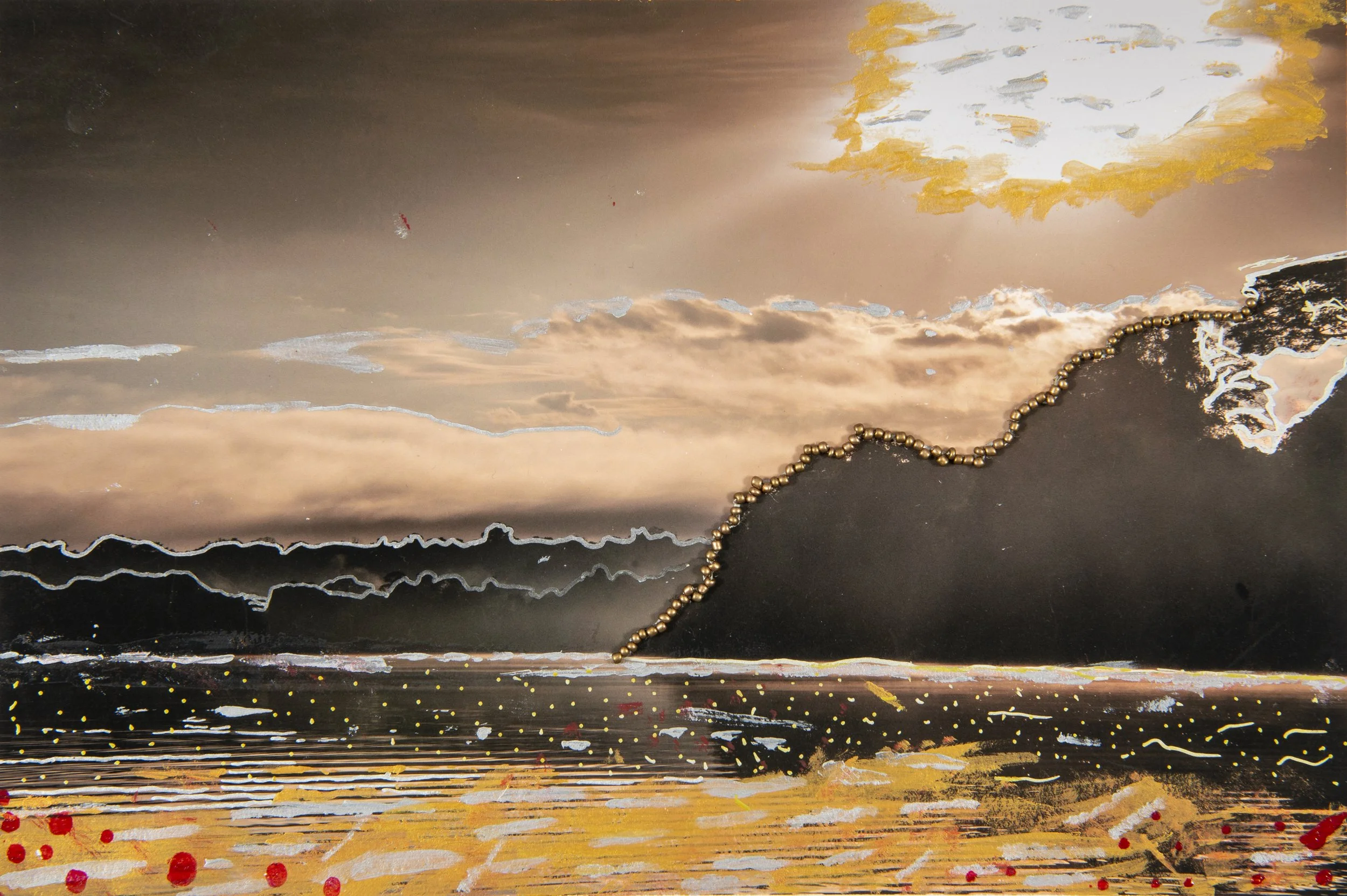
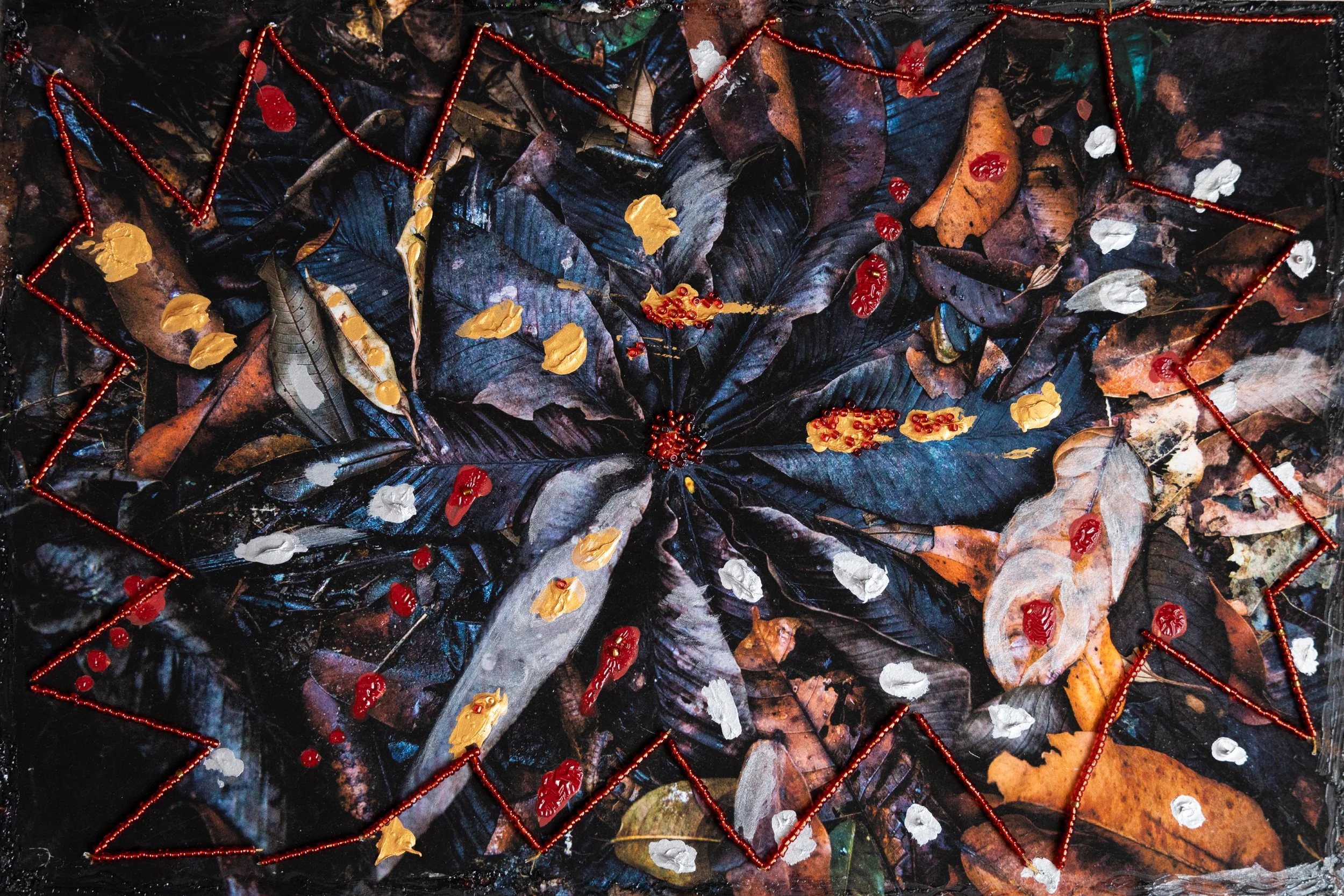
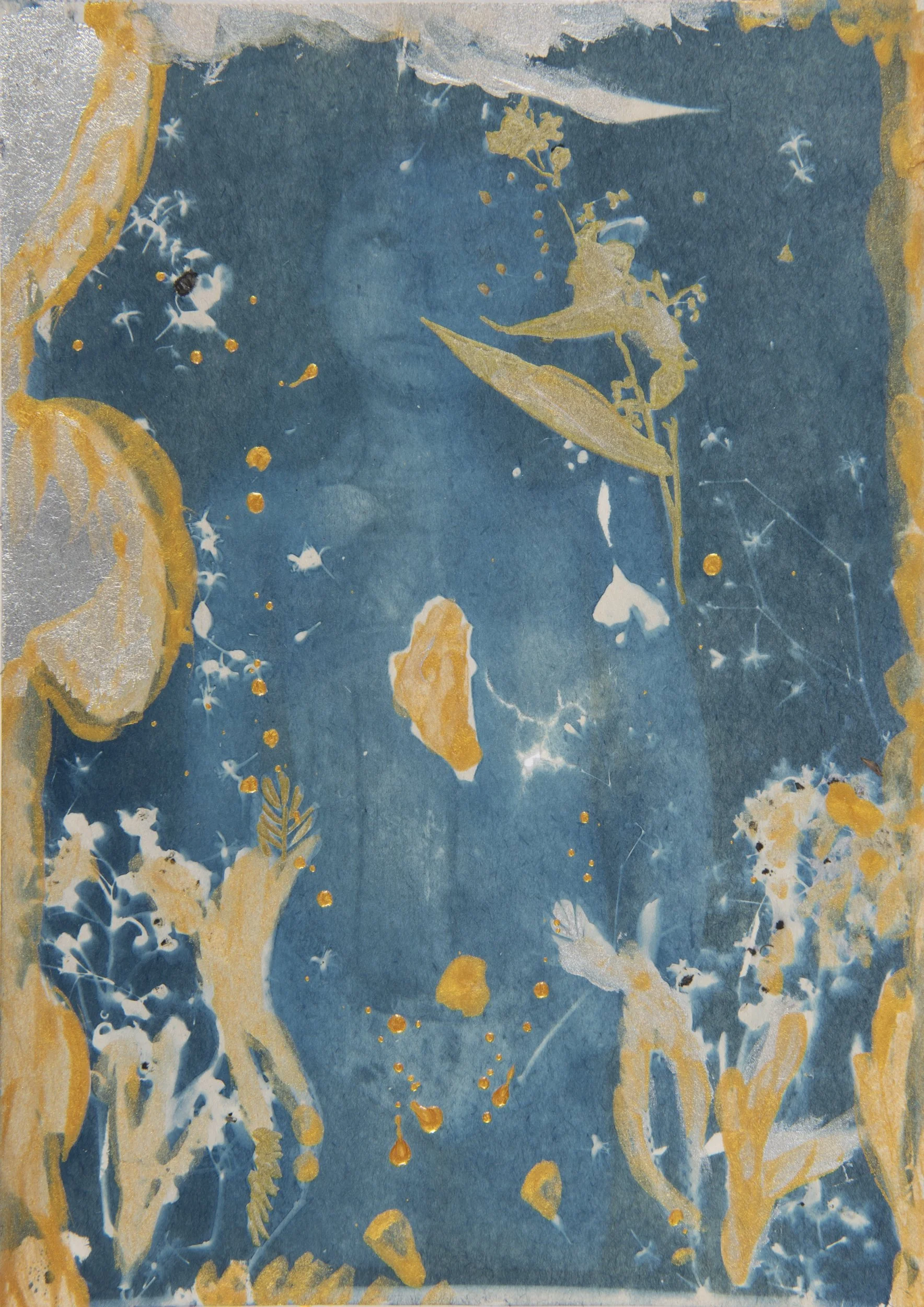
Using paint, red urucum (a traditional plant pigment used to paint their bodies), earth, leaves, river water, and fire, children, women and elders intervened directly on the photographs. The colour palette and materials are symbolic: Red for their blood Gold for mining Silver for mercury, forest materials, and Amazon sunshine for cyanotypes. ”
“These gestures became acts of protest and acts of healing.
They carry stories of contamination but also of joy, beauty and resilience. What began as a way to engage young people evolved into a collective, intergenerational process. Hands of different ages worked side by side.
We also created cyanotypes using river water, sand and forest materials. Beads traditionally used in their jewellery were embroidered onto paper and cloth. Many prints passed through multiple hands; younger ones painting, older women stitching, forming a weaving of knowledge, ancestry and hope.”
You mention the heartbreaking reality that local women live with the terror of getting pregnant due to mercury poisoning. As a mother who started this journey by making art with your own kids, how did that shared bond of motherhood shape your connection with the women in the village?
Yes, motherhood creates an immediate connection. As a mother, it is impossible not to imagine my own children and myself in another mother’s reality. Many of the women spoke about the fear of passing mercury to their babies during pregnancy or breastfeeding, and that really stayed with me. And since my visit a recent Fiocruz* research found that 97% of the pregnant Munduruku women tested had mercury levels above what the WHO considers safe. I am so aware that beyond the statistics, there are mothers carrying an invisible burden.
As you mentioned, my previous project, And Now My Children Know, came from wanting to talk to my own children about the Amazon, its beauty and challenges. This new chapter felt like an extension of that conversation, but now created together with Indigenous mothers, children and grandmothers. We are all thinking about the world we are leaving to the next generation.
*Brazil's leading public health, science, and technology institution.
Can you elaborate on the therapeutic side of this project? How did transforming an invisible poison into a shared, creative activity help the community find a sense of collective healing and joy?
I am not a therapist but I know there is something potent and cathartic in the act of inviting people to collective discuss and collaborate on a cause. What I witnessed was that art making together created space for conversation, reflection and expression. Mercury is invisible, but through paint, embroidery, river water and mark-making it became something people could see, discuss and respond to together. There was sadness, but there was also laughter. Beauty and creativity became another way of speaking about something that is otherwise so difficult to express.
These images manage to highlight an incredibly dark environmental crime while celebrating a vibrant, resilient culture. When exhibiting this to a Western audience, how do you balance inspiring political accountability with showcasing the beauty of the Munduruku people?
I feel there is space, and a need, for multiple ways of telling stories. I myself do straight photo documentary for magazines and work within the language of television documentaries.
But in my personal work I've always believed the beauty resulting from collaborations can open doors that raw facts alone sometimes cannot. I don't want people to leave only shocked by the contamination; I would like them to admire the resilence, creativity and humanity of the Munduruku and their forest home. I believe there are other ways of connecting emotionally with audiences and those connections may make people more willing to listen, learn and hopefully act. The beauty isn't there to soften the crisis but to help people stay with it.
Ultimately, I believe in a non extractivist way of documenting people's lives and I always hope to find beauty in the unexpected. But is so often the case with socially engaged work, I did not know we would create pieces so beautiful they can sit naturally within an art gallery. We all understood that what we were creating was artivism.
What is the ultimate message or feeling you hope the Munduruku people's voices carry across the world through this exhibition?
I hope people realise these are not communities asking to be saved. They are asking to be heard and respected. The Munduruku, as other indigenous people, know how to care for their territory which is an extension of themselves. They are inviting us to understand what is happening, to be allies and recognise our connection to it, and to act. Above all, I hope people stay with a sense of shared responsibility and with hope that art can build bridges between worlds.
About Leticia
Brazilian Leticia Valverde studied Fine Art and photography at London Metropolitan University. Her personal work concentrates on interactions with people and begins with deep listening and grounding. Through simple ideas, she invites collaboration and exploration of identity, self-compassion, and curiosity towards the self, body, and nature. Alongside this, she works as a TV producer, including recent work for BBC Planet Earth 3 and other series, producing stories on female environmental protagonists.
Her work has been featured in a number of group and solo exhibitions in the UK and internationally, and published in magazines such as the Sunday Times Magazine, The Independent, Telegraph, Guardian, Marie Claire and Colors. She has also collaborated with institutions, NGOs and companies, including the Wellcome Trust, Save the Children, Oxfam, All Change Arts and YouTube, among others.
Following its recent showcase at Somerset House for London Climate Action Week, the series is currently on view at the Genesis Cinema, London. Looking ahead, the exhibition is set to travel internationally, with upcoming shows at the Paranapiacaba Photo Festival in Brazil from August 29th to 30th, followed by a presentation at the University of Oxford this September.
These upcoming exhibitions will feature artist talks and potential screenings of Amazon the New Minamata, a documentary focusing on the same Munduruku community. The project is also driving an active fundraising campaign to support the Munduruku Association, with a percentage of all art sales going directly to the community.